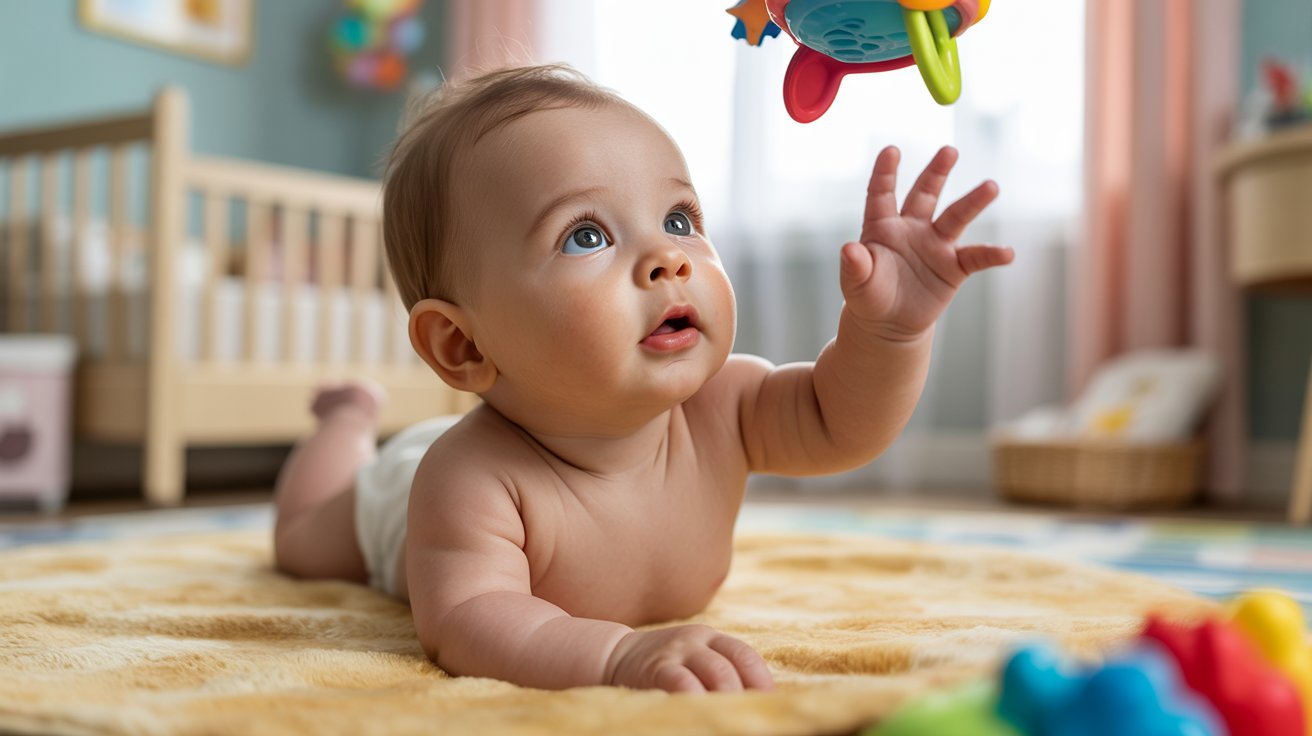
Most babies start reaching for things between 3 and 4 months old. Early reaching begins as swiping motions, while accurate grabbing usually develops by 5 to 6 months.
I remember watching my nephew swipe at a hanging toy over and over before his fingers finally made contact. That small moment felt like a milestone.
If you’re wondering when do babies start reaching for things, this guide has clear answers. I’ll walk you through every stage, month by month. You’ll learn what’s normal, what’s not, and how to support your baby’s progress.
This guide is based on child development guidance from pediatric experts and organizations like the American Academy of Pediatrics.
When Do Babies Start Reaching for Things?
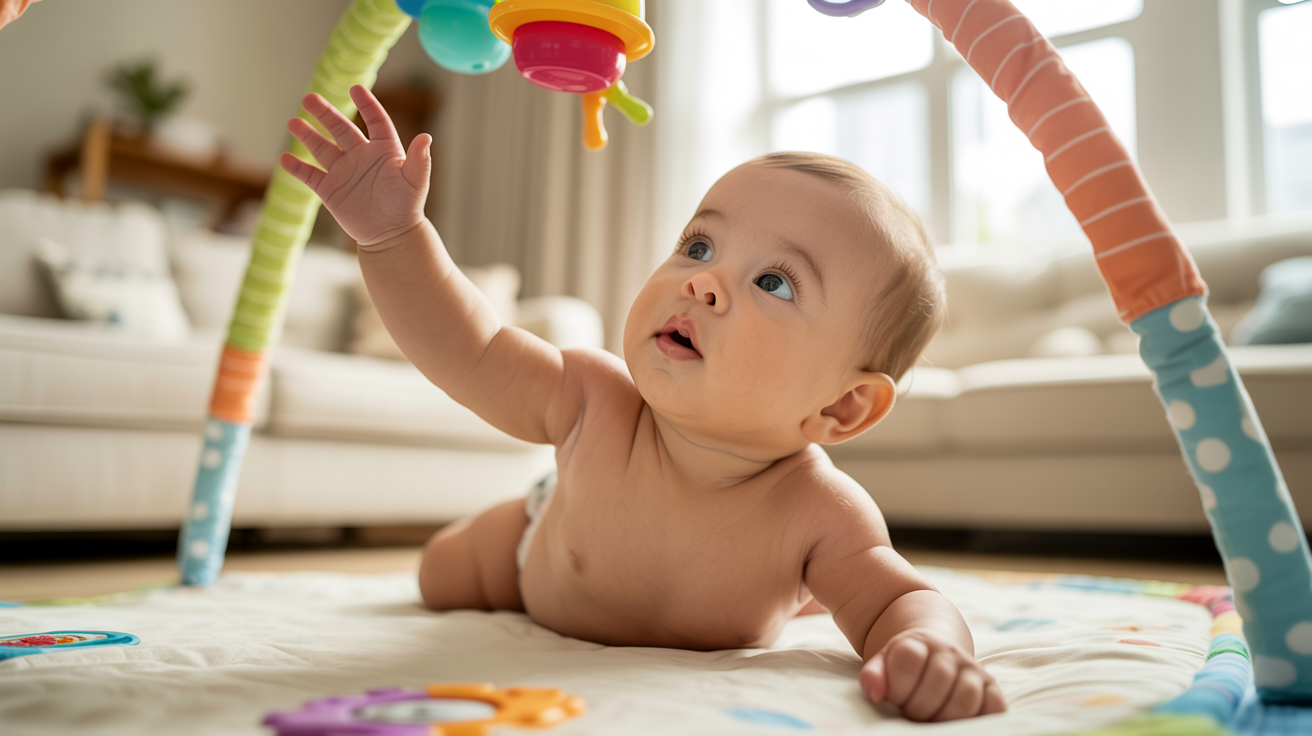
Most babies begin reaching between 3 and 4 months. The skill builds gradually. It starts as random arm waving and becomes more controlled over the following weeks.
By 5 to 6 months, most babies can grab objects with purpose. By 6 months and beyond, many can pass objects between hands and hold on with a firm grip.
Here’s a quick overview of what to expect at each stage:
|
Age |
Reaching Milestone |
|
0–2 months |
Reflex arm movements only |
|
3–4 months |
Swiping at toys and objects |
|
5–6 months |
Intentional grabbing |
|
6–9 months |
Passing objects between hands |
|
8–10 months |
Early pincer grasp develops |
Every baby develops at their own pace. The guide below gives you a realistic month-by-month picture.
Baby Reaching Milestones by Age (Month-by-Month Guide)
Here’s what to expect from the first weeks through the first half of your baby’s first year.
0–2 Months — Reflex Movements Only

At this stage, arm movements are driven by newborn reflexes, not intention. The hands are mostly closed in fists. The brain is still learning how to send signals to the body.
You won’t see purposeful reaching here, and that’s completely normal. A lot of important neurological groundwork is being laid during these early weeks.
3–4 Months — First Attempts at Reaching

This is when things start to shift. Your baby will begin swiping at objects placed in front of them. Most attempts will miss at first. The eyes and hands are just beginning to work together.
You might notice your baby batting at toys on a play gym or swatting at objects you hold up. These are early but meaningful signs that reaching is developing. The American Academy of Pediatrics includes early reaching and grasping as key fine motor milestones during this period.
5–6 Months — Purposeful Reaching and Grabbing

By now, reaching becomes more accurate. Your baby can grab objects and hold on. They’ll bring items to their mouth right away, which is a normal part of sensory exploration at this age.
Babies at this stage love grabbing fingers, toys, and anything colorful within their line of sight. Tummy time starts to pay off noticeably here, as stronger arms support better reaching movements.
6+ Months — Coordinated Grabbing and Passing

After 6 months, reaching becomes much more controlled. Babies can pass objects from one hand to the other and reach for things while sitting with support.
Around 8 to 10 months, a pincer grip begins to form, where babies pick up small items using two fingers. The CDC’s developmental milestone checklist notes that passing objects between hands is a key marker to watch for around 6 to 9 months.
Pediatricians often use milestone checklists from the Centers for Disease Control and Prevention and the American Academy of Pediatrics to track infant motor development across all these stages. It’s worth remembering that developmental milestones are meant to guide observation, not diagnose delays on their own.
Signs Your Baby Is About to Start Reaching
Before reaching begins, you’ll usually notice a few early signals.
Your baby will start staring at their own hands with focus. They’ll wave their arms more frequently and follow moving objects with their eyes.
You may also see a slight lean toward objects they want. That body lean is the brain’s signal before the hands have learned how to follow through.
Is My Baby Behind? (What’s Normal vs Not)
This is one of the most common concerns parents bring up. The honest answer is that the normal range is wide.
Some babies reach at 3 months. Others don’t start until closer to 5 months. Both can be completely typical.
If your baby is making eye contact, showing curiosity, and responding to faces, development is likely progressing well even if reaching hasn’t started yet.
A few factors can slow the timeline. Premature birth is an important one. Babies born early may reach milestones later based on their adjusted age rather than their birth date.
A baby born 6 weeks early may reach this milestone 6 weeks later than a full-term baby, and that’s expected.
Pediatric occupational therapists recommend using adjusted age when tracking milestones for preterm infants.
Limited tummy time and extended time in bouncers or rockers can also reduce the opportunity to practice arm movements.
When Should You Be Concerned?
Speak with your pediatrician if, by 6 months, your baby shows none of the following:
- No swiping or reaching toward objects
- No interest in items placed in front of them
- Hands consistently clenched with no opening
- No following of moving objects with their eyes
These signs don’t automatically indicate a problem, but early evaluation can make a meaningful difference. The sooner any delays are identified, the sooner targeted support can begin.
Why Reaching Is an Important Developmental Milestone
Reaching is about far more than picking up toys. It strengthens the muscles in the arms and shoulders. It also creates new neural connections in the brain that support learning and problem-solving.
When a baby reaches for an object, they’re practicing cause and effect. They’re learning that movement produces results.
Pediatric research shows that these early motor experiences directly influence later skills like self-feeding, crawling, and the muscle control needed for writing and drawing.
How to Encourage Your Baby to Reach and Grab
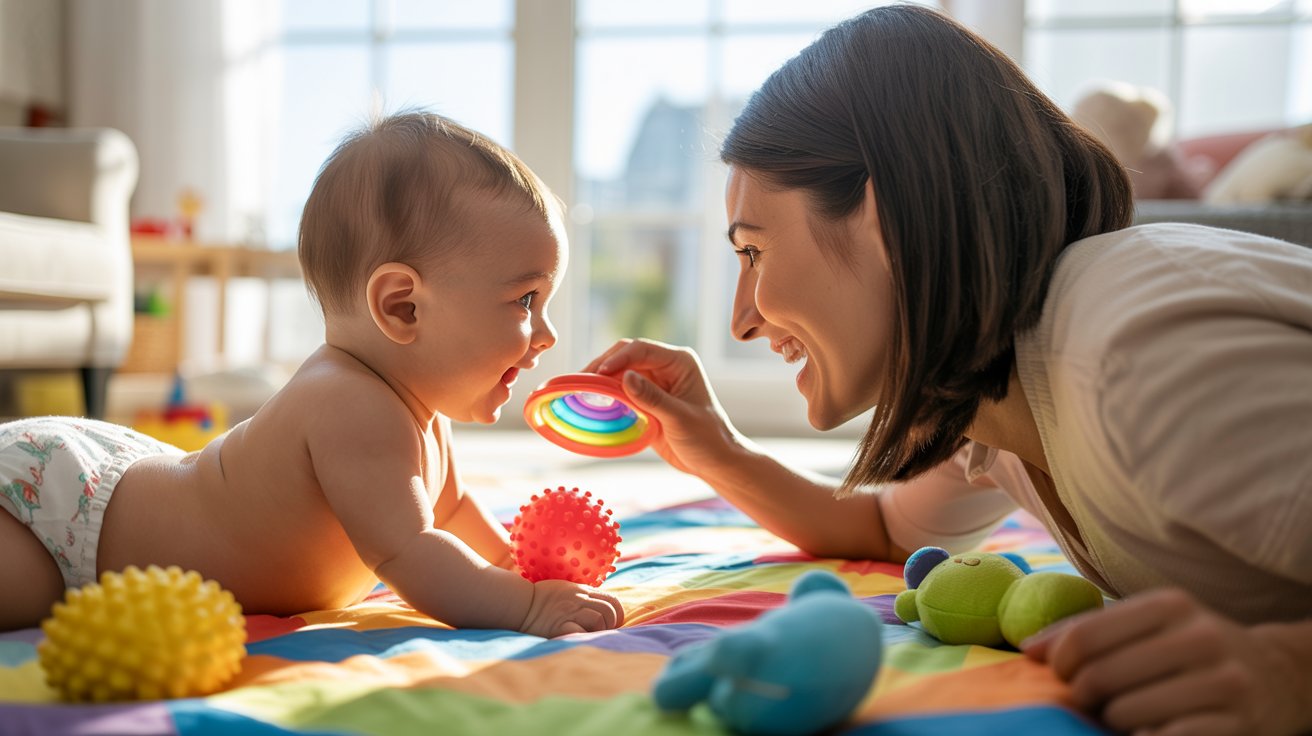
Small, consistent efforts during playtime can support your baby’s reaching development at every stage.
Use High-Contrast and Colorful Toys
Young babies see contrast before they see color. Black and white patterns catch their attention earliest. After 3 months, bright primary colors become more effective.
Hold a toy slowly in front of your baby and let their eyes focus on it. Then move it gently to one side. Tracking a moving object helps strengthen the connection between vision and movement.
Position Toys Within Reach (But Not Too Easy)
Place toys just slightly beyond your baby’s grasp. Not so far that they give up, but far enough that a genuine effort is needed. This small challenge builds persistence and teaches babies that effort leads to results.
Does Tummy Time Help Babies Reach Earlier?
Yes, and more than most parents expect. Tummy time frees the arms and hands for active movement. When babies push up on their tummy, they naturally begin reaching forward.
Even 5 minutes several times a day adds up quickly over weeks. Most babies begin showing early reaching movements during tummy time around the 3 to 4 month mark, right around the same time you’ll notice the first intentional swipes when they’re on their back.
Play Face-to-Face Interaction Games
Your face is one of the most appealing things your baby can look at. Get close and let your baby reach toward your nose, chin, or cheeks. This builds the reaching skill in a warm, connected way and supports emotional bonding at the same time.
Rotate Toys to Keep Interest High
Babies lose interest in familiar objects quickly. Bringing back a toy after a week away makes it feel new again. A small rotation keeps visual curiosity active and gives babies a reason to keep reaching.
Common Mistakes Parents Make
One of the most frequent mistakes is placing toys directly into the baby’s hand every time. That skips the reaching practice entirely, which is the part that actually builds the skill.
Another common pattern is keeping babies in bouncers or swings for extended stretches. These limit arm movement and reduce floor time, where most reaching practice happens naturally. Babies need time on a flat surface with objects nearby to work toward.
Some parents also tie too much anxiety to exact milestone dates. Watching for the direction of progress matters more than hitting a specific week on the calendar.
Real Parent Experiences (What Other Babies Do)
Pediatricians often see healthy babies reach anywhere between 3 and 5 months.
Parents frequently notice sudden progress after several weeks of failed attempts, especially once shoulder and neck strength improve from consistent tummy time.
One mother told me her daughter showed no real reaching until almost 5 months, then caught up quickly within a few weeks.
A father shared that his son was grabbing at everything by 3.5 months and was hard to keep still during diaper changes.
Pediatric occupational therapists point out that babies often build arm strength and visual focus quietly for weeks before a visible reach appears.
Progress is happening even when you can’t see it yet.
Conclusion
Understanding when babies start reaching for things can help parents feel more confident about infant development. Most babies start between 3 and 4 months, though some develop this skill a little earlier or later. Early reaching looks like swiping motions, and accurate grabbing usually follows by 5 to 6 months.
Consistent tummy time, face-to-face play, and placing objects just within reach all help strengthen fine motor development over time.
If your baby was born prematurely, track milestones using their adjusted age.
If you’re not seeing any reaching attempts by 6 months, bring it up with your pediatrician. Developmental milestones are meant to guide observation, not create alarm. You know your baby best. Trust that instinct.
What reaching milestone surprised you most with your baby?
Frequently Asked Questions
When do babies start reaching for things on their own?
Most babies begin intentional reaching between 3 and 4 months. Accurate grabbing typically develops between 5 and 6 months as the connection between vision and movement strengthens with practice.
My baby was born premature. When should reaching start?
Premature babies should be tracked using their adjusted age rather than birth date. A baby born 8 weeks early may reach this milestone 8 weeks later than a full-term baby, which is completely expected.
Why does my baby bring everything to their mouth after grabbing it?
Mouthing objects is a normal part of sensory exploration at this age. Babies learn about texture, shape, and temperature through their mouths. Make sure any reachable objects are safe and sized appropriately.
Is it a concern if my baby only reaches with one hand?
A mild preference for one hand in early infancy is common. If one hand seems completely unused, stiff, or clenched most of the time by 6 months, mention it to your pediatrician for evaluation.
How much tummy time supports reaching development?
Pediatric guidance generally recommends working up to 30 minutes of tummy time per day by 3 months, spread across several short sessions. This builds the arm strength and body awareness that directly supports reaching.