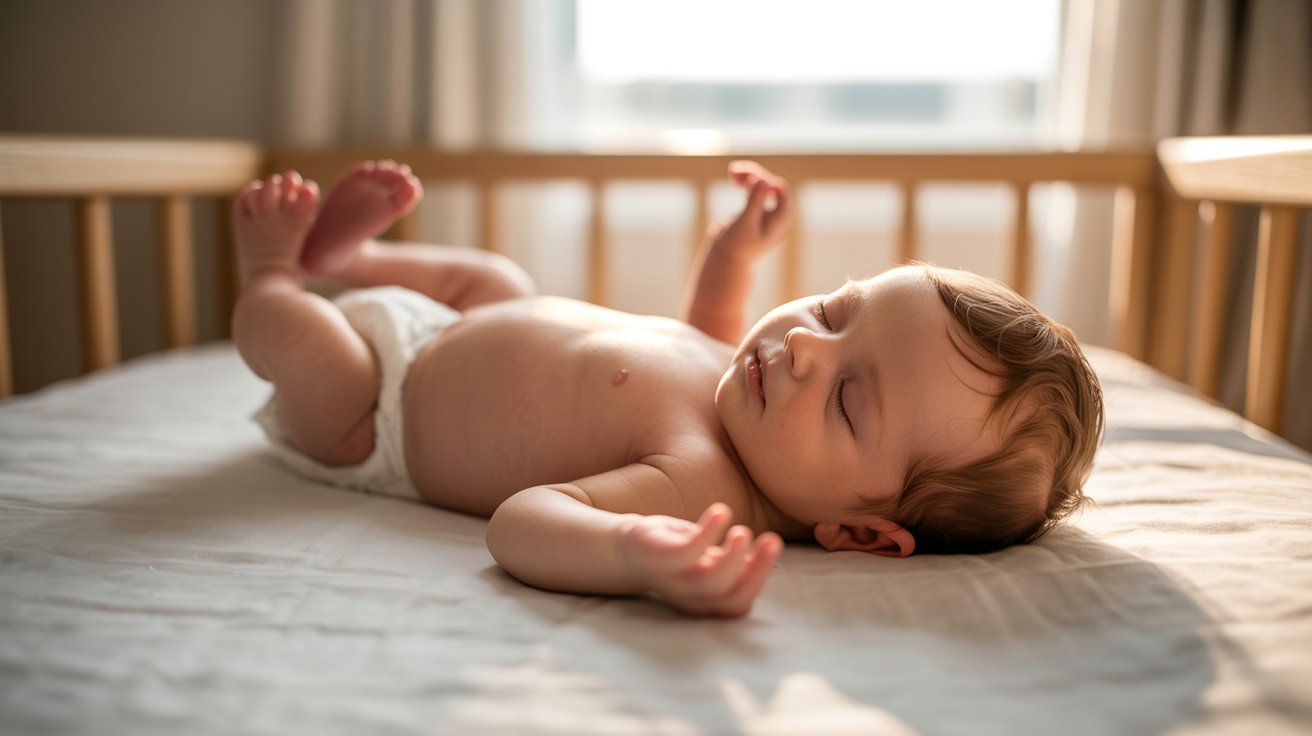
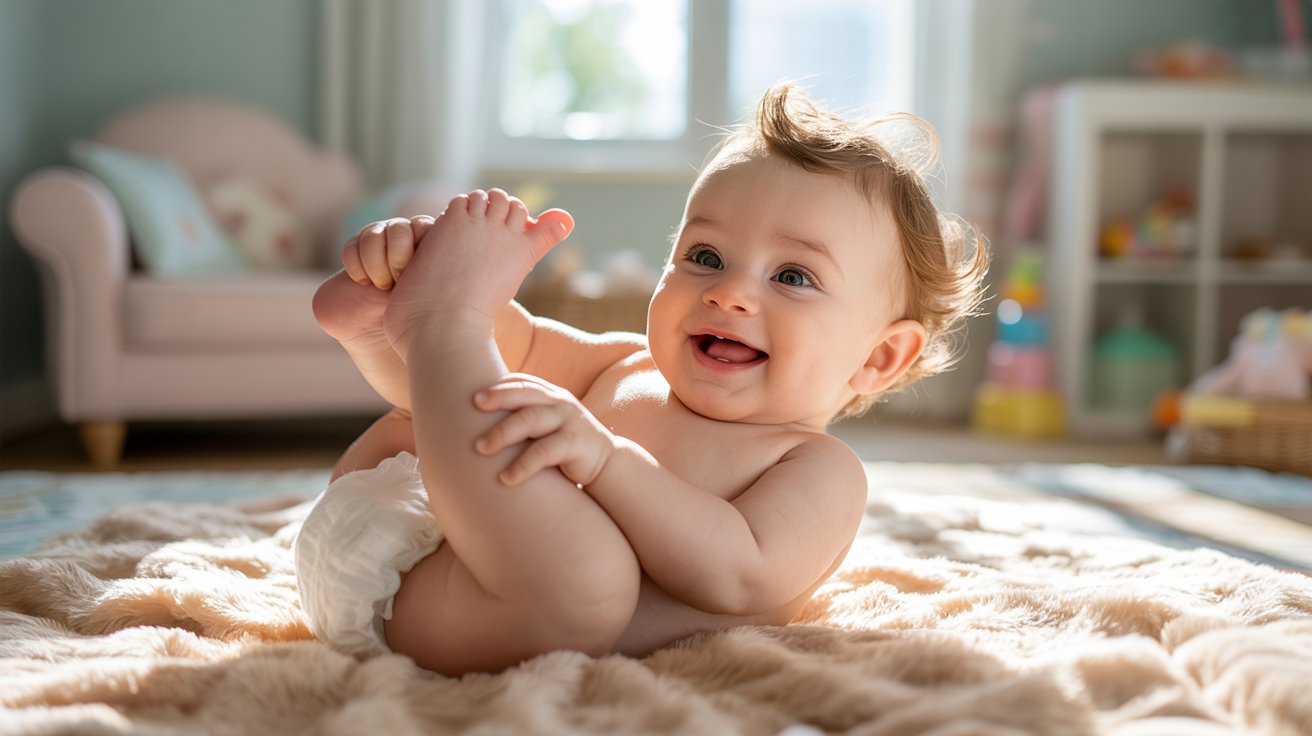
One day your baby is just lying there, kicking around and staring at the ceiling. The next, they are grabbing their feet like they just made the greatest discovery of their life. And honestly? They kind of did.
I remember seeing this for the first time and thinking it was just one of those cute baby things. Turns out, there is a lot more happening in that little moment than it looks.
Most babies get there between 4 and 6 months. When they do, it means their core is getting stronger, their coordination is coming together, and their brain is making new connections every single day.
When Do Babies Start Grabbing Their Feet?
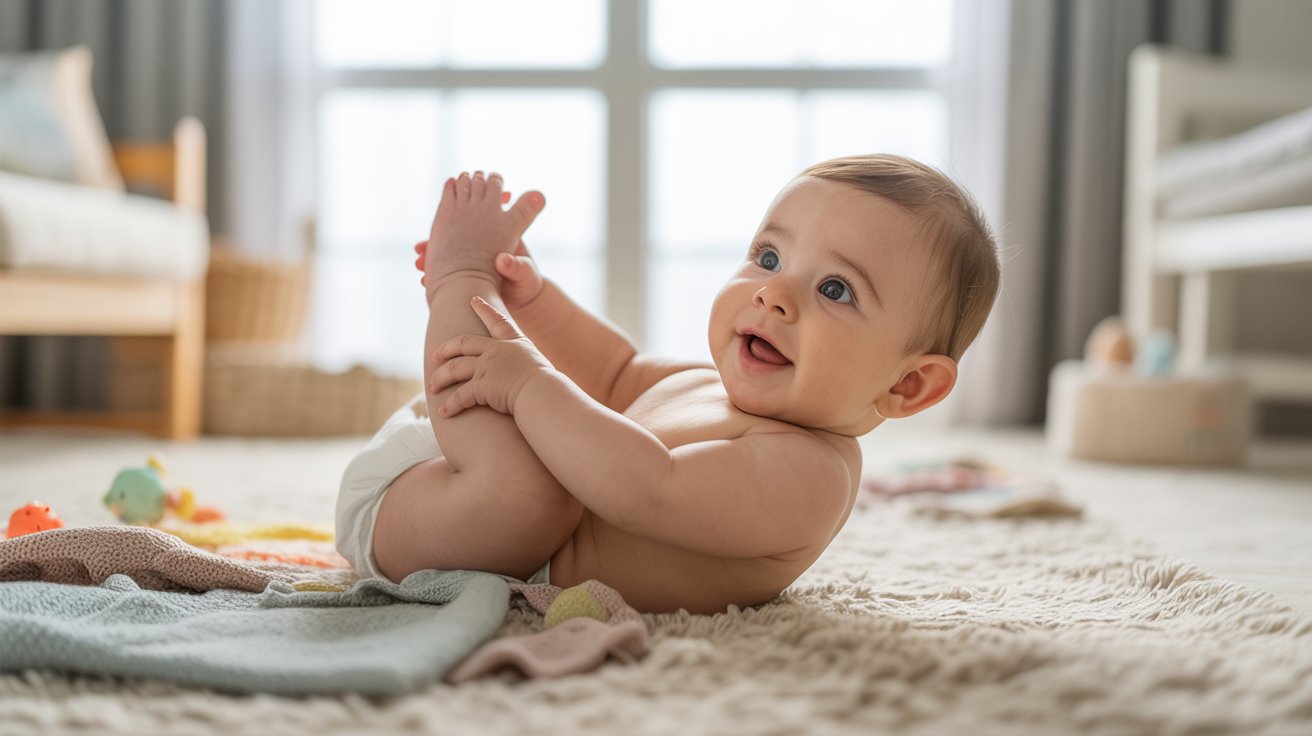
Most babies start grabbing their feet somewhere between 4 and 6 months. Some get there a little earlier, some a bit later. Both are completely normal.
Every baby develops at their own pace. Things like muscle strength, tummy time practice, and overall motor development all play a role in the timing.
Before babies grab their feet, you will usually notice some signs. They start kicking their legs a lot, bring their hands toward the center of their body, and get better at holding their head steady. These are all good signs things are moving along.
Why Babies Grab Their Feet
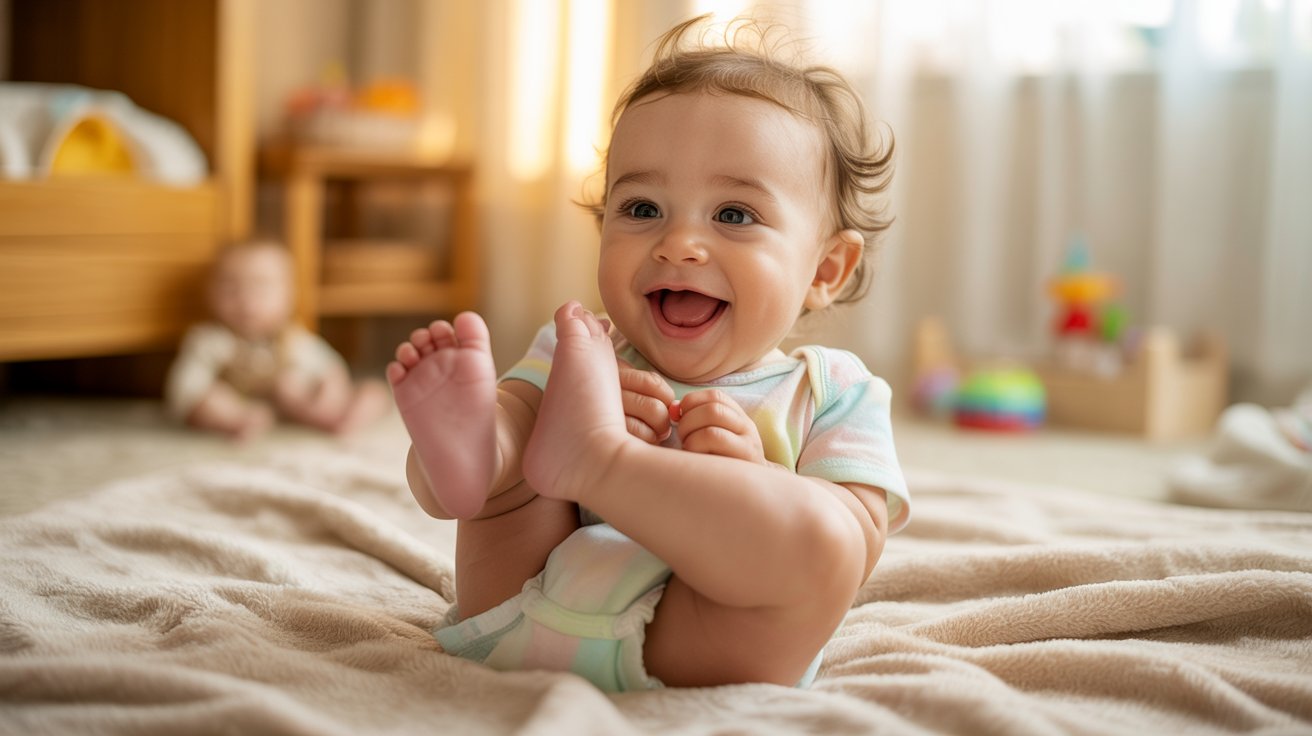
Most babies start grabbing their feet around 4 to 6 months, and it is more than just a cute moment. It is actually a sign that their body and brain are developing right on track.
Building Core Strength
When babies lift their legs up to grab their feet, they are actually working their core muscles. All that leg lifting and holding strengthens the abdominal area more than you might expect. It also gets their body ready for bigger milestones like rolling over and sitting up on their own.
Developing Hand-Eye Coordination
Reaching for their feet teaches babies how to aim their hands accurately. They are learning to connect what they see with what they do. This builds body awareness and helps their coordination improve week by week.
Exploring Their Body and Senses
Babies learn through touch, and their feet are just another thing to feel and figure out. That is exactly why so many babies end up putting their feet straight in their mouth.
It is not random. They are taking in texture, pressure, and movement all at once, which is a big part of how they make sense of the world around them.
What Milestones Come After Foot-Grabbing?

Foot-grabbing is just the beginning as it sets the stage for some of the biggest physical milestones in your baby’s first year.
Rolling Over
Grabbing their feet helps babies shift their weight from side to side. That rocking motion is actually what builds up to rolling over. Most babies start rolling sometime between 4 and 6 months, right around the same time they find their feet.
Sitting Up
All that leg lifting and core engagement does a lot for trunk strength. As those muscles get stronger, babies start developing the balance they need to sit up on their own. Independent sitting usually follows a few weeks or months after foot-grabbing kicks in.
Crawling Preparation
Foot-grabbing also works the arms, shoulders, and core without babies even knowing it. The strength they build during this stage feeds directly into early movement patterns. Those same muscles are exactly what they will need once crawling starts to come together.
How to Encourage Your Baby to Grab Their Feet
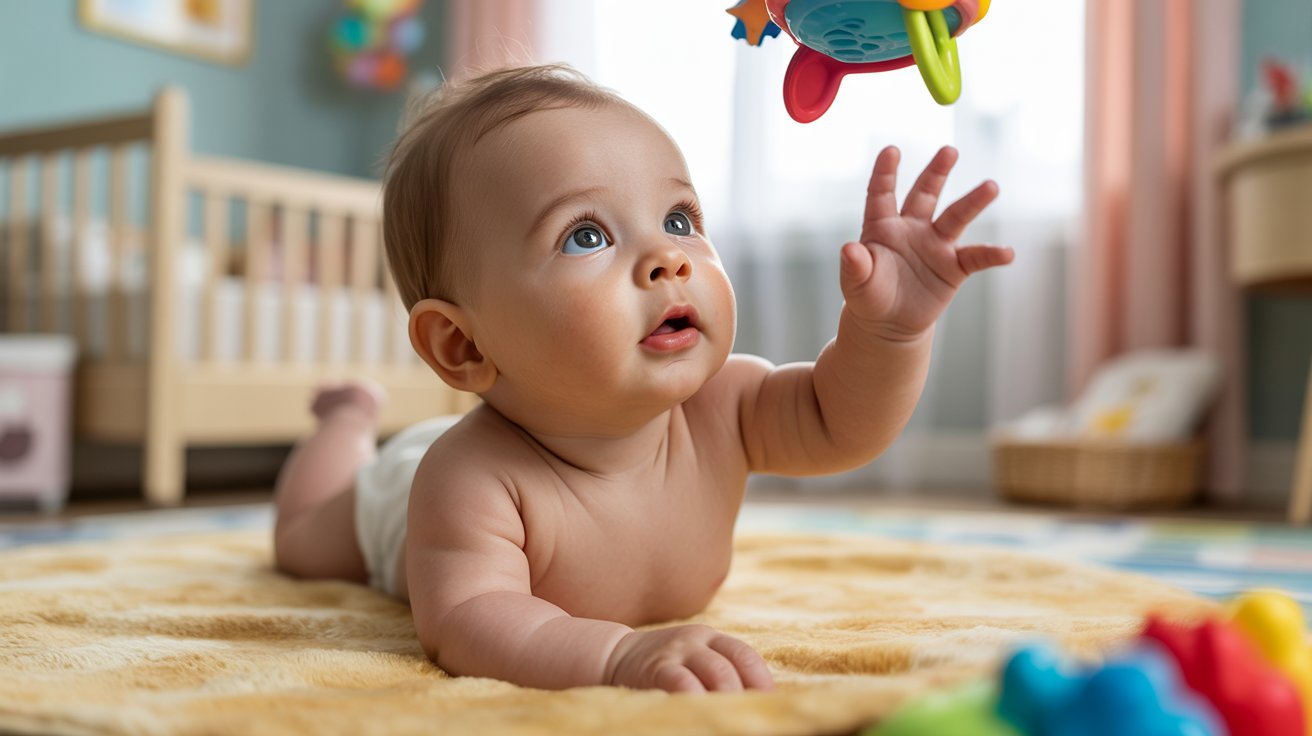
Give your baby plenty of floor time on a soft, safe surface. It gives them the space to kick, reach, and move freely, which is key for motor development.
Tummy time every day builds the neck, shoulder, and core strength babies need to reach those feet.
Rattle socks and soft toys placed near their feet encourage kicking and reaching without any pressure.
Also, keep clothing loose and let your baby go barefoot when possible. Tight outfits and socks can limit movement and get in the way of natural exploration.
Is It Normal If My Baby Is Not Grabbing Their Feet Yet?
Every baby moves at their own pace. Timing can vary based on things like birth weight, how much floor time they get, and overall muscle development.
That said, there are a few things worth watching. If your baby shows no interest in their feet by 7 months, consistently favors one side of the body, or seems to have limited movement and coordination, it is worth paying attention.
In those cases, talk to your pediatrician. Catching anything early always makes a difference.
Conclusion
Watching your baby grab their feet for the first time is one of those small moments that actually means a lot. It tells you their body and brain are doing exactly what they should.
Most babies get there between 4 and 6 months. Keep up with tummy time, give them room to move, and let them play freely.
If you found this helpful, share it with a new parent who needs it. And if you have concerns, always talk to your pediatrician.
Frequently Asked Questions
At what age do babies usually start grabbing their feet?
Most babies start grabbing their feet between 4 and 6 months. Some may do it a little earlier or later, and both are completely normal.
Is foot-grabbing a developmental milestone?
Yes, it is. Foot-grabbing shows that your baby is building core strength, coordination, and body awareness all at the same time.
What if my baby is not grabbing their feet at 6 months?
Not every baby hits milestones at the exact same time. If there is still no interest by 7 months, it is worth mentioning to your pediatrician.
Can I do anything to help my baby grab their feet?
Yes. Daily tummy time, floor play, and loose comfortable clothing all give your baby the strength and freedom to reach their feet naturally.
Why do babies put their feet in their mouth?
It is a normal part of sensory learning. Babies use their mouth to feel and understand things, and their feet are just another thing to figure out.