

Babies should not sleep with blankets before 12 months old. Loose bedding can create serious sleep risks for infants, including suffocation and SIDS.
The American Academy of Pediatrics is clear: the crib stays clear for the full first year. Nothing goes in except a firm mattress and a fitted sheet.
I have spent those same anxious nights checking the baby monitor and second-guessing the whole setup.
So I put this guide together using pediatric guidelines and real parent experience.
In this guide, I will walk through when blankets become safe, what pediatricians recommend, and how to keep your baby warm without increasing sleep risks.
Why Blankets Are Unsafe for Babies Under 1 Year
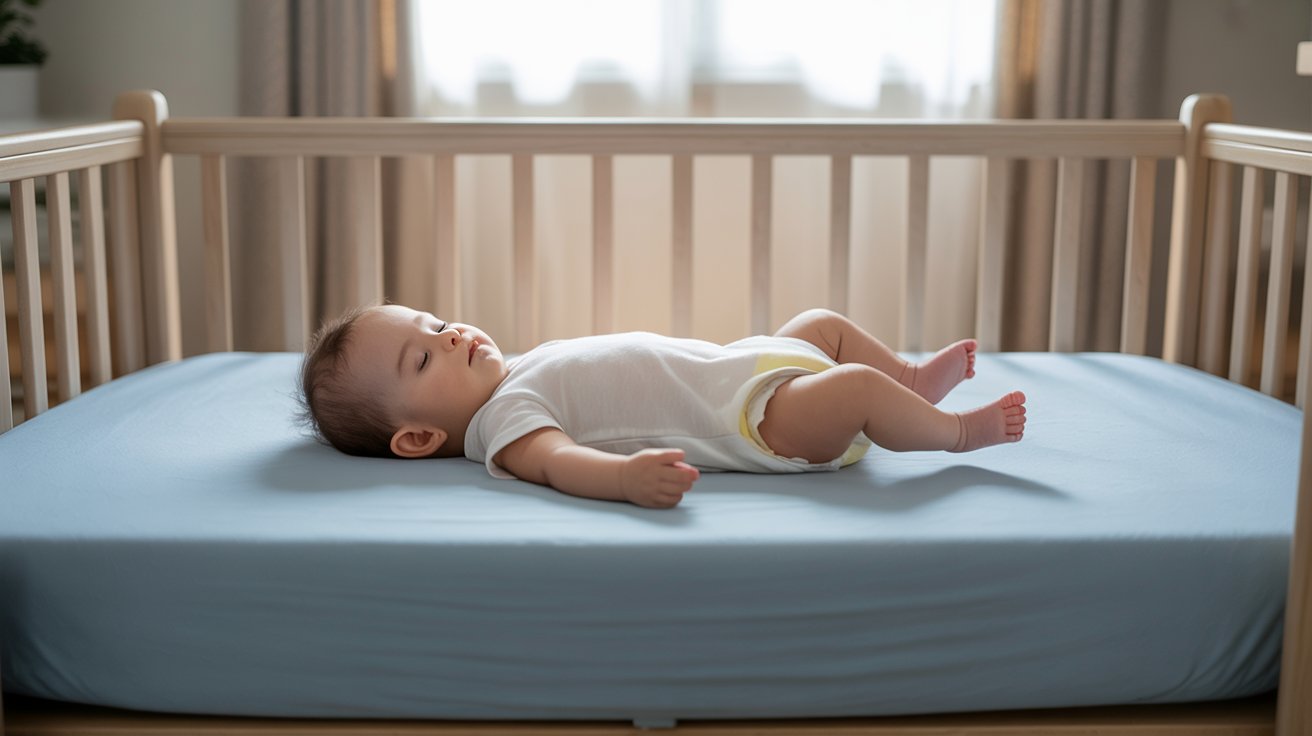
Young babies cannot reliably reposition themselves during sleep.
If loose bedding shifts near their face, they do not yet have the strength or coordination to move it away. That is the core problem.
The AAP recommends keeping the crib completely clear during the first 12 months. No blankets, no pillows, no stuffed animals.
Many pediatricians describe an empty crib as the safest crib during the first year, and that idea is worth holding onto every time you feel tempted to add something soft.
The CDC reports that around 3,500 infants in the US die each year from sleep-related causes. Many are linked to unsafe sleep environments.
Overheating is a separate concern. Research from the NIH connects elevated body temperature during sleep to a higher SIDS risk.
A flushed face or sweaty neck means your baby is too warm, and heavy bedding can cause that faster than parents expect.
Knowing this shifted how I thought about the crib entirely. Simpler really is safer.
What Age Can Babies Sleep With Blankets Safely?
The AAP recommends waiting until at least 12 months. Most pediatricians follow the same guideline.
By around this age, babies have developed stronger neck and core muscles. Most can roll in both directions on their own. Those physical changes matter because a child who can reposition themselves is at much lower risk if breathable bedding shifts during sleep.
Some parents choose to wait until 18 months, and that is a sound choice. There is no rush. If your baby is warm and sleeping well, holding off a little longer carries no downside.
When you do introduce one, start with a small, lightweight blanket tucked below the shoulders. This is not the time for thick quilts or heavy layers.
Signs Your Baby Might Be Ready for a Blanket
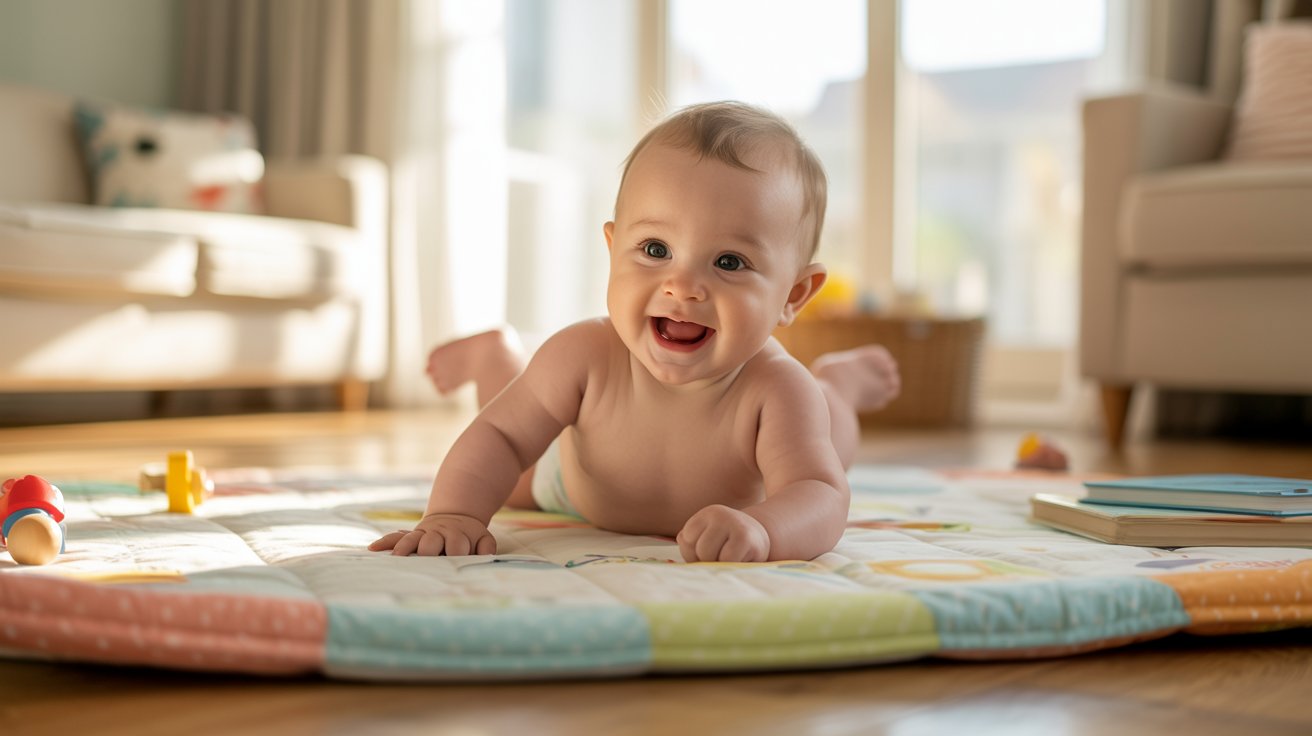
Age is part of the picture. Physical development fills in the rest.
Can your baby roll from back to front and back again without help? Do they move their head freely while lying flat? Do they stay mostly in one position through the night?
If you can say yes to those and your baby has reached 12 months, lightweight infant bedding may be a reasonable next step.
Active sleepers are a different case. Young children who shift around a lot may accidentally pull loose bedding near their face during sleep.
Many toddlers become less restless as they get older, so if your baby is still moving unpredictably at night, waiting another month or two is the right call.
Your pediatrician can help confirm whether your baby's development aligns with the transition. Their input matters more than any general timeline.
What Type of Blanket Is Safest for Babies?
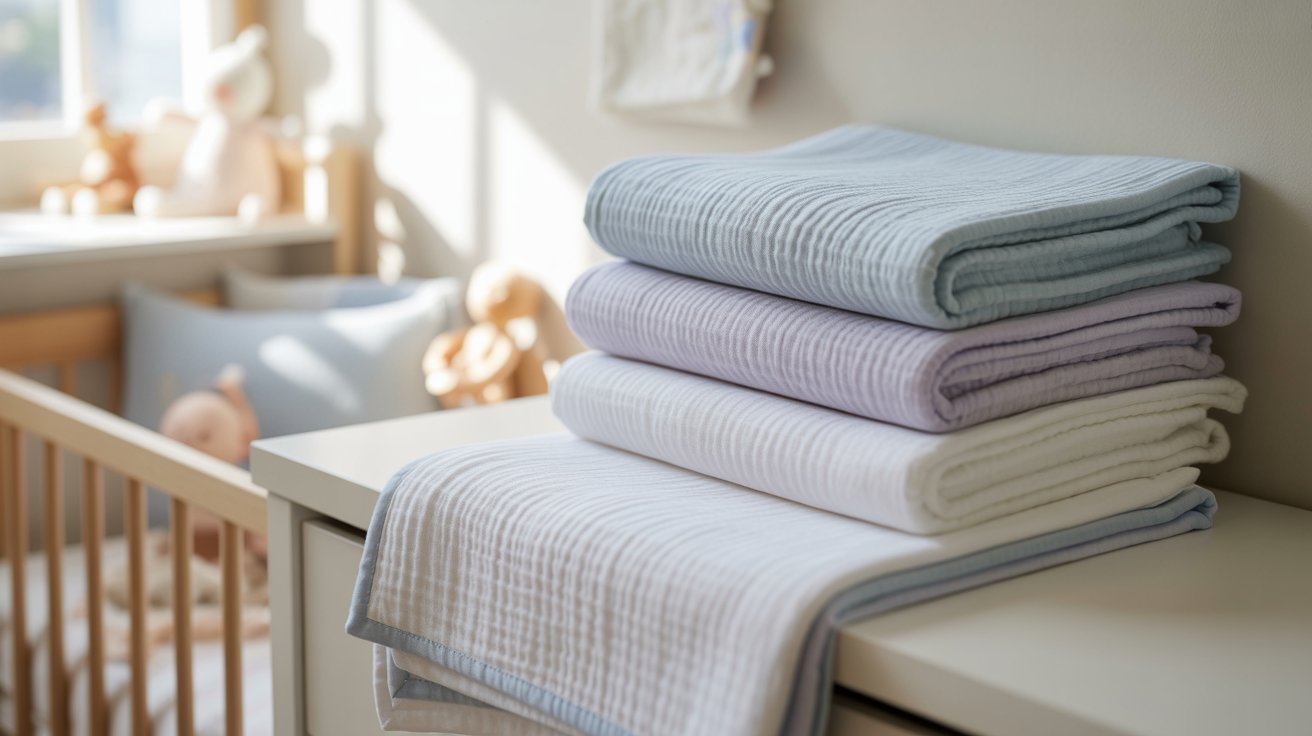
I remember standing in the baby section feeling completely overwhelmed by options. Here is what actually matters when you are choosing.
Go with a small, breathable blanket. Muslin cotton is a solid pick because it allows airflow and does not trap heat. A thin fleece works fine for cooler nights. Both are practical and widely used.
Avoid quilts, chunky knits, and anything with decorative edges, loose threads, or buttons. These can bunch up during sleep in ways that create unnecessary risk.
Skip weighted blankets entirely for young children. Young children may not be able to reposition themselves freely under the added weight, which is why pediatric experts recommend avoiding them for children under five. That applies to toddlers, not just infants.
Smaller is better as a starting point. A blanket that only reaches your baby's waist covers less area and is far less likely to cause issues overnight.
Safer Alternatives to Blankets for Babies
For the first 12 months, wearable blankets are the top recommendation across infant sleep safety guidelines.
Sleep sacks zip around the body and stay in place through the night. Because they stay zipped in place, they remove the risk of loose fabric moving near your baby's face.
I used one every night for the first year and it genuinely made those late-night check-ins less stressful.
TOG ratings tell you how warm a sleep sack is. For warmer rooms above 75 degrees Fahrenheit, a lightweight 0.5 TOG is usually enough.
A 1.0 TOG suits most average-temperature rooms between 69 and 73 degrees. For cooler rooms around 61 to 68 degrees, a 2.5 TOG keeps your baby comfortable through the night.
Match the TOG to your room, then dress your baby appropriately underneath. That combination handles warmth without any loose fabric in the crib.
Swaddles work well for newborns. Once your baby starts showing signs of rolling, stop using one. A swaddled baby who rolls onto their side cannot use their arms to push back, which creates a different kind of risk.
Footed pajamas and cotton sleepers are simple, safe, and reliable for every stage of the first year.
How to Keep Your Baby Warm Without a Blanket
Room temperature plays a bigger role than most parents realize. Aim for between 68 and 72 degrees Fahrenheit and use a room thermometer to confirm it. Your own sense of the room at night is not always accurate.
A practical rule is to dress your baby in one more layer than what you are wearing in the same room. If you are in a t-shirt, your baby probably needs a light cotton sleeper.
Here is something that surprised me when my pediatrician mentioned it. Cool hands on a baby are actually normal and not a reliable sign that they are cold. Check the back of the neck or the chest instead. Warm and dry there means your baby is comfortable.
Watch for signs of overheating too. Flushed skin, a sweaty neck, or faster-than-normal breathing are signals to remove a layer.
Common Mistakes Parents Make With Baby Blankets
The most common one is introducing loose bedding before 12 months. A few weeks early can feel harmless, but the infant sleep guidelines exist for a reason. The risk does not disappear based on proximity to the birthday.
Using heavy or oversized blankets after 12 months is another frequent mistake. Bigger is not warmer or safer in a crib context. Lightweight breathable bedding is still the right approach for early toddler sleep.
Leaving stuffed animals, pillows, or bumper pads in the crib alongside the blanket compounds the risk. A clear sleep environment is the baseline goal, even after 12 months.
Trusting your own sense of the room temperature without checking is also something to avoid. Babies regulate body temperature differently than adults, and small shifts in room conditions affect them more noticeably.
When Can Toddlers Safely Use Blankets?
Between 12 and 18 months, a small lightweight blanket is generally reasonable if your child is rolling confidently and sleeping without too much movement at night.
By age two, most toddlers handle standard toddler bedding without any concern. At this stage, a firm, flat toddler pillow is also okay to introduce. It should be designed for young children. Adult pillows are too thick and soft for this age group.
Weighted blankets stay off the list for now. Pediatric sleep experts often repeat the phrase "bare is best" when talking about infant sleep spaces, and that caution carries into early toddler years for weighted products specifically.
Let your child's preferences guide some of this. Some toddlers love having a blanket. Others sleep just as well without one.
Pediatrician-Approved Safe Sleep Guidelines
A simple crib safety checklist based on AAP infant sleep guidelines:
Always place your baby on their back for every nap and every nighttime sleep.
Use a firm, flat mattress with a properly fitted sheet. Nothing soft underneath the baby.
Keep the crib completely clear of loose items before 12 months. That means no blankets, pillows, stuffed animals, or bumper pads.
Room-share but do not bed-share on a soft surface. Having your baby's crib near your bed for the first six months lowers SIDS risk.
Use a TOG-rated wearable blanket and appropriate sleepwear matched to the room temperature instead of loose bedding.
After 12 months, introduce lightweight breathable bedding gradually when your baby is developmentally ready.
Conclusion
Blankets should stay out of your baby's crib until at least 12 months old.
Until then, a well-rated wearable blanket, appropriate sleepwear, and a clear safe sleep environment do everything a blanket would without the risks that come with loose bedding.
After 12 months, start small, keep it lightweight, and check in with your pediatrician if you feel unsure about your baby's readiness.
Infant sleep safety comes down to consistent choices made every single night.
The first year moves faster than you expect, and the setup you choose matters more than it may seem in the moment.
Following these guidelines through the first year is one of the most practical things you can do for your baby's wellbeing.
Frequently Asked Questions
Can I use a blanket during supervised naps?
Supervised naps carry lower risk than overnight sleep, but loose bedding near a young infant is still not recommended. A wearable blanket is the safer option even during the day.
What TOG rating should I start with?
A 1.0 TOG works well for most average-temperature rooms. If your home runs cooler overnight, a 2.5 TOG is a better fit. Start by checking your actual room temperature rather than guessing.
Are weighted blankets safe for toddlers?
Pediatric experts recommend keeping weighted blankets away from children under five. Young children may not move freely under added weight during sleep, which makes them unsuitable for a crib or toddler bed.
My baby's hands feel cold at night. Should I add a layer?
Cool hands are normal for babies and not a reliable indicator of body temperature. Check the back of the neck or chest instead. Warm and dry there means your baby is comfortable.
When is the right time for a toddler pillow?
Most pediatricians suggest waiting until around age two to introduce a firm, flat toddler pillow. Adult pillows should be avoided until your child moves to a regular bed.