

If you’ve looked over at your sleeping baby and seen those tiny arms raised straight up, you’ve probably had questions.
I know that feeling well. It looks strange, especially in the first few weeks.
So why do babies sleep with their arms up? Is it safe? Should you be worried?
In this blog, I’ll cover 7 real reasons behind this position, what pediatric experts say, swaddling tips, safe sleep guidelines, and when to call your doctor.
You’ll leave with clear, honest answers you can actually use.
What Is the “Arms Up” Baby Sleeping Position?

This is when a baby sleeps on their back with both arms raised beside their head.
Some parents call it the starfish position. Others say it looks like a tiny surrender pose.
You’ll most often see it in newborns and babies under six months. Some babies naturally sleep this way from birth.
Most of the time, it happens without any effort from your baby at all.
Why Do Babies Sleep With Their Arms Up? (7 Real Reasons)
There’s usually more than one thing going on. Here’s what may be behind it.
1. The Moro (Startle) Reflex
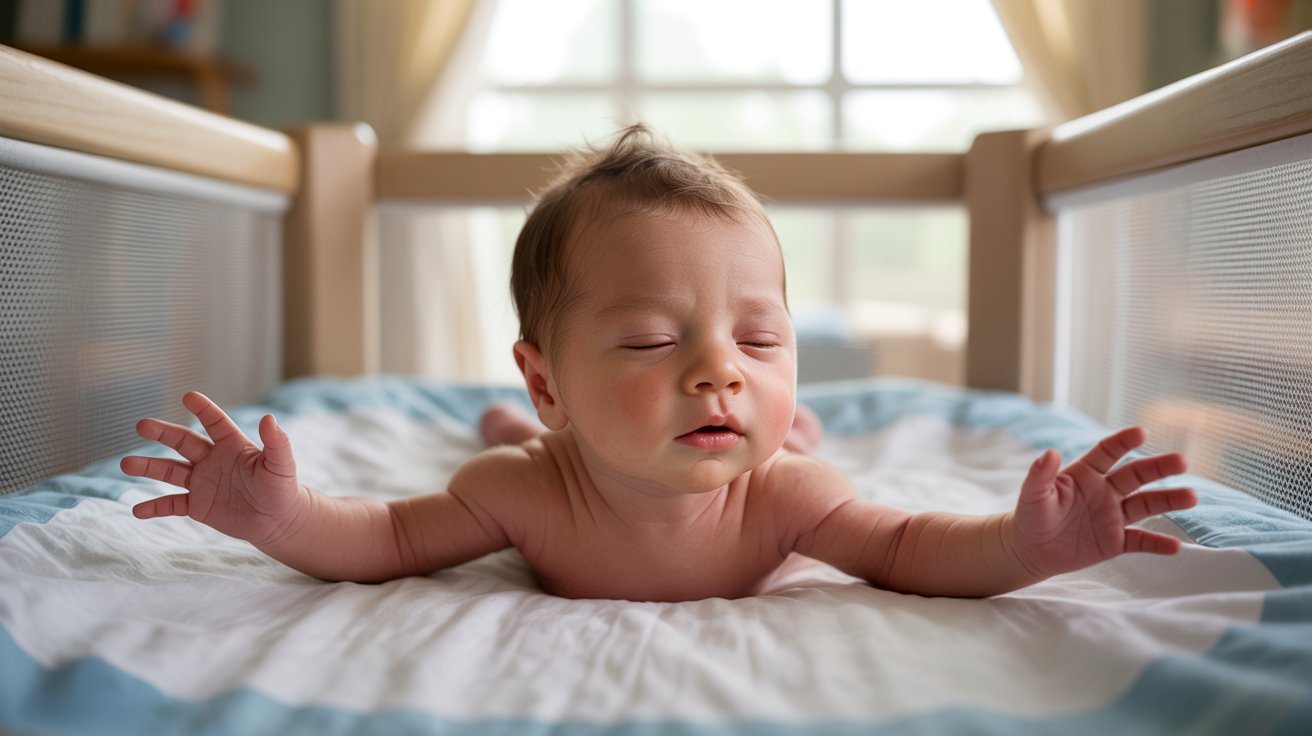
This is likely the most common cause. The Moro reflex is a built-in startle response that babies are born with. When a baby senses sudden movement or hears a loud noise, their arms often shoot outward automatically.
This reflex can activate during sleep too. It’s a normal part of early neurological function and typically fades between 3 to 6 months.
2. Womb Position Memory

Inside the womb, babies are tucked in tight. Their arms tend to stay bent and raised near their face.
After birth, that familiar position can feel natural and calming. The arms-up pose may be their body holding onto what felt safe before.
3. Self-Soothing Mechanism

Some babies commonly raise their arms as a way to settle during sleep. It may help them feel more at ease in lighter sleep stages.
Think of it as a comfort habit. Not every baby does this, but for those who do, it often supports calmer, longer sleep.
4. It Often Just Feels Comfortable

Babies shift positions naturally during sleep as their bodies adjust. Many babies appear more relaxed with their arms raised, especially in lighter sleep phases.
There’s no clear scientific proof that babies choose this position for any specific physical reason. In most cases, it’s simply the position their body settles into.
5. Babies Move Naturally During Sleep

Babies frequently change positions and move their arms during lighter stages of sleep. Sleeping with arms raised may be part of those normal sleep movements.
Pediatricians commonly observe this in young infants and generally consider it a typical part of early sleep behavior.
6. Nervous System Development
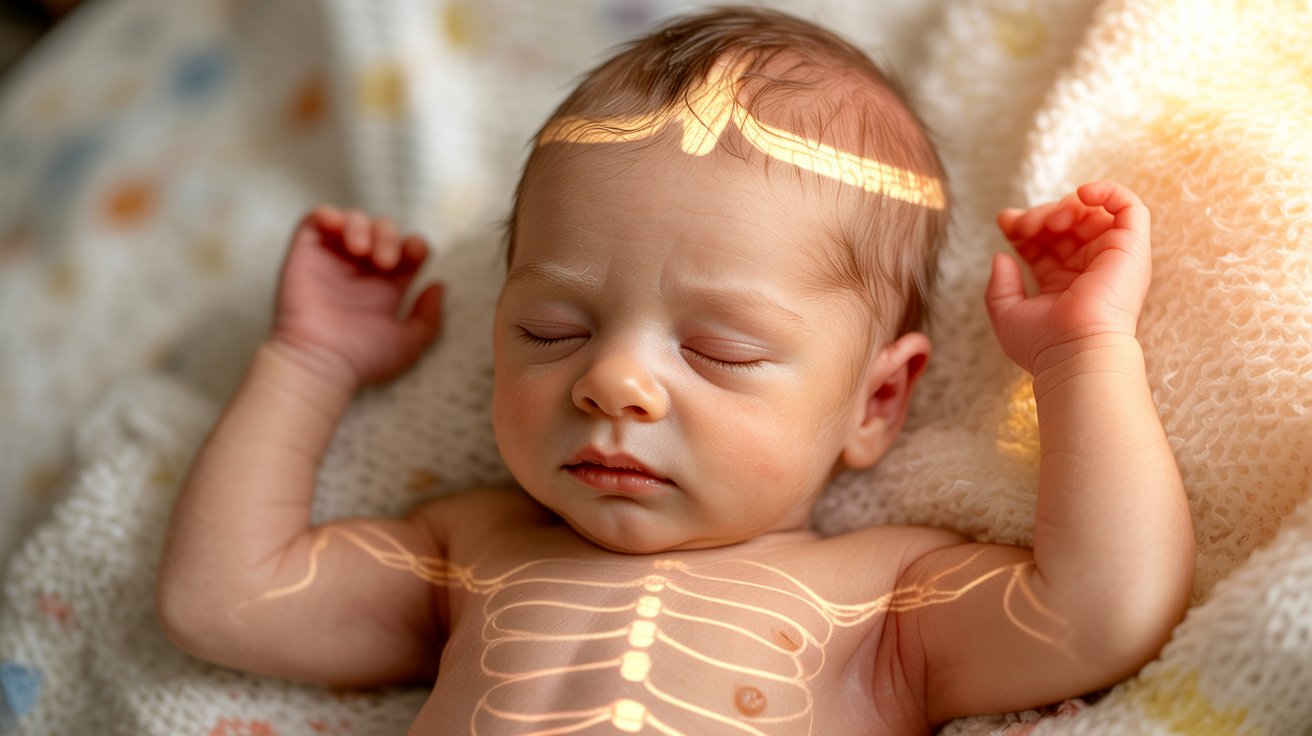
A baby’s nervous system develops rapidly in the first year of life. The way they move during sleep can reflect this growth.
Arms-up sleeping often appears alongside the Moro reflex and typically reduces as the brain matures and motor control improves.
7. Pure Comfort Preference

Sometimes there’s no deeper reason. Just like you might have a preferred sleep position, your baby may too.
Some babies simply find this position the most comfortable. That’s often all it is.
What Pediatric Experts Say
According to the American Academy of Pediatrics (AAP), sleeping on the back is the safest sleep position for babies under one year old.
The AAP does not identify the arms-up position itself as unsafe when safe sleep guidelines are followed.
The organization’s guidance focuses on the sleep environment rather than arm placement.
Back sleeping, a firm flat surface, and a clear crib are the core recommendations. The arms-up position typically falls within those boundaries without any concern.
Are There Any Benefits of Sleeping With Arms Up?
There may be a few worth noting, though these are observations rather than confirmed medical outcomes:
- It commonly helps some babies feel more settled during sleep.
- The open position may allow muscles to rest without strain.
- It may reduce the feeling of restriction during lighter sleep stages.
- It often allows the Moro reflex to activate and settle naturally.
Always check with your pediatrician if you have specific concerns about your baby’s sleep habits.
Are There Any Risks or Concerns?
The arms-up position itself is not risky. The focus should always be on the sleep environment.
The AAP recommends making sure your baby is:
- On a firm, flat mattress.
- In an approved crib, bassinet, or play yard.
- Free from loose items like pillows, blankets, or toys.
- On their back, not their stomach or side.
- Not dressed too warmly.
Following these guidelines is what keeps your baby safe, not the position of their arms.
Should You Swaddle a Baby Who Sleeps With Arms Up?
Many parents swaddle to help babies sleep longer and feel more settled.
But if your baby consistently breaks free to raise their arms, that may be a sign they prefer more freedom of movement.
You might try an arms-out swaddle or a wearable sleep sack. These keep the body snug while allowing the arms to move freely.
One important safety note: stop swaddling as soon as your baby shows signs of rolling, which often happens around 2 to 4 months.
Once rolling begins, a swaddle can become a safety risk. Your pediatrician can guide you on the right time to make that switch.
When Do Babies Stop Sleeping With Their Arms Up?
Most babies start sleeping in more varied positions around 4 to 6 months.
As the Moro reflex fades and motor control improves, they tend to shift around more during sleep rather than staying in one fixed pose.
Every baby develops at their own pace. Some may continue raising their arms a little longer, and that’s generally fine.
Tips for Safe and Comfortable Baby Sleep
These basics always matter:
- Place your baby on their back for every sleep.
- Use a firm, flat mattress with a snug fitted sheet.
- Keep the crib or bassinet clear of loose items.
- Dress your baby in light layers to avoid overheating.
- Keep room temperature between 68 and 72 degrees Fahrenheit.
- Consider white noise if your baby startles easily during sleep.
Following the AAP’s safe sleep guidelines gives your baby the best foundation for healthy rest.
When Should You Be Concerned?
The arms-up position alone is rarely a reason to worry.
But contact your pediatrician if you notice:
- Your baby’s arms seem stiff or they appear unable to move them freely.
- Trembling or shaking that looks different from a normal startle response.
- Signs of pain or unusual crying during sleep.
- Irregular or labored breathing patterns.
If something feels off, always check with a medical professional. Trusting your instincts as a parent matters.
Conclusion
Most babies sleep with their arms up because of normal reflexes, womb habits, and early development patterns.
It’s one of the most common things parents notice in newborns, and it’s almost always harmless.
Keep the focus on a safe sleep space, back sleeping, and a comfortable room temperature. If you ever feel uncertain, your pediatrician is always the right person to call.
In most cases, babies sleeping with their arms up is a completely normal part of newborn development and not a sign of a sleep problem.
Frequently Asked Questions
Is it safe for a newborn to sleep with arms up every night?
Yes, it’s generally considered safe. As long as your baby sleeps on their back in a safe crib or bassinet with no loose items, the arms-up position is not a concern.
Why does my baby raise arms while sleeping and then wake up suddenly?
This is most likely the Moro reflex activating during sleep. It’s a normal startle response that typically fades between 3 and 6 months of age.
Can I use a swaddle if my baby prefers the arms-up position?
You can try an arms-out swaddle or a sleep sack. Stop swaddling completely once your baby shows signs of rolling, usually around 2 to 4 months.
At what age do babies usually stop sleeping with their arms raised?
Most babies start sleeping in more varied positions around 4 to 6 months, as the Moro reflex fades and their motor skills develop further.
Should I reposition my baby’s arms if they sleep with them raised?
No, there’s no need to. Repositioning can disturb your baby’s sleep and is generally not recommended unless a doctor advises otherwise.