Babies should avoid TV before 18 months, except for video calls. That is the short answer from the American Academy of Pediatrics, and it is backed by solid research.
But I know it is not always that simple. You are tired. The screen is right there. And every show seems to claim it is "educational."
So when can babies watch TV without causing real harm? In this blog, I cover the exact age guidelines, what early screen exposure does to a developing brain, the safest way to introduce TV, and the warning signs to watch for.
I have spent years writing about child development and parenting topics. I want to give you clear, honest answers you can actually use.
Official Recommendations on When Babies Can Watch TV

According to the American Academy of Pediatrics (AAP), no screen time is recommended for babies under 18 months.
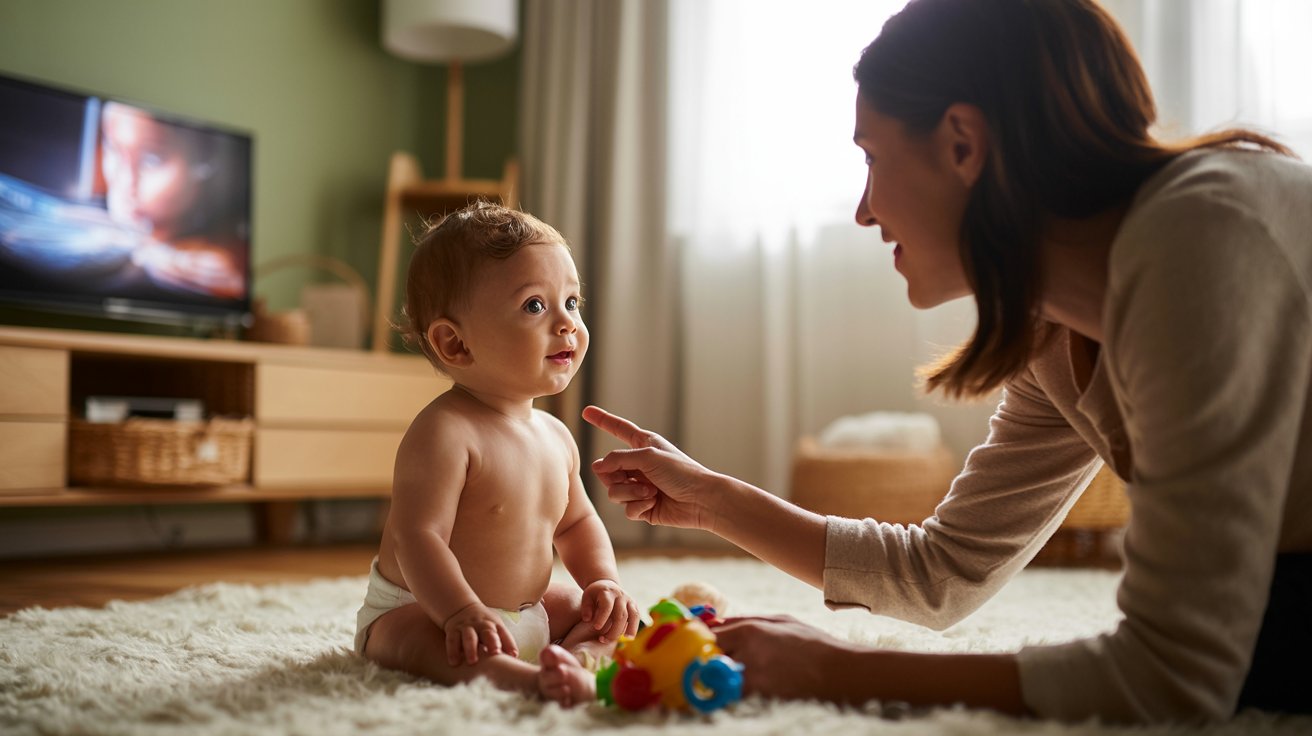
The one exception is video calls with family members. FaceTime or Zoom with grandparents involves real back-and-forth, which is very different from passive TV watching.
From 18 to 24 months, the AAP allows limited screen time, but only with a parent or caregiver watching alongside.
For children aged 2 to 5, the recommendation is no more than one hour per day of high-quality programming.
The World Health Organization (WHO) supports similar limits. Their 2019 guidelines on physical activity and sedentary behavior for children under 5 reinforce keeping screens out of the earliest years of life.
Why Babies Under 18 Months Should Avoid TV
The first 18 months of life are a critical window for brain development.
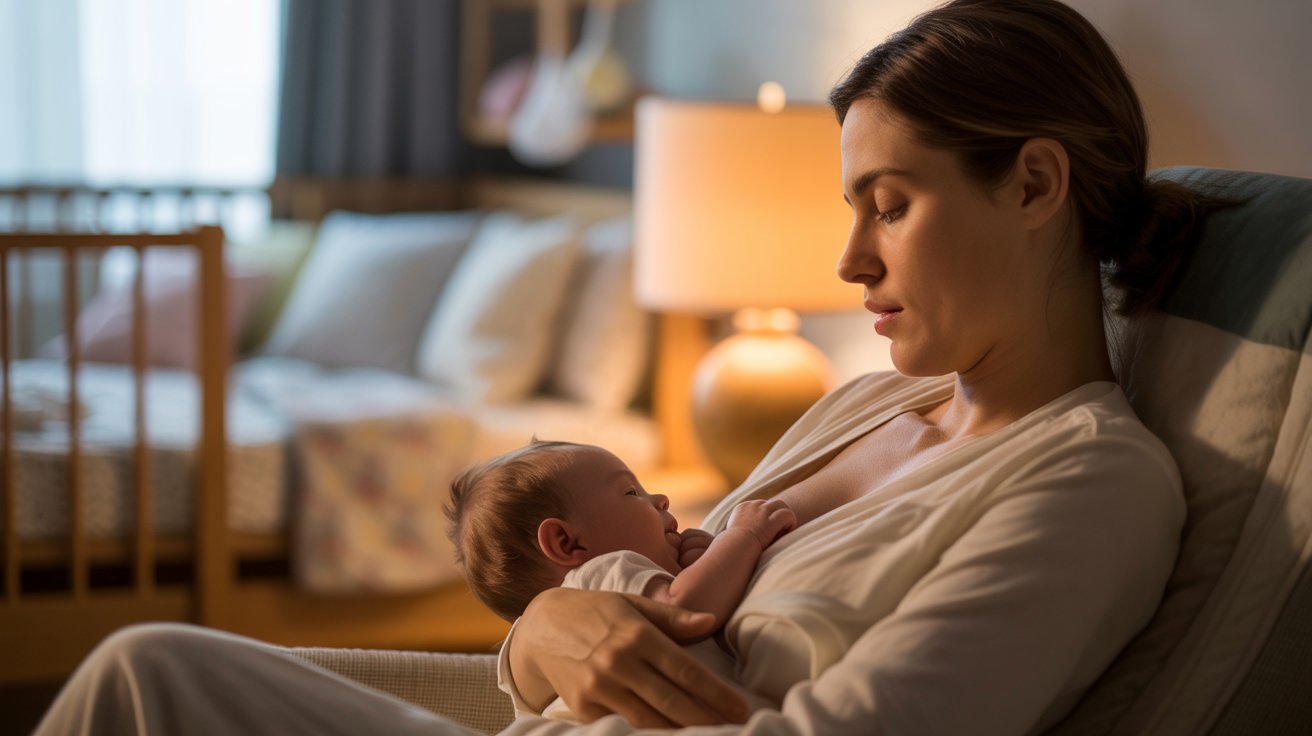
During this time, babies learn through direct interaction. Eye contact, spoken words, facial expressions, and touch all build neural connections faster than any screen can.
Research has linked heavy screen time before 18 months to delayed language development, shorter attention spans, and disrupted sleep.
A 2019 study in JAMA Pediatrics found that more screen time at age 1 was connected to measurable developmental delays by age 3.
Background TV is also a concern. Studies show it reduces how often parents speak to their babies and breaks up focused play, both of which are important for healthy early development.
When Can Babies Watch TV Safely? Age Breakdown
Here is a clear breakdown by age so you know exactly where your child stands.
0 to 12 Months
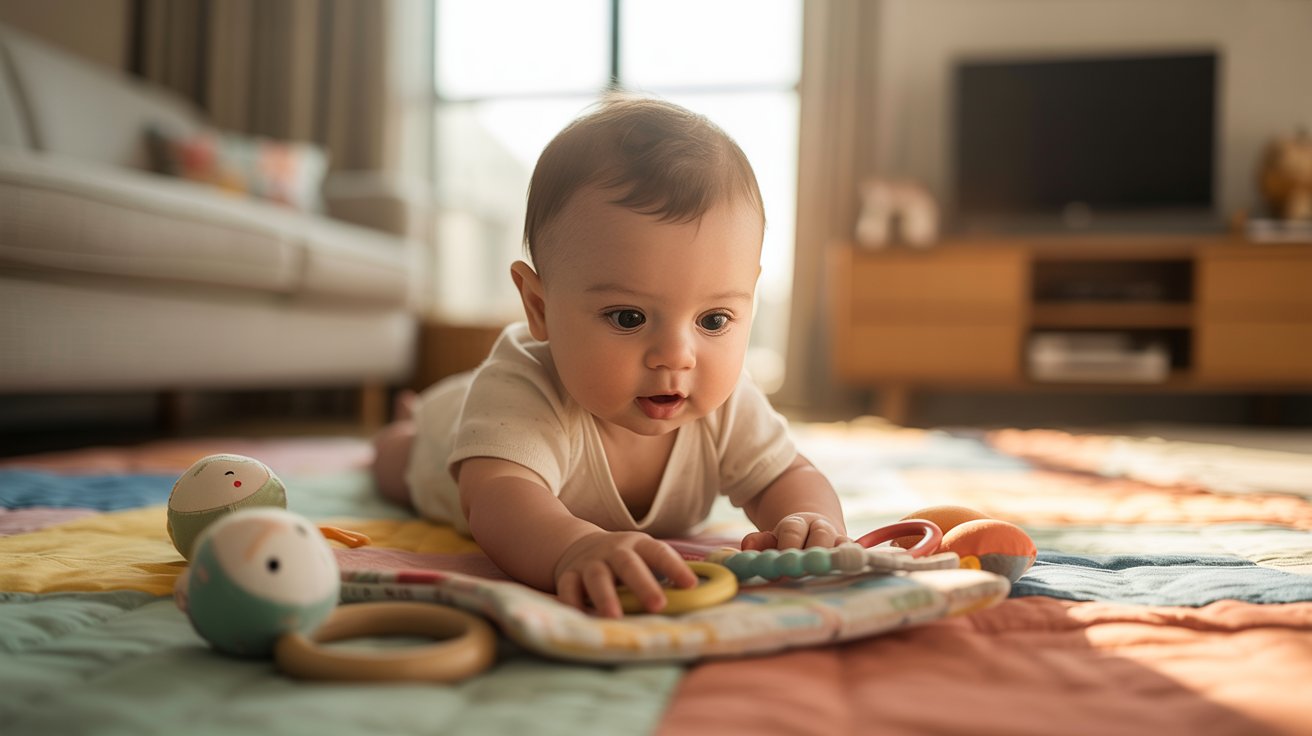
No TV. Full stop.
Babies at this age cannot process what is on a screen in any meaningful way. They see light and movement, nothing more. Video calls with family are fine because they involve real human responses.
12 to 18 Months
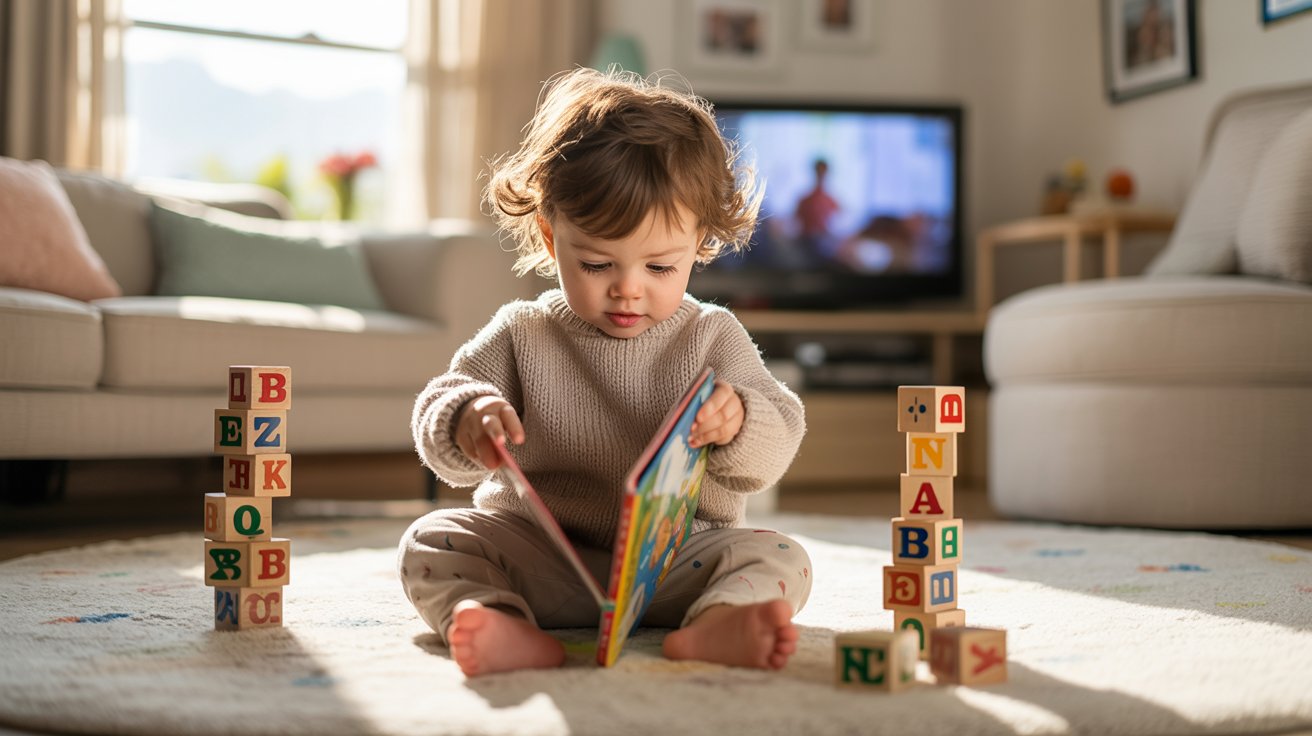
Still too early for regular screen time, even if a show claims to be educational.
Research shows babies this age do not transfer what they see on a screen to real-world learning. Child development researchers call this the "video deficit effect," and it is well documented.
18 to 24 Months
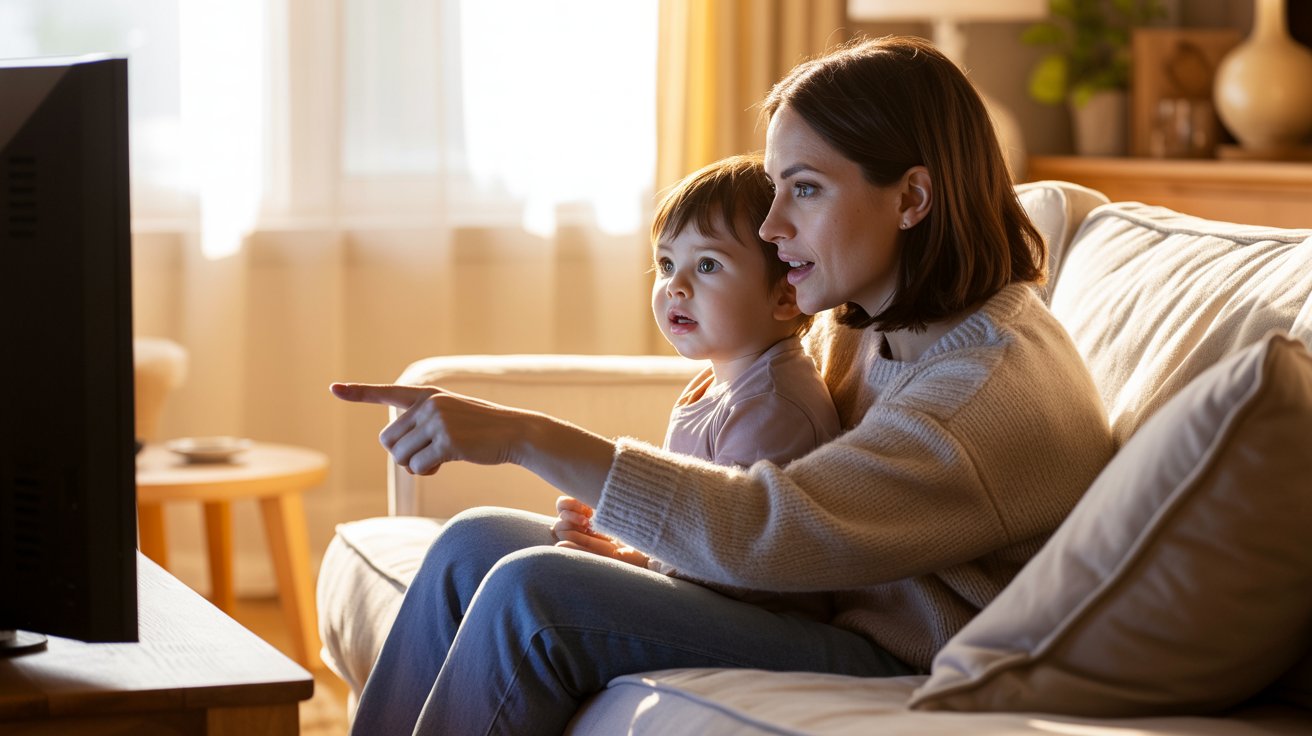
This is when limited screen time can begin, but with one firm condition: a parent must watch alongside the child.
Sit with them, name things on screen, and keep conversations going. That active involvement turns viewing into something that supports learning instead of replacing it.
2 Years and Older
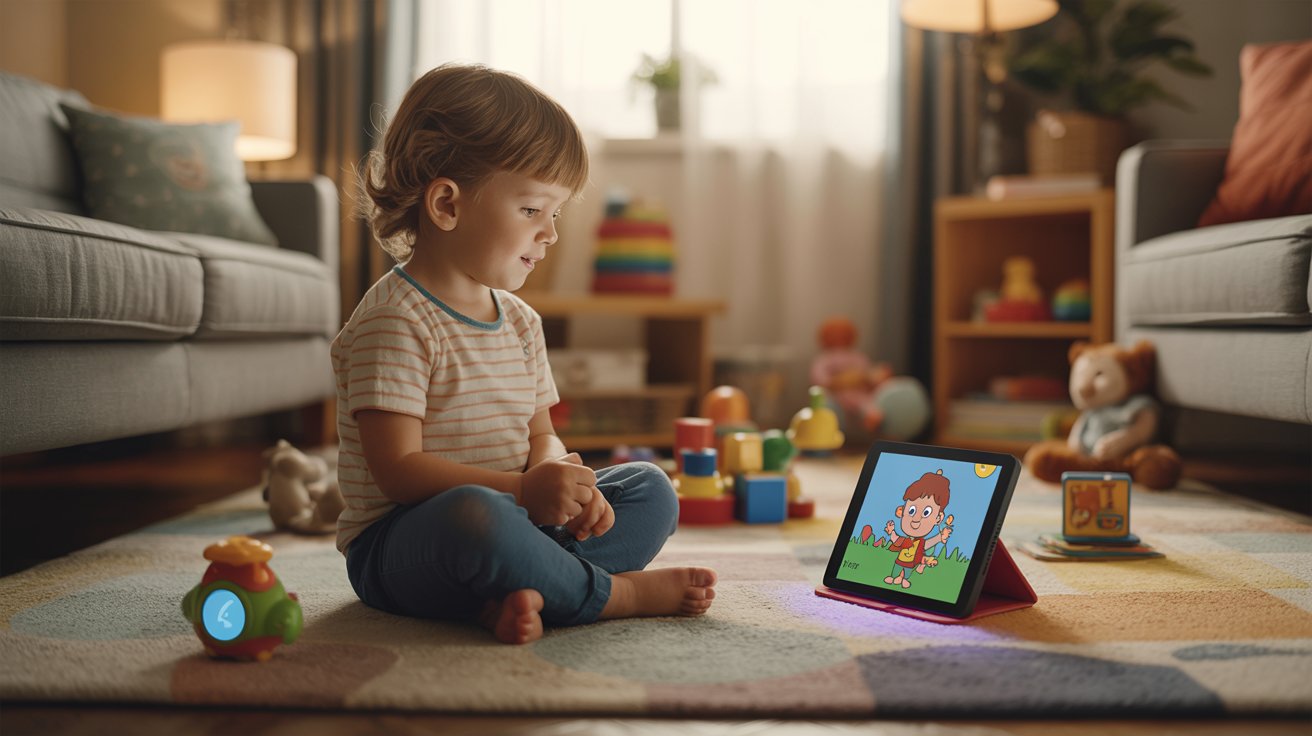
Up to one hour per day of age-appropriate, well-produced content is the recommended limit. Co-viewing when possible still makes a significant difference at this age.
What Happens If Babies Watch TV Too Early?
This is not about guilt. It is about understanding the full picture.
Studies have linked early, heavy screen exposure to delayed speech, reduced physical activity, difficulty managing emotions, disrupted sleep, and shorter attention spans.
The CDC also notes screen time as a factor worth discussing during developmental screenings. Pediatricians are increasingly raising it in well-child visits.
Background TV compounds the problem.
Even when a baby is not looking at the screen, the noise reduces parent-child interaction and breaks up the kind of focused play that supports healthy growth.
Are There Any Benefits of TV for Babies?
Research shows limited developmental benefit from screen exposure before 18 months.
After that age, well-designed programs have genuine evidence behind them.
A long-running study from the University of Massachusetts found that children who watched Sesame Street with a parent showed stronger vocabulary growth than those who watched alone.
The deciding factor in every case was parental involvement. A screen left on without interaction does not produce the same result.
How to Introduce TV the Right Way
When the time is right, starting slowly makes a real difference.
Begin with 10 to 15 minutes, not a full episode. Choose shows with slow pacing, simple language, and clear storylines.
Sit with your child and talk about what is happening on screen. Name characters, point out colors, and ask easy questions.
Turn the screen off when the time is up and move on to something active. Keep screens off for at least an hour before bedtime since the light affects melatonin and disrupts sleep.
Best Types of Shows for Babies and Toddlers
Not all children's content is created equal.
Look for programs that move at a slow pace, repeat key words and concepts, show emotions and everyday social situations, and are developed with input from early childhood specialists.
Sesame Street, Daniel Tiger's Neighborhood, and Bluey are widely recommended by child development professionals. They are built with how young children think and grow in mind.
Avoid anything with rapid scene changes, loud or jarring sounds, or complex storylines. That type of content overstimulates a developing nervous system rather than supporting it.
Signs Your Baby Is Watching Too Much TV
Pay attention to these changes in your child.
They become very distressed when the screen turns off. They are making less eye contact during the day.
Speech seems slower compared to peers the same age. Sleep has become harder. They show less interest in books, toys, or people around them.
Noticing these patterns early gives you time to pull back on screen time and bring in more hands-on play before any habits set in.
Better Alternatives to TV for Babies
There are many activities that do more for brain development than a screen can at this age.
- Talk to your baby throughout the day, including during routine tasks like feeding and diaper changes.
- Read picture books with simple text and bold images.
- Play interactive games like peek-a-boo or simple clapping songs.
- Spend time outdoors.
- Offer age-appropriate toys like stacking cups, soft blocks, or textured objects.
- Sing nursery rhymes and use simple music together.
These activities build vocabulary, motor skills, attention, and emotional connection, none of which a screen can replicate in the first two years of life.
Conclusion
When can babies watch TV safely? Based on AAP and WHO guidelines, the answer is clear: not before 18 months, except for video calls.
After 18 months, short sessions of good-quality programming watched with a parent can fit into a healthy routine. After age 2, up to one hour per day is the recommended limit.
The early months matter. But no parent gets this perfectly right every day, and that is okay. What counts is knowing the guidelines and making steady changes over time.
You asked the right question by looking this up. That kind of awareness already makes a real difference for your child's development.
What is one screen habit at home you feel ready to change this week?
Frequently Asked Questions
When can babies watch TV for the first time?
According to the AAP, babies can begin limited TV time at 18 months, but only when a parent watches alongside them. Before that age, when can babies watch TV at all? Only video calls are considered appropriate.
When can babies watch TV without a parent present?
Most child development experts suggest waiting until at least age 2 or 3 before allowing solo viewing, and even then, keeping content age-appropriate and time-limited is important.
Does following guidelines on when babies can watch TV help prevent speech delays?
Yes. Limiting early screen time reduces the risk of language delays, which have been linked in research to heavy screen exposure in the first two years of life.
Is educational content safe for babies under 12 months?
No. Even content labeled educational does not provide real learning for babies under 12 months because of the video deficit effect. Their brains are not yet ready to retain information from a screen.
What if family members let my baby watch TV before the recommended age?
Share the AAP guidelines directly and calmly. You can say the pediatrician recommends no screens before 18 months and ask for their support in following that at your home.