
Your 6-month-old is ready to learn about the world in new ways. At this age, babies use all five senses to understand everything around them. Touch, taste, sight, sound, and smell work together to help your baby’s brain grow and make important connections.
Sensory activities for 6-month-old babies don’t need to be complicated or expensive. In fact, the best activities often use items you already have at home. In this guide, you’ll find simple, safe ways to help your baby learn through play.
These activities support important skills like reaching, grabbing, and coordinating movements. You’ll also learn what to expect during sensory play and how to keep everything safe. Let’s look at activities you can try today.
Why Sensory Play Matters at 6 Months?
At 6 months, your baby’s brain is making millions of connections every day. Each time your baby touches something new, tastes a different texture, or hears a fresh sound, their brain creates pathways that help with learning and development. Sensory play gives your baby the experiences they need to build these important connections.
Babies at this age learn by putting things in their mouths, touching different surfaces, and watching how objects move.
This isn’t just play. It’s how they figure out that objects feel different, that some things are wet while others are dry, and that their actions can make things happen. These early lessons form the foundation for problem-solving later on.
Sensory activities for 6-month-old babies also help build physical skills. When your baby reaches for a toy, they’re working on hand-eye coordination. When they sit and play with textured objects, they’re building core strength.
All of these small movements add up to big developmental gains that prepare your baby for crawling, standing, and walking.
Simple Sensory Activities to Try Today
These activities are easy to set up and give your baby rich sensory experiences. You probably have most of the materials at home already.
Water Play on a Baking Sheet
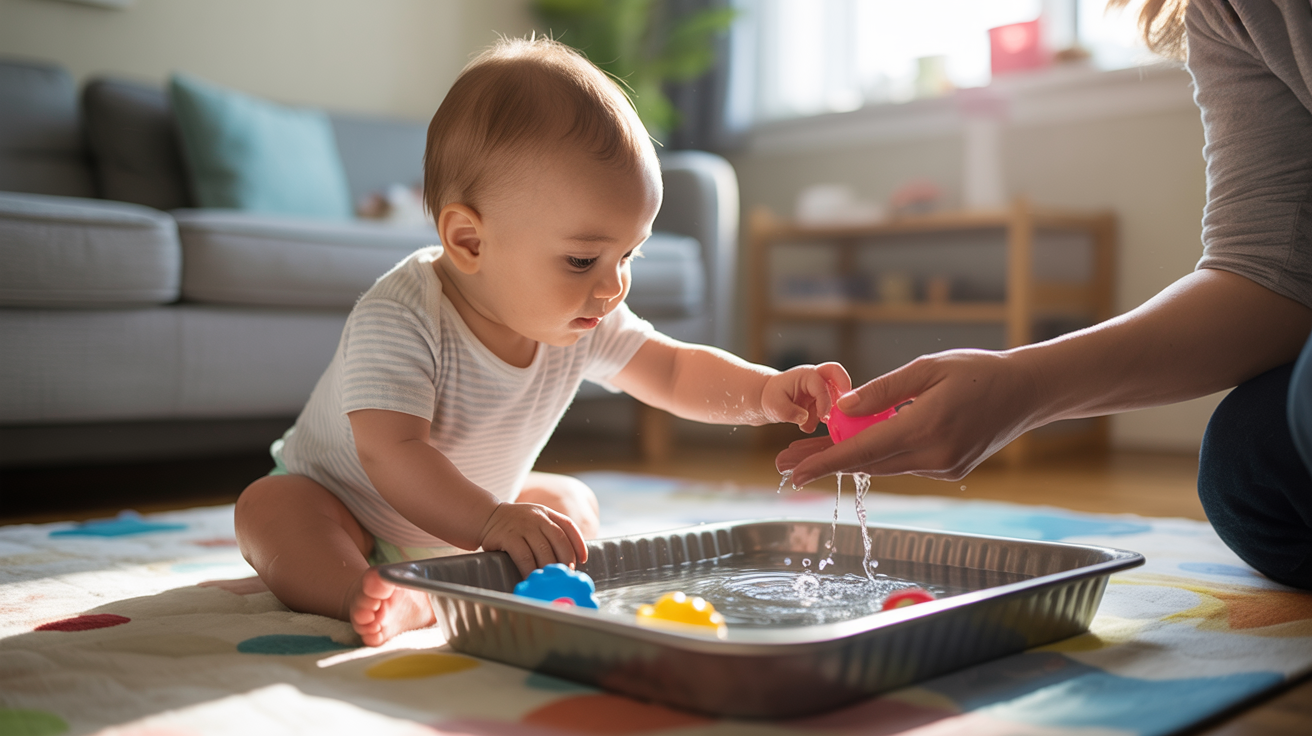
Fill a shallow baking pan with about an inch of water and add a few small toys that float. Place your baby in a supported sitting position or during tummy time, and let them splash and reach for the toys. The water feels cool and moves in interesting ways when touched.
This activity helps your baby practice tracking objects with their eyes as the toys float around. Reaching for slippery, moving toys builds coordination and teaches anticipation. Always stay close and watch carefully during any water activity, even with just a small amount of water.
Textured Tissue Pulling

Take a tissue box or small container and fill it with different types of fabric scraps, scarves, or crinkly tissue paper. Let your baby pull the materials out one by one. The different textures feel interesting in their hands, and the pulling motion builds strength.
This simple activity works the core muscles that your baby needs for sitting without support. It also helps develop the hand coordination that will be important later for self-feeding. Your baby might put the fabrics in their mouth, which is normal and helps them learn about different textures.
Ice Cube Touch Activity
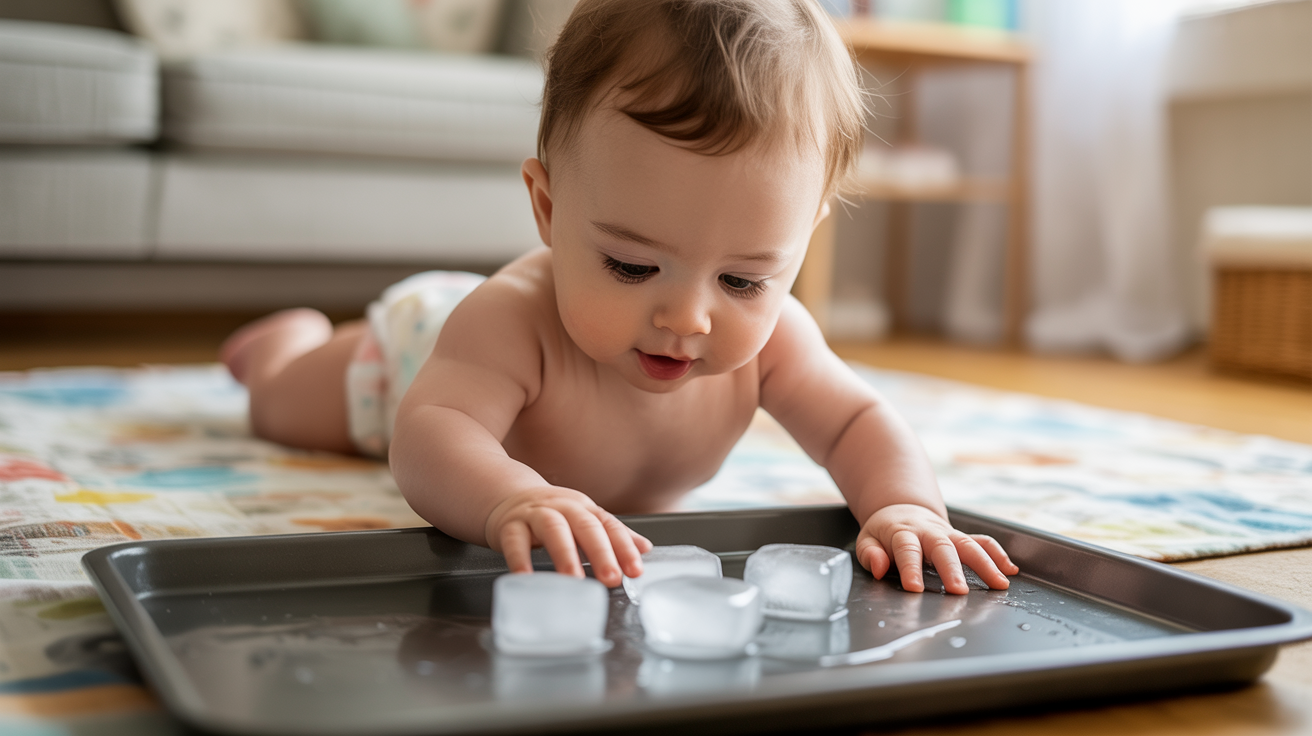
Place a few ice cubes on a cookie sheet and let your baby touch them while supervised. The cold temperature is a new sensation, and watching the ice melt introduces early science concepts. The slippery surface makes the cubes hard to grab, which is actually helpful for skill building.
This activity safely teaches temperature awareness. Trying to pick up something slippery challenges hand-eye coordination more than grabbing regular toys. Just make sure the ice cubes are too large to fit in your baby’s mouth, and watch them closely the whole time.
Homemade Sensory Bags
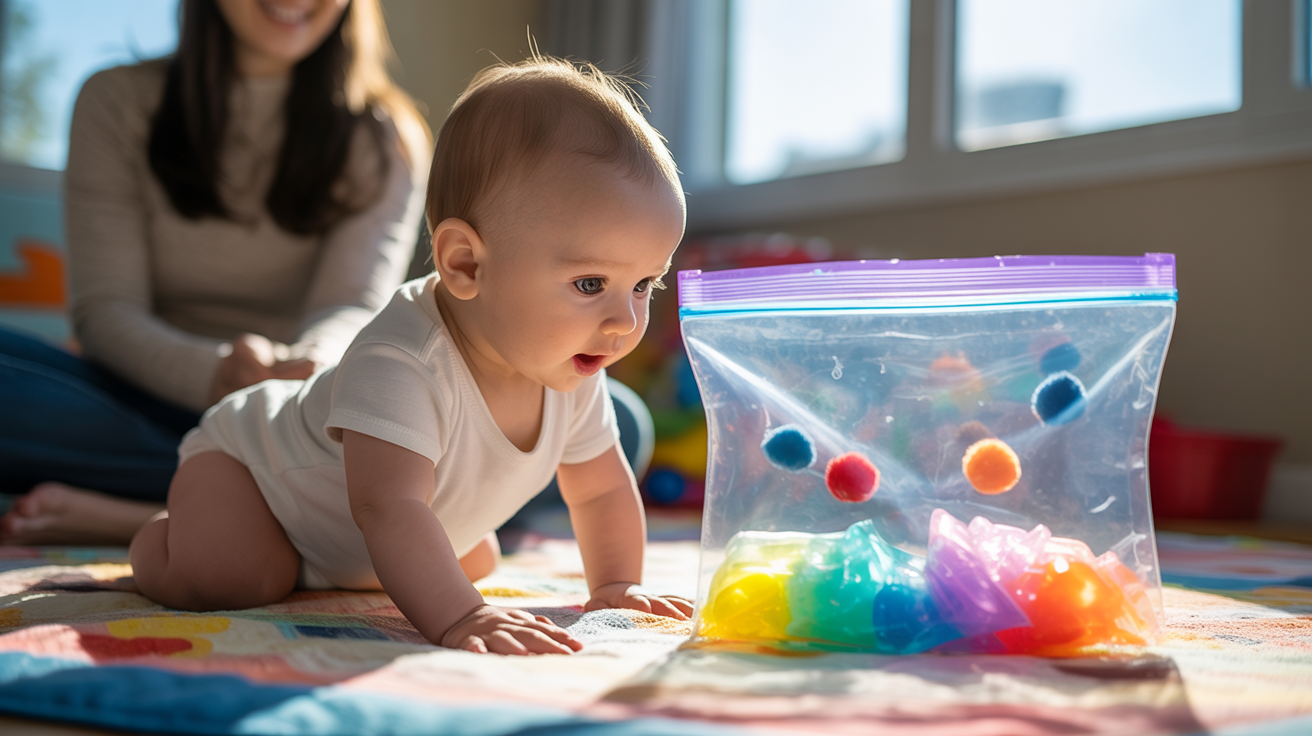
Fill a gallon-size ziplock bag about halfway with hair gel, then add safe items like large pom poms or plastic shapes.
Seal the bag completely and tape the edges with strong tape. Your baby can squish the bag and watch the items move around inside without making a mess.
You can also make sensory bags with water and a few drops of food coloring, or with vegetable oil and water to see how they separate.
These bags give your baby visual and tactile input without the cleanup. Place the bag on the floor during tummy time or in front of a sitting baby.
Kicking Play with Noisy Toys
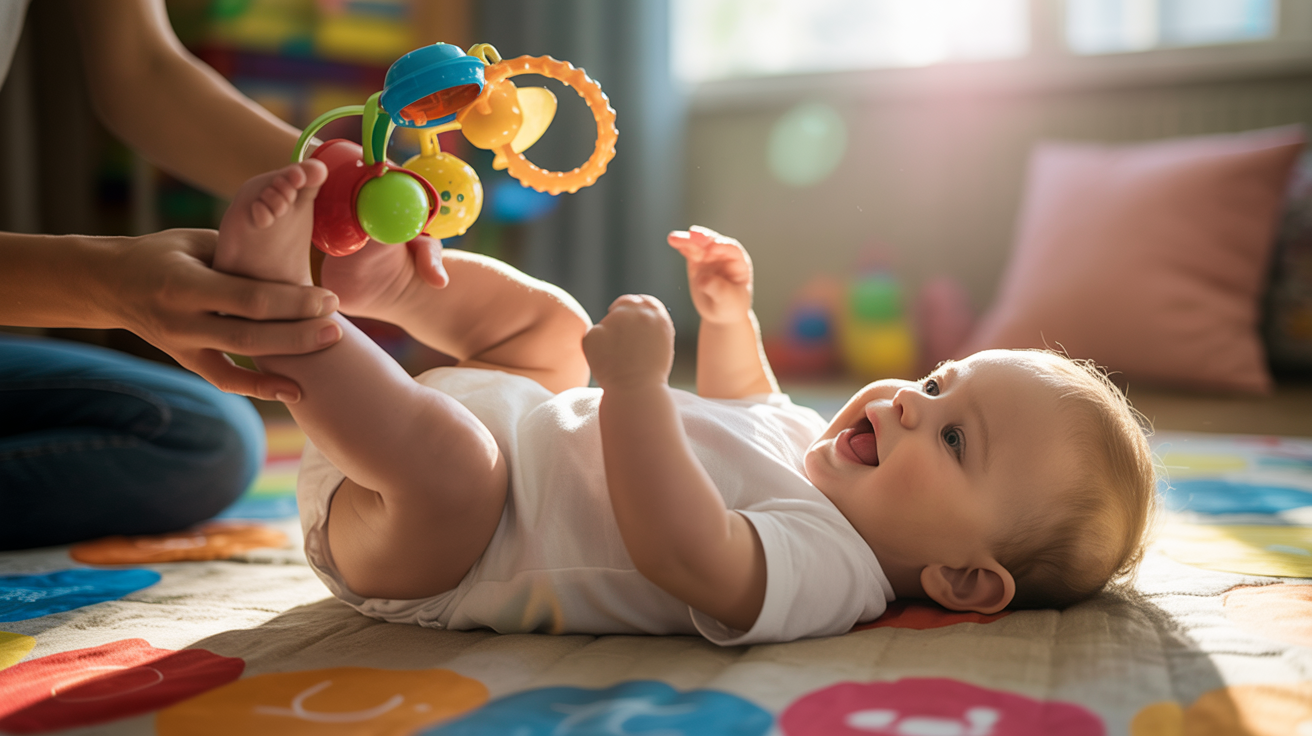
While your baby lies on their back, position toys at their feet that make sounds when kicked. Crinkly toys, bells, or rattles work well.
Your baby will start to understand that their movements cause the sounds to happen.
This cause-and-effect learning is important for cognitive development. It also helps your baby become more aware of their whole body, not just their hands.
Kicking builds leg strength that will be needed for rolling, crawling, and eventually walking.
Side Lying Book Time
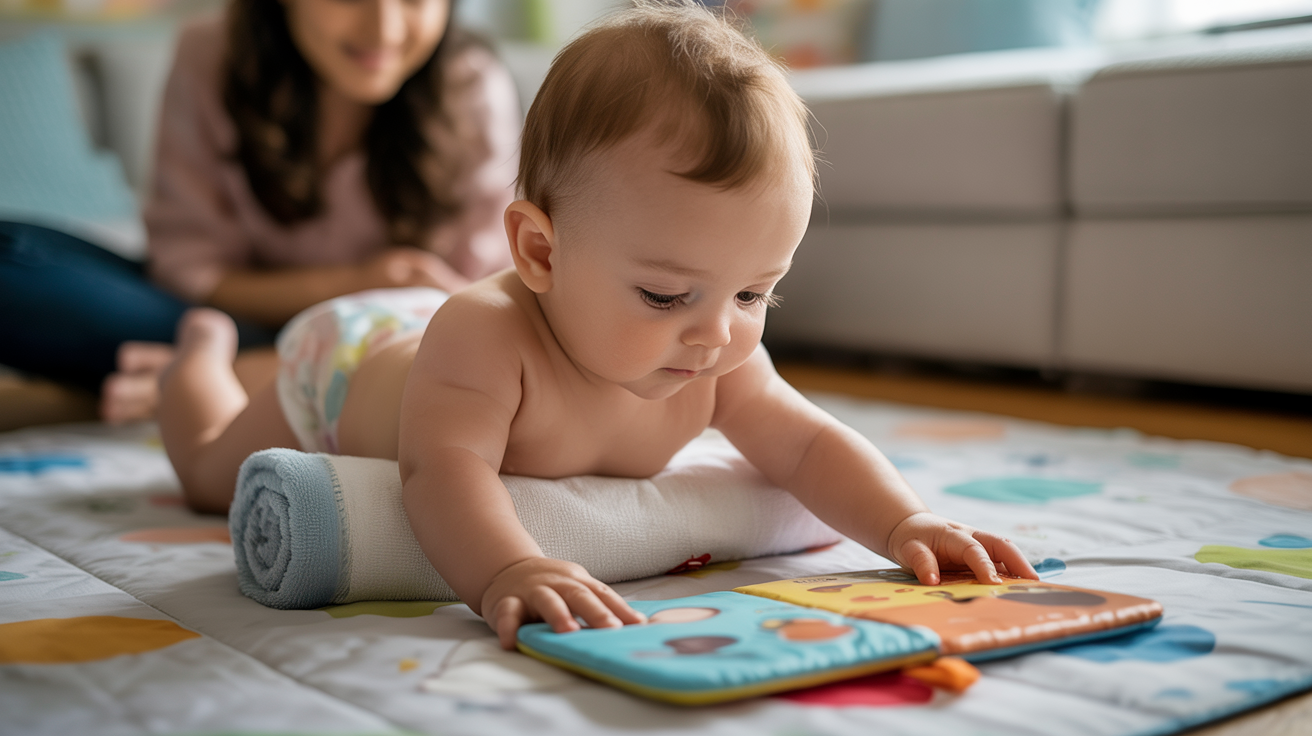
Place your baby on their side with a board book in front of them. This position is less common than back or tummy time, but it’s great for development.
Your baby will reach across their body to touch the book, which builds the core muscles needed for rolling over.
Choose books with different textures on the pages or simple, high-contrast pictures. The reaching motion strengthens muscles in a different way than tummy time does.
You can support your baby with a rolled towel behind their back if needed.
Natural Sponge Discovery
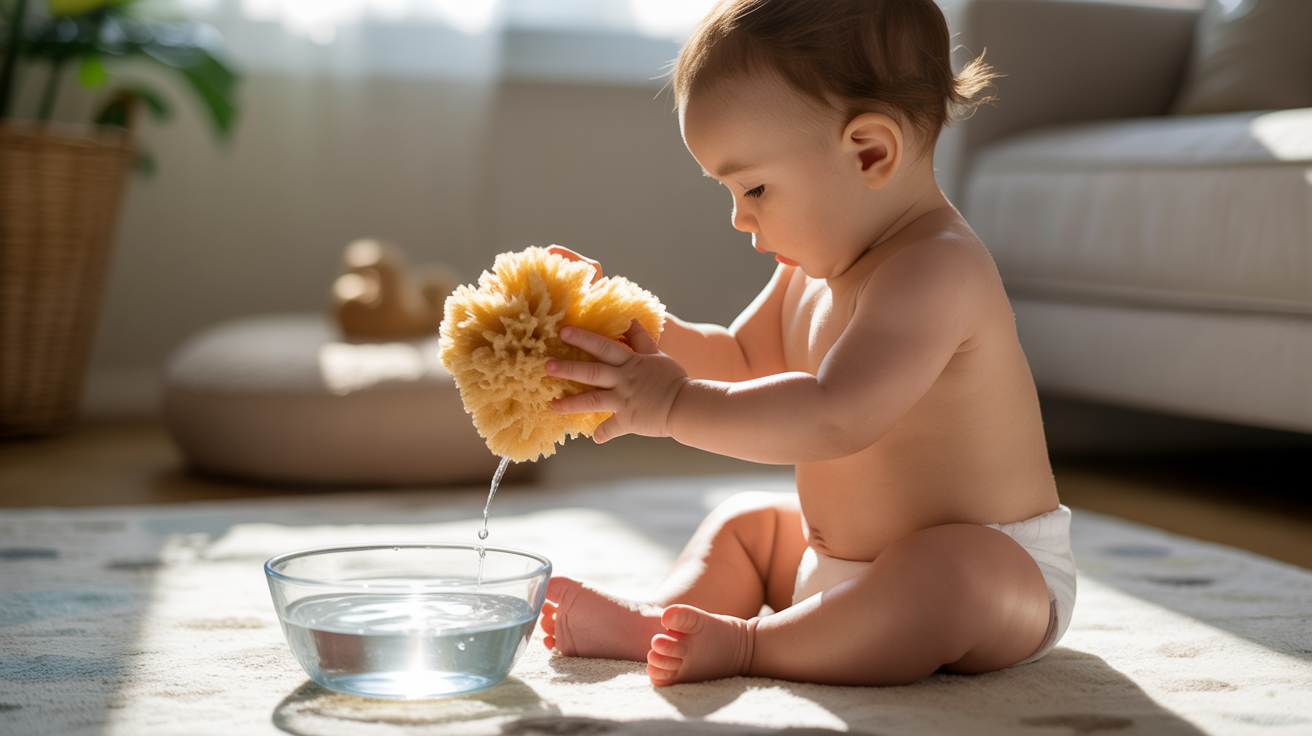
Give your baby a natural sea sponge to hold and squeeze. Start with the sponge dry so they can feel all the holes and the bumpy texture. Let them bring it to their mouth if they want to. The irregular shape and texture are very different from those of regular toys.
After a few minutes, dip the sponge in water and let your baby squeeze it. Water will drip out, which teaches cause and effect. The wet sponge feels completely different from the dry one, giving your baby two sensory experiences from one object. This activity works well during bath time, too.
Tips for Safe and Successful Sensory Play
Safety comes first with sensory activities for 6-month-old babies. Always stay within arm’s reach during any activity, especially those involving water. Even an inch of water requires your full attention.
- Choose materials that are too large to fit completely in your baby’s mouth
- Avoid anything with small parts that could break off
- Let your baby control how long the activity lasts
- Keep sessions between 10 and 15 minutes
- Use old towels or do messy activities during bath time
- Stop if your baby seems fussy, turns away, or loses focus
- Start with one or two simple activities before trying more complex ones
Your baby will let you know when they’ve had enough. Some days they’ll be very focused on an activity, while other days they might only want to play for a few minutes. Both are completely normal.
What to Expect During Sensory Activities
Don’t worry if your baby seems unsure about new textures or temperatures at first. It can take a few tries before they feel comfortable with something unfamiliar. Give them time to warm up to each new experience.
- Your baby will probably put everything in their mouth, which is how babies this age learn.
- Doing the same activity multiple times helps your baby learn and remember
- Each baby develops at their own speed, so don’t compare them to others
- Happy babies will focus on the activity, make sounds, and reach for objects
- Overstimulated babies might cry, turn away, or become very still
If your baby seems overwhelmed, take a break and try again later. Reading these cues helps you understand what your baby needs.
Conclusion
Sensory activities for 6-month-old babies support brain development, physical skills, and learning in important ways. The good news is that the best activities are often the simplest ones, using everyday items from your home.
You don’t need fancy toys or expensive materials. A baking sheet with water, some fabric scraps, or a natural sponge can provide rich learning experiences. The key is giving your baby safe opportunities to touch, taste, see, hear, and smell different things.
Remember to always supervise closely and follow your baby’s lead. Try one or two of these activities this week and see which ones your baby enjoys most. You’re supporting your baby’s growth and development through simple, meaningful play.
Frequently Asked Questions
How Long Should Sensory Activities Last For A 6-month-old?
Keep sessions between 10 and 15 minutes. Watch your baby for signs they’re done, like looking away or getting fussy. Short, focused play times work better than long sessions at this age.
Can I Do Sensory Activities If My Baby Isn’t Sitting Up Yet?
Yes, many activities work during tummy time or while you support your baby in a sitting position. Side-lying, being held, and propped positions all work well for sensory play at this age.
What Should I Avoid During Sensory Play At This Age?
Stay away from small objects that could cause choking, materials with toxic chemicals, and never leave your baby alone with water. If something doesn’t feel safe to you, trust that feeling and skip it.
How Often Should I Introduce New Sensory Activities?
Mix familiar activities with new ones. Let your baby enjoy their favorites while slowly adding fresh experiences. Watch how interested your baby seems before introducing something completely different.
What If My Baby Doesn’t Seem Interested In Sensory Play?
Try the activity at a different time of day when your baby is alert and happy. Start with very simple activities before moving to more complex ones. Remember that all babies develop differently and have different interests.