
Watching your child wiggle their first loose tooth brings a mix of excitement and worry. You want to help, but you’re not sure if you should. What if you do something wrong? What if it hurts them?
A kid’s loose tooth is one of those childhood moments that seems simple until it’s happening to your child. Suddenly, you have questions. Should you pull it out or leave it alone? When is it safe to help? What are the warning signs that something’s not right?
This guide will answer all those questions and more. You’ll learn the safest methods that work, the common mistakes that cause problems, and exactly when you need to call a dentist. By the end, you’ll feel confident handling this milestone with your child.
What Causes a Child’s Tooth to Become Loose?

When your child is about six years old, their baby teeth start to get loose. This happens because permanent teeth growing underneath push against the roots of baby teeth. Over time, these roots break down, and the tooth becomes wobbly.
The process usually follows a pattern. Teeth tend to fall out in the same order they first appeared when your child was a baby. The bottom front teeth are often the first to go.
Here are the main reasons a kid’s loose tooth becomes wobbly:
- Permanent teeth pushing up from below the gums
- Natural root breakdown as your child grows
- Normal development between ages 6 and 12
- Sometimes, injuries or accidents to the mouth
- Rarely, tooth decay can cause early loosening
If your child’s tooth becomes loose because of an injury or you see signs of decay like dark spots or a bad smell, call your dentist right away. These situations need professional care.
The Best Way to Handle a Loose Tooth

Most of the time, the best thing you can do is wait. Patience really works when dealing with a kid’s loose tooth.
Let Nature Take Its Course
Your child’s body knows what to do. Baby tooth roots dissolve slowly over time as the permanent tooth gets ready to come in. This natural process is the safest way for teeth to fall out.
When you let the tooth come out on its own, you avoid problems. Pulling too early can cause pain, heavy bleeding, or damage to the gums. The tooth will fall out when it’s completely ready, usually while your child is eating or brushing their teeth.
When to Call the Dentist
Sometimes a kid’s loose tooth needs a dentist’s help. If the tooth became loose from a fall, sports injury, or hitting something hard, get it checked. An injury might have affected the permanent tooth below.
You should also call if you see decay, swelling, or pus around the loose tooth. Another reason to visit is when a permanent tooth starts growing in, but the baby tooth hasn’t fallen out yet. Your dentist can safely remove the baby tooth to make room.
Safe Methods to Help a Loose Tooth
These methods are gentle and safe. They help the natural process along without forcing anything.
Method 1: Let Your Child Wiggle It Gently

Kids naturally want to touch their loose teeth with their tongue. This is actually helpful. They can also use clean fingers to gently wiggle the tooth back and forth.
Gentle movement helps the tooth loosen more each day. Just make sure your child washes their hands first. Never let them pull hard or yank on the tooth. If it hurts, they should stop right away.
Method 2: The Tissue Technique
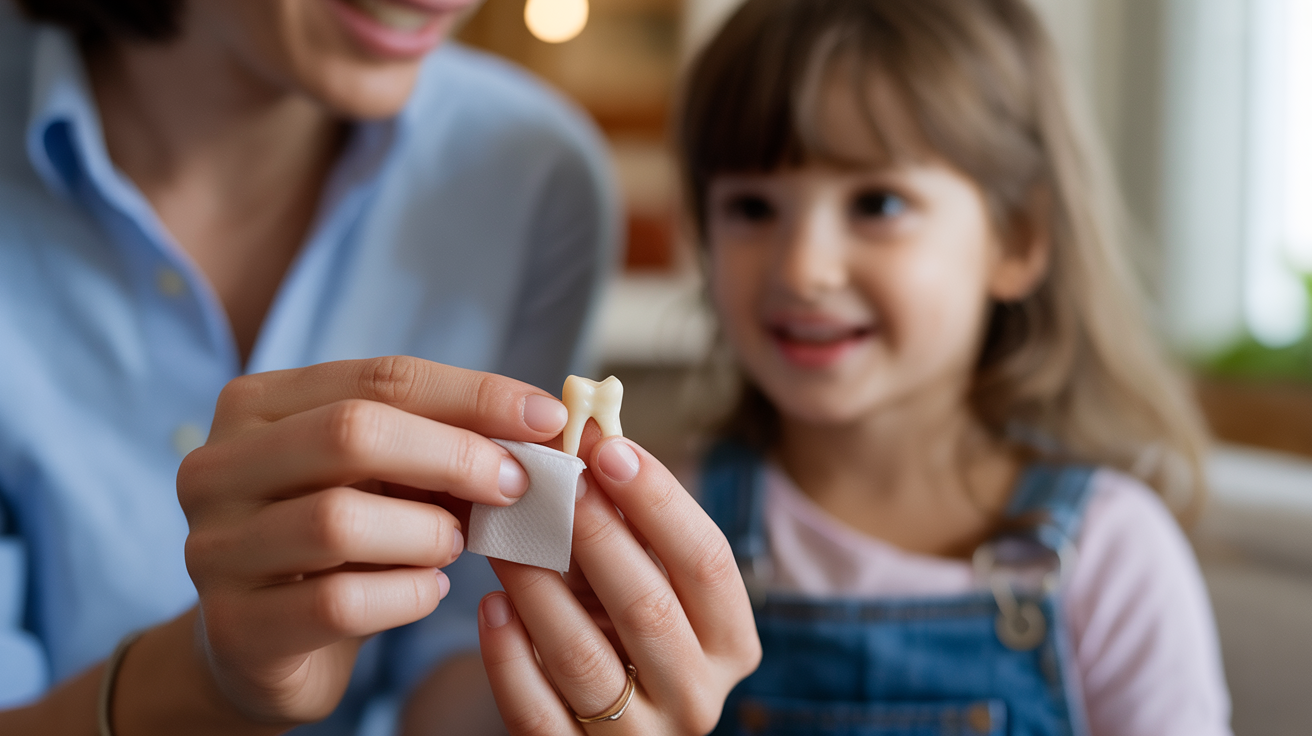
When a kid’s loose tooth is hanging by a thread, you can use a clean tissue or gauze. Wrap it around the tooth and gently squeeze. Give a soft twist if the tooth feels ready.
This only works if the tooth is already very loose. Stop if your child feels pain. The tissue gives you a better grip than using bare fingers. It also keeps things clean.
Method 3: Encourage Soft Foods

Regular meals can help a loose tooth fall out naturally. Give your child soft foods like yogurt, mashed potatoes, pasta, or smoothies. These foods won’t h, hurt but still put gentle pressure on the tooth.
Avoid hard, crunchy, or sticky foods for now. Skip things like apples, carrots, popcorn, and chewy candy. The natural chewing motion helps the tooth get looser each day without any extra effort.
Method 4: Keep the Area Clean

Your child should keep brushing their teeth twice a day, even with a loose tooth. Use a soft toothbrush and be extra gentle around the wobbly tooth.
Clean teeth and gums are important during this time. Bacteria can build up around loose teeth and cause infections. Gentle brushing won’t make the tooth fall out before it’s ready. It just keeps the mouth healthy.
Method 5: Ice for Comfort

If your child’s gums feel sore around the loose tooth, a cold compress can help. Wrap ice in a clean cloth and hold it against their cheek for 10 to 15 minutes.
You can do this a few times a day if needed. Cold helps reduce swelling and numbs any discomfort. Some kids also like eating popsicles or drinking cold water for the same relief.
Method 6: Saltwater Rinse

A simple saltwater rinse can soothe sore gums. Mix half a teaspoon of salt in a cup of warm water. Have your child swish it around their mouth for about 30 seconds, then spit it out.
This rinse helps keep the area clean and reduces swelling. Salt has natural healing properties for gums. Your child can use this rinse once or twice a day, especially after meals.
Method 7: Monitor Progress Patiently

Check the kids’ loose teeth each day to see how they’re doing. You’ll notice it getting wobblier over time. This can take a few days or even a few weeks.
Don’t try to speed up the process. Every child is different, and teeth come out on their own schedule. Trust that the tooth will fall out when it’s fully ready. Rushing things only causes problems.
What NOT to Do With a Loose Tooth?
Some old methods for removing teeth are not safe. You might have heard about tying a string to a doorknob and slamming it. Don’t do this. It can cause serious pain and injury.
Here’s what to avoid with a kid’s loose tooth:
- Forcing the tooth out before it’s ready to come out
- Letting your child pull hard or yank aggressively
- Using pliers, tweezers, or other tools at home
- Ignoring signs of infection like swelling or fever
- Letting an older sibling or friend try to pull it out
These methods can break the tooth, damage the gums, or hurt the permanent tooth growing underneath. They also make kids scared and anxious about losing teeth. Stick to gentle, safe methods instead.
Managing Pain and Discomfort After Tooth Loss
Most kids don’t feel much pain when a baby tooth falls out. If your child does feel sore, you can give them children’s pain medication like ibuprofen or acetaminophen. Follow the dosage on the bottle for their age and weight.
Cold foods feel good on sore gums. Try ice cream, frozen yogurt, or smoothies. Avoid hot, spicy, or acidic foods for a day or two. These can sting the sensitive spot where the tooth was.
A little bleeding is normal right after a kid’s loose tooth falls out. Have your child bite down on clean gauze for a few minutes. The bleeding should stop quickly. If it continues for more than 10 minutes or seems heavy, call your dentist.
What to Expect as Baby Teeth Fall Out?
The process of losing all baby teeth takes several years. Most kids start around age six and finish by age twelve or thirteen.
Your child has 20 baby teeth total. They won’t all fall out at once.
Here’s what usually happens:
- Bottom front teeth (lower central incisors) fall out. The top front teeth come out next
- Molars and canines fall out last
- Permanent teeth grow in to replace each lost tooth
- The whole process is spread out over many years
Every child follows their own timeline. Some start losing teeth earlier, others later. Both are normal and healthy. If you have concerns about your child’s teeth, your dentist can check that everything is on track.
Conclusion
Dealing with a kid’s loose tooth doesn’t have to be stressful. The most important thing to remember is patience. Almost all baby teeth fall out easily on their own without any pulling needed.
Use gentle methods to help the process along. Let your child wiggle the tooth with their tongue or clean fingers. Keep the area clean by brushing carefully. Offer soft foods and comfort if needed.
If something seems wrong, like an injury, an infection, or a tooth that won’t come out, contact your dentist. They can check that everything is okay.
Make this a positive time for your child. Celebrate each lost tooth as a sign that they’re growing up. The tooth fairy tradition can make losing teeth feel special instead of scary.
Frequently Asked Questions
How Long Does It Take for a Loose Tooth to Fall Out?
A kid’s loose tooth usually falls out within a few weeks once it starts wiggling. Some take just days, while others might take a month or two. Every child is different, so don’t worry about exact timing.
Is It Normal for a Loose Tooth to Bleed?
Yes, a small amount of bleeding is normal when a baby tooth comes out. The bleeding should stop within 5 to 10 minutes. If it continues longer or seems heavy, call your dentist for advice.
Can My Child Eat Normally With a Loose Tooth?
Your child can eat most foods, but stick to softer options. Avoid hard, crunchy, or very chewy foods that might hurt or pull the tooth out too early. Soft pasta, yogurt, and cooked vegetables work well.
What Should I Do if the Permanent Tooth Grows in Before the Baby Tooth Falls Out?
Call your dentist if you see a permanent tooth coming in behind or next to a baby tooth that’s still there. The dentist can remove the baby tooth so the permanent one has room to grow properly.
How Can I Make Losing Teeth Less Scary for My Child?
Talk about losing teeth as a normal, happy part of growing up. Read books about the tooth fairy together. Let them pick out a special box for storing lost teeth. Give praise when each tooth falls out.