
You’re changing your baby’s onesie for the third time today, and you notice their chin is wet again. Is this normal? Should you be worried about a baby drooling at 1 month old?
Many new parents feel concerned when they see their newborn drooling. It’s natural to wonder if something is wrong, especially when your little one is so young.
The good news is that some drooling at this age can be completely normal. While it’s more common in older babies, early drooling happens and is usually nothing to worry about.
In this article, we’ll explain why baby drooling at 1 month occurs, what causes it, and how to care for your little one’s skin. You’ll also learn when drooling might need a doctor’s attention.
Is It Normal for a 1-Month-Old Baby to Drool?
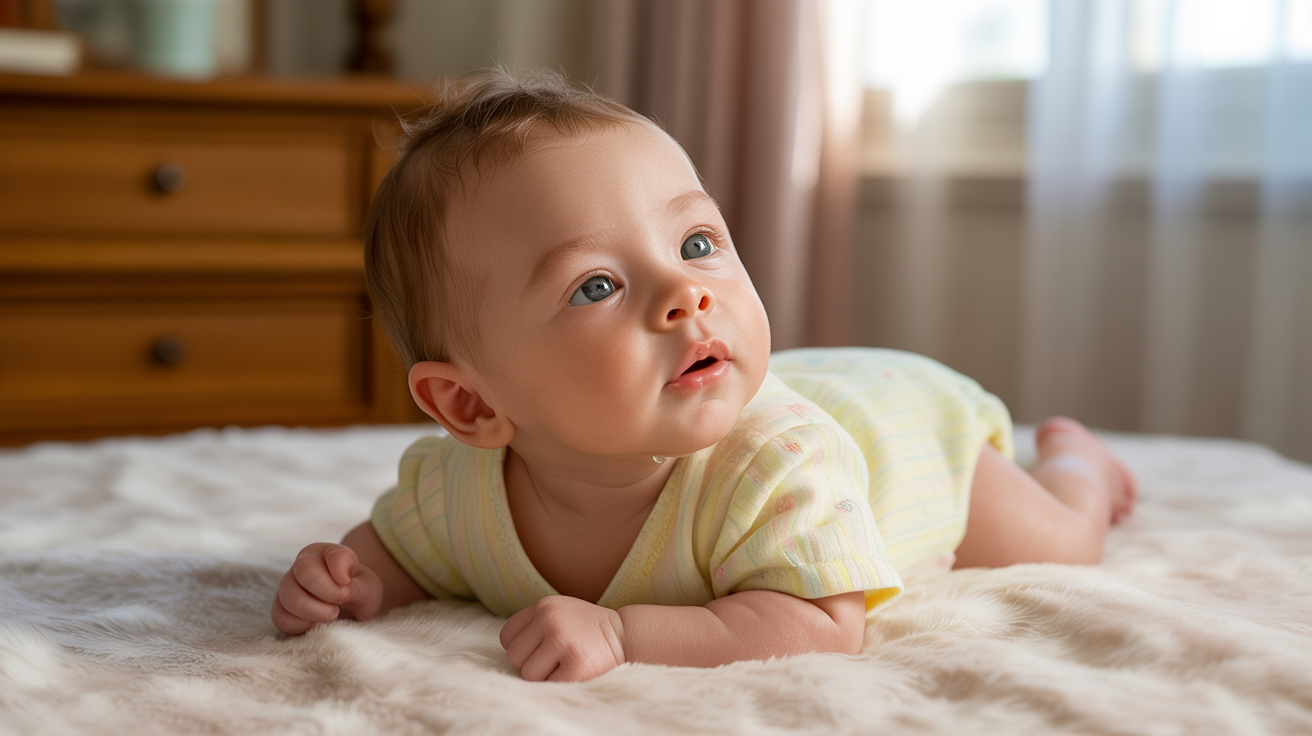
Yes, it can be normal for a baby to drool at 1 month, though it’s less common than in older babies. Most babies start drooling more heavily around 2 to 3 months of age.
Some babies simply start producing saliva earlier than others. Every baby develops at their own pace, and drooling timelines vary from child to child. If your 1-month-old drools a bit, it doesn’t mean something is wrong with their development.
You’ll likely notice the drooling increase as your baby gets older. By 3 months, most babies drool much more as their salivary glands become more active. This is a normal part of growing up and learning to control one’s mouth muscles.
What Causes Drooling in 1-Month-Old Babies?
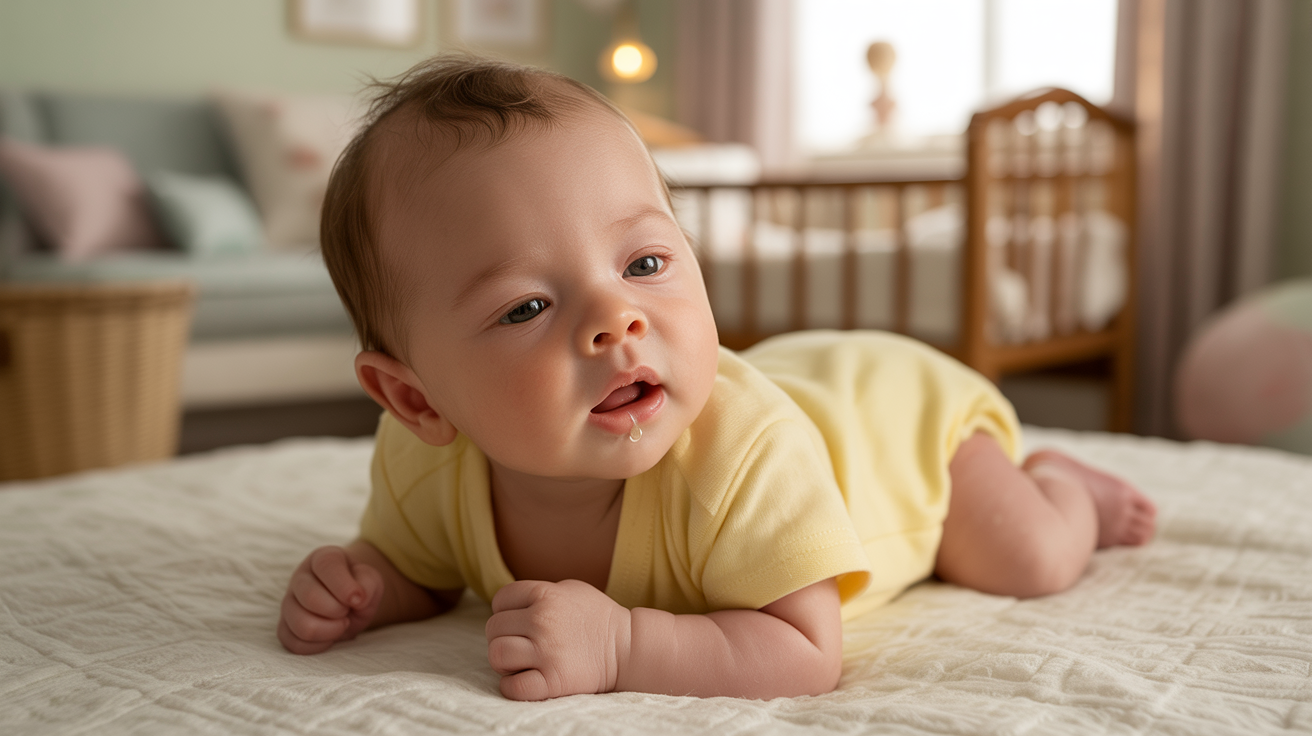
Several factors can lead to a baby drooling at 1 month old. Understanding these causes can help put your mind at ease.
Weak Oral Muscle Control
Your baby’s mouth muscles are still very weak at 1 month old. They haven’t learned how to swallow properly yet, and controlling saliva takes practice.
When saliva builds up in their mouth, it has nowhere to go but out. The muscles that would normally keep it inside aren’t strong enough yet. This is why you see drool dribbling down their chin.
Saliva Production
Salivary glands start working soon after birth. These glands make saliva to help keep the mouth healthy and moist.
Some babies naturally produce more saliva than others, even at 1 month. If your baby makes more saliva than they can swallow, you’ll see drooling. This is just how their body works and isn’t a problem.
Mouth Breathing or Congestion
If your baby has a stuffy nose, they might breathe through their mouth more. This can lead to extra drooling because their mouth stays open.
Colds and congestion are common in newborns. When babies can’t breathe well through their nose, mouth breathing increases saliva flow. Once the congestion clears up, the drooling usually gets better, too.
Understanding Baby Saliva and Its Purpose

Saliva isn’t just spit. It actually serves important functions for your baby’s health and development.
Saliva keeps your baby’s mouth moist and comfortable. It also starts preparing their digestive system for when they begin eating solid foods later. Another key job is protecting against harmful bacteria that could cause infections in the mouth.
Your baby’s salivary glands are located in several places around the mouth and jaw. These glands work automatically to produce saliva throughout the day. Even though your 1-month-old can’t control swallowing well yet, their body is already making saliva to support their health.
Drooling Patterns: What to Expect as Your Baby Grows

Drooling changes as babies grow and develop new skills. Here’s what typically happens at different stages. From birth to 1 month, drooling is usually minimal.
Some babies drool more than others, but most newborns keep saliva fairly controlled. From 2 to 3 months, you’ll notice drooling increases significantly as salivary glands become more active.
The drooling usually peaks between 3 and 6 months of age.
This happens for several reasons:
- Saliva production is high
- Swallowing skills are still developing
- Babies put their hands and toys in their mouths more
- Teething may begin around 3 to 4 months for some babies
Remember that every baby is different. Your child might drool heavily at 2 months, while your friend’s baby stays fairly dry until 4 months. Both patterns are normal.
How to Manage Drooling in Your 1-Month-Old?
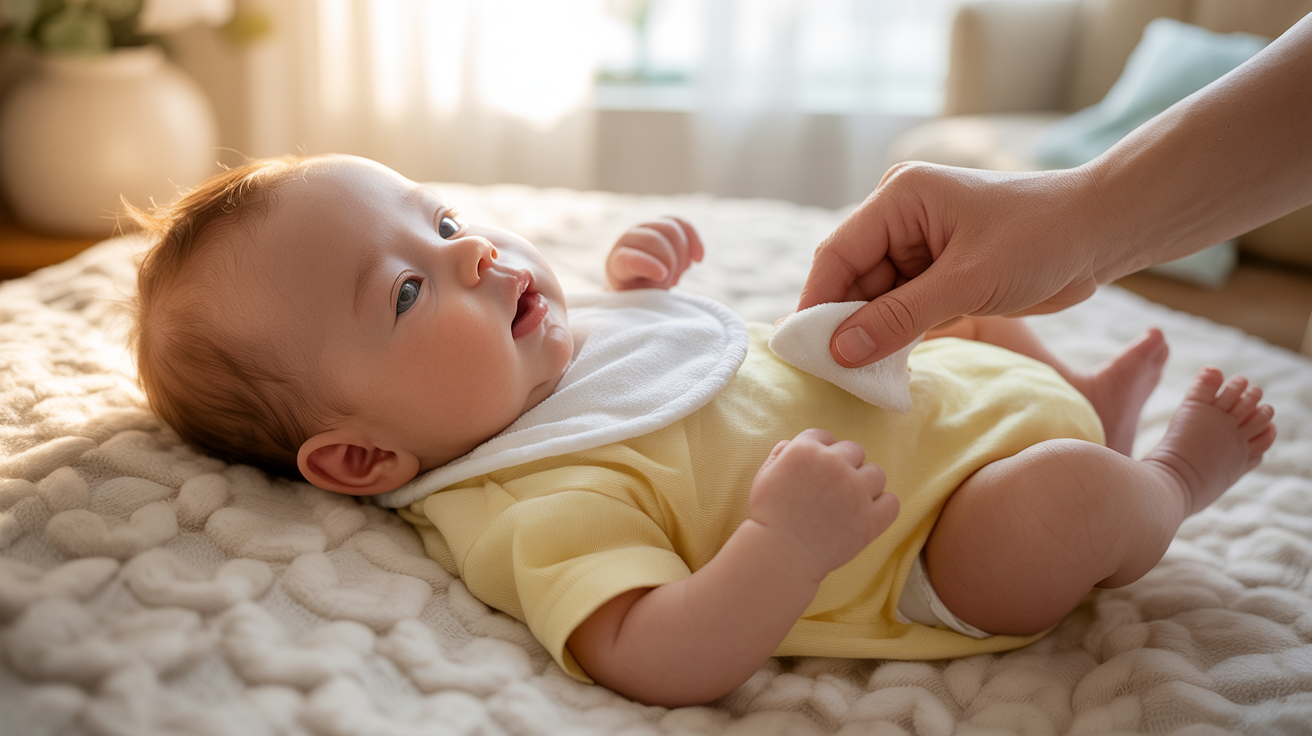
You can take simple steps to keep your baby comfortable when they’re drooling.
Keep Baby’s Skin Dry
Use soft cotton or muslin cloths to wipe away drool throughout the day. These fabrics are gentle on sensitive newborn skin and absorb moisture well.
Wipe your baby’s chin, neck, and chest gently but often. Don’t rub hard, as this can irritate their skin. A light patting motion works best to remove moisture without causing redness.
Protect Delicate Skin
When your baby’s skin is completely dry, you can apply a thin layer of barrier cream or ointment. Products like Aquaphor or plain petroleum jelly create a protective layer.
Always choose fragrance-free products made for babies. Scented lotions and creams can irritate sensitive skin and make rashes worse. Read labels carefully before buying any product for your newborn.
Clothing Tips
Bibs can help keep your baby’s clothes dry during heavy drooling times. Choose soft, absorbent bibs that won’t scratch your baby’s neck.
Change wet clothes as soon as you notice them. Sitting in damp clothing can lead to skin irritation and rashes. Keep extra outfits handy so you can swap them out quickly when needed.
Preventing and Treating Drool Rash

Drool rash appears as red, dry, or chapped patches on the skin. It happens when moisture sits on the skin for too long.
The most common areas for drool rash include the chin, cheeks, neck, and upper chest. These are the spots where drool tends to collect. You might also see rash around the mouth corners where saliva pools.
To prevent drool rash, follow these tips:
- Wipe drool away gently and often
- Keep skin as dry as possible
- Apply barrier cream to problem areas
- Avoid scratchy fabrics against your baby’s face
- Use mild, fragrance-free laundry detergent
- Skip fabric softeners and dryer sheets
If your baby develops a rash, continue wiping gently and apply barrier cream more often. The rash should improve within a few days with good care.
When to Contact Your Pediatrician?

Most cases of baby drooling at 1 month are harmless. However, some signs need a doctor’s attention.
Call your pediatrician if you notice any of these warning signs:
- Your baby seems to have trouble swallowing or chokes frequently
- Drooling suddenly becomes much heavier than before
- A rash doesn’t get better after several days of treatment
- Your baby has a fever along with drooling
- Feeding becomes difficult, or your baby refuses to eat
- Your baby seems uncomfortable or in pain
Trust your gut as a parent. If something feels off about your baby’s drooling, it’s always okay to call the doctor.
Pediatricians would rather answer questions than have you worry at home. Most concerns can be addressed with a quick phone call.
Conclusion
Baby drooling at 1 month can be a normal part of development. While it’s more common in older babies, some newborns do drool early.
Most drooling at this age is harmless. It happens because your baby’s mouth muscles are still weak and their body is learning to control saliva. Simple car,e like wiping gently and using barrier creams can prevent discomfort.
Watch for warning signs like feeding problems or sudden changes in drooling. If you’re concerned about your baby’s drooling, reach out to your pediatrician for guidance.
Remember that your baby is growing and changing every day. What seems like a lot of drool now will likely become even more noticeable in a few months, and that’s okay. You’re doing a great job taking care of your little one.
Frequently Asked Questions
Can Drooling Mean My Baby Is Teething at 1 Month?
Teething at 1 month is very rare. Most babies get their first tooth between 4 and 6 months old. Early drooling is more likely due to developing mouth muscles than teething.
Will Using a Pacifier Make Drooling Worse?
Pacifiers can increase drooling in some babies. If you notice excessive drooling with pacifier use, try limiting how often your baby uses it. Every baby responds differently to pacifiers.
How Often Should I Wipe My Baby’s Drool?
Wipe your baby’s drool as needed to keep their skin dry. Be gentle to avoid irritation. Find a balance between keeping skin dry and wiping too much, which can also cause redness.
Does Drooling While Sleeping Indicate a Problem?
Drooling during sleep is usually normal. It often happens because of your baby’s sleeping position or weak swallowing muscles. Check if congestion might be causing mouth breathing while your baby sleeps.
Can Drooling Cause My Baby to Lose Fluids?
Drooling doesn’t typically cause dehydration. Babies produce saliva and swallow most of it back down. Watch for other dehydration signs like fewer wet diapers or a sunken soft spot instead.