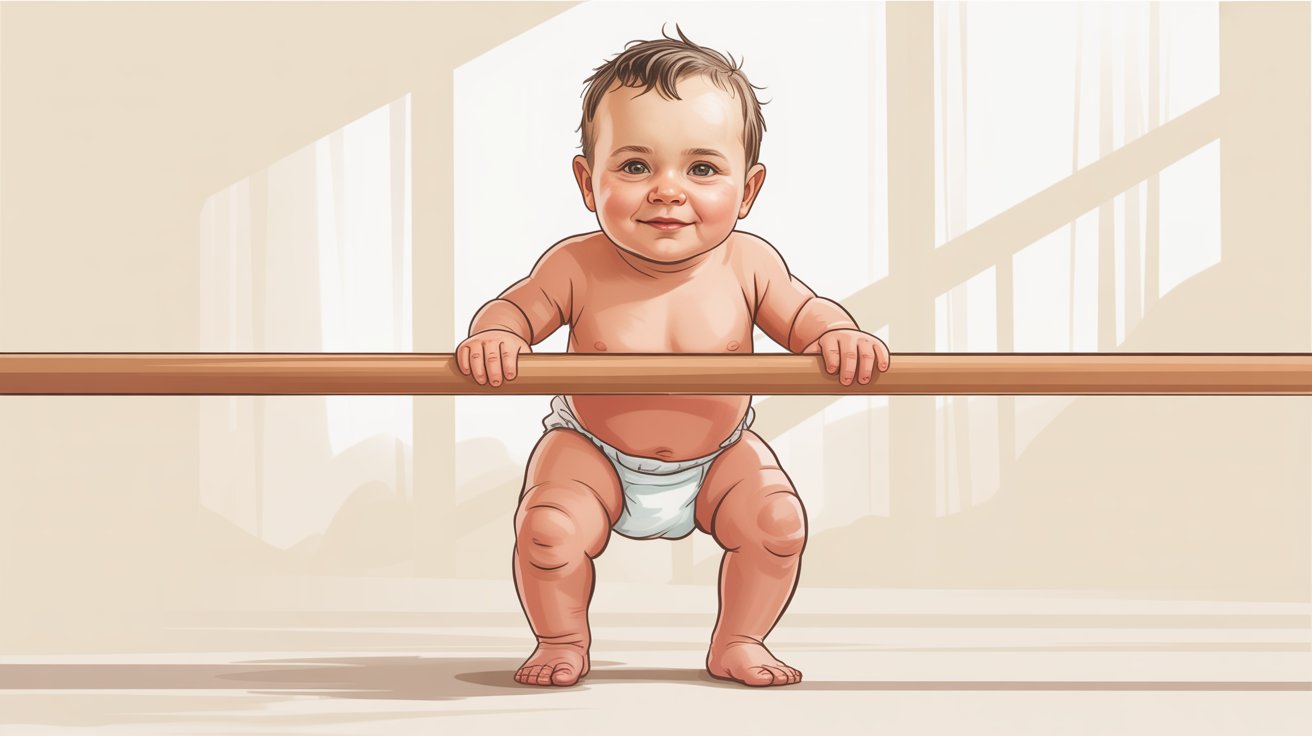

Most activities for 16 month old toddlers fail in under five minutes. These 27 don't.
At this age, attention spans are short, moods shift fast, and what worked yesterday gets ignored today. I've tested a lot of ideas through this stage, including ones that completely flopped.
In this blog, I'm sharing 27 learning activities for 16 month old toddlers that support real brain development, fine motor skills, and early language, along with a daily routine, safety tips, and honest advice on what to skip.
Whether you need indoor activities for a 16 month old or simple Montessori activities at 16 months, this covers it all.
Low-prep, realistic, and built around how toddlers actually develop.
Parents Are Looking for Fun and Engaging Activities Suitable for a 16-Month-Old Toddler

Most parents I talk to say the same things. "My toddler gets bored in five minutes." "I don't know what's age-appropriate." "I need screen-free ideas right now."
You are not alone in this.
According to the American Academy of Pediatrics, hands-on, adult-guided play is one of the best ways to support language, motor, and cognitive growth at this stage.
Pediatric guidelines consistently emphasize hands-on play over passive screen time for toddlers under two. They don't need expensive toys or complicated setups. They need repetition, sensory input, and your face.
What works well:repetition-based play, sensory exploration, and movement with interaction. What to skip:anything with small pieces, too many steps, or designed for kids over two.
Keep it simple. That's the whole strategy.
27 Fun and Easy Development Activities for 16 Month Old Toddlers
These aren't random ideas. Each one is chosen to support a specific developmental skill, including fine motor control, early language development, sensory processing, and brain development during one of the most active growth windows in early childhood.
1. Dry Rice Scooping Bin
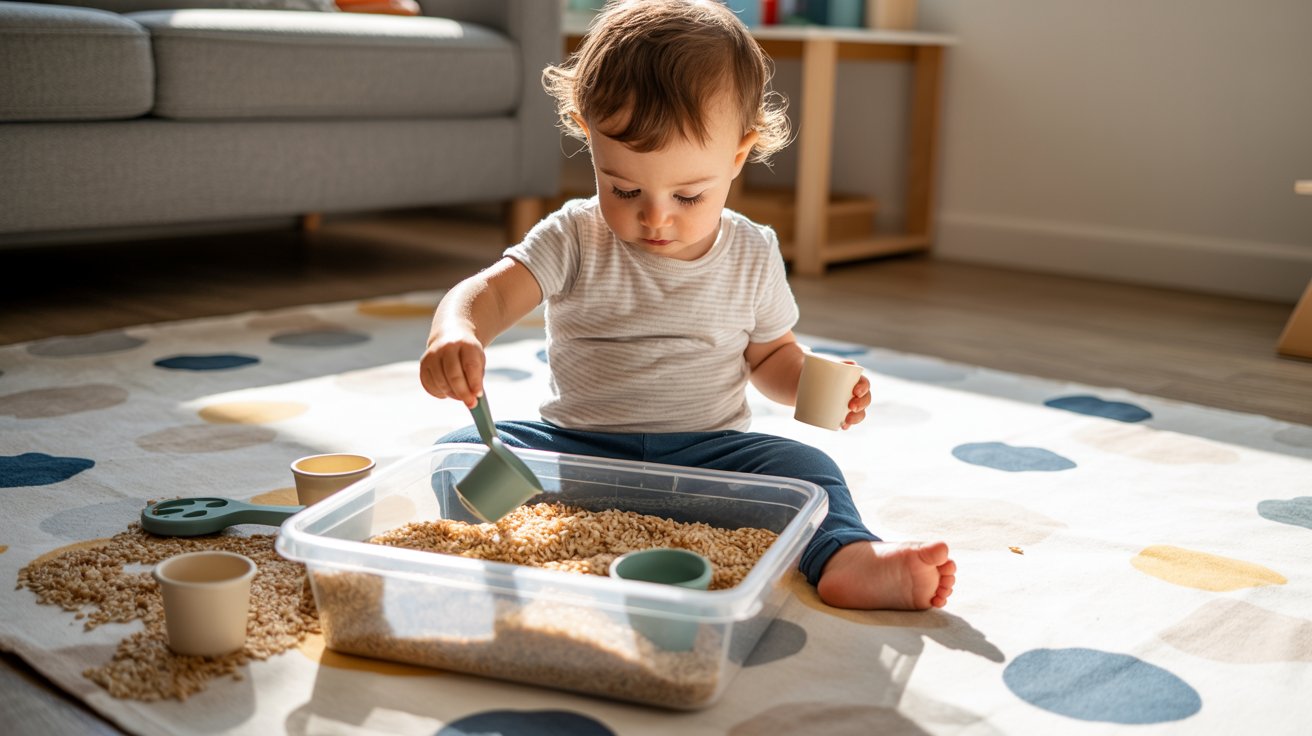
Skill developed: Fine motor, focus
Time required: 15 to 20 minutes
Mess level: Low
Fill a bin with dry rice, small cups, and spoons. Let your toddler scoop and pour. This is one of the best Montessori activities for 16 months because it's completely self-directed. Lay a mat underneath for easy cleanup.
2. Water Pouring Station
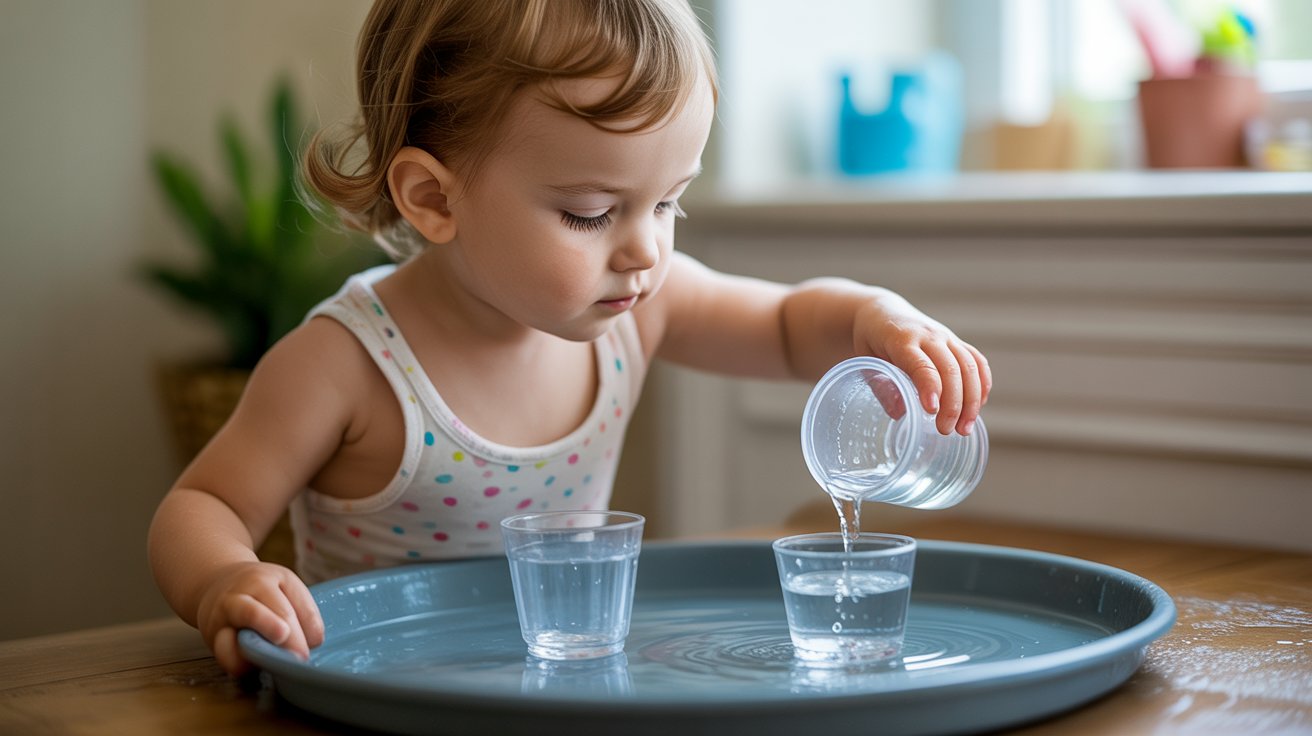
Skill developed:Hand-eye coordination, cause and effect
Time required:10 to 15 minutes
Mess level:Medium
Set out small cups and a shallow tray. Show them how to pour from one cup to another. Do this in the bathtub or outside to manage the mess easily.
3. Edible Finger Painting

Skill developed:Sensory processing, creativity
Time required:10 minutes
Mess level: High
Use yogurt or pureed fruit as paint on a tray. Strip them down first. It's messy, but they absolutely love it and it's completely safe if things go in the mouth.
4. Texture Basket Exploration

Skill developed:Sensory awareness, language
Time required: 10 to 15 minutes
Mess level:Low
Fill a basket with items of different textures: a sponge, a rubber ball, a wooden block, a soft cloth. Name each texture out loud. This one quietly builds vocabulary without feeling like a lesson.
5. Ice Cube Play

Skill developed:Sensory processing, curiosity
Time required:10 minutes
Mess level:Low
Drop ice cubes into a shallow bowl. Let your toddler touch, push, and watch them melt. Adding food coloring makes it more interesting and keeps attention longer.
6. Bubble Wrap Stomping

Skill developed: Gross motor, cause and effect
Time required:5 to 10 minutes
Mess level:Low
Lay bubble wrap on the floor and let them stomp on it. Hold their hands the first time so they don't slip.
7. Sand or Flour Play Tray
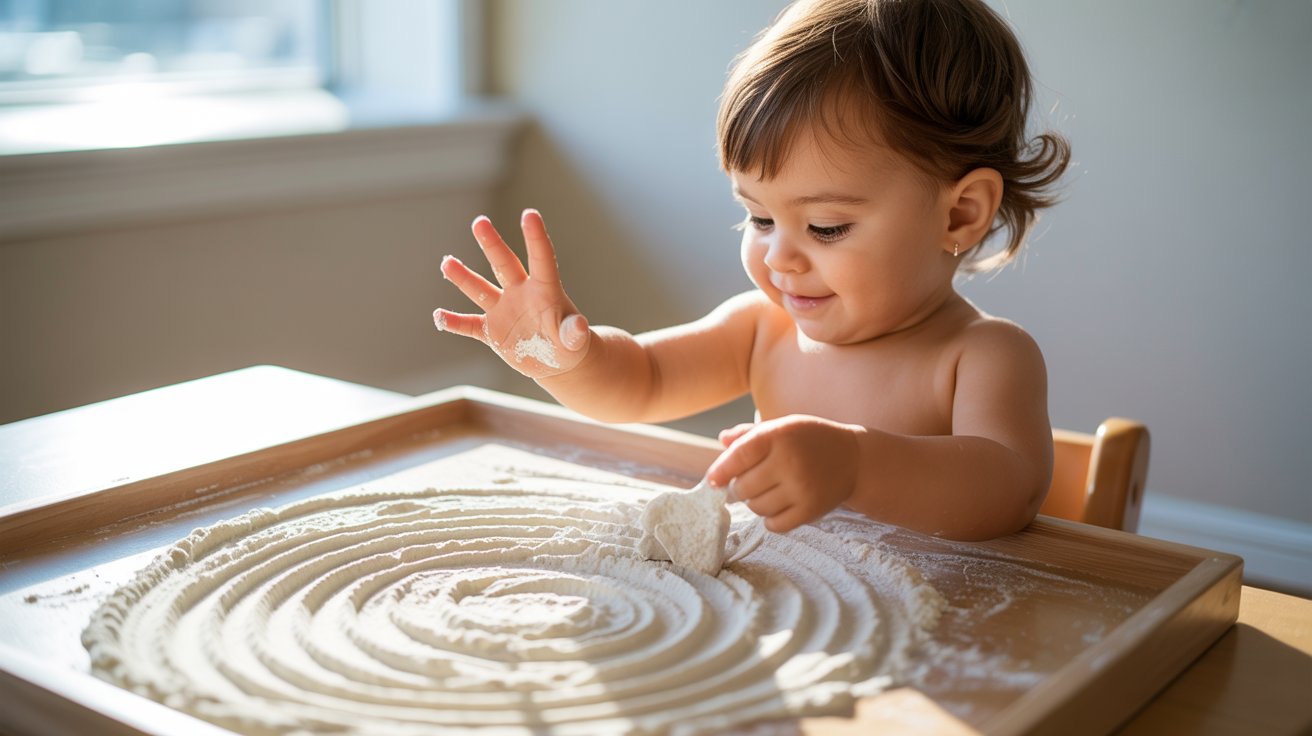
Skill developed:Sensory processing, fine motor
Time required: 15 minutes
Mess level:Medium
Pour flour into a tray and let your toddler pat it flat and drag fingers through it. Sand works outside. Both are excellent indoor activities for a 16 month old on rainy days.
8. Pillow Obstacle Course

Skill developed:Gross motor, balance
Time required: 10 to 15 minutes
Mess level: Low
Stack cushions in a line and let your toddler climb over them. Stay close and spot them throughout.
9. Push and Pull Toy Walk

Skill developed:Walking confidence, coordination
Time required: 10 to 20 minutes
Mess level: Low
Give your toddler a push toy or a small laundry basket to push around the room. One of the best movement-based development activities for toddlers at this stage.
10. Ball Rolling Game

Skill developed: Social play, coordination
Time required:10 minutes
Mess level:Low
Sit on the floor and roll a ball back and forth. Simple, calming, and a great introduction to turn-taking.
11. Climbing Cushions

Skill developed: Gross motor, spatial awareness
Time required:10 to 15 minutes
Mess level:Low
Stack firm cushions and let them climb up and slide down. Put a mat underneath for safety.
12. Dance and Freeze Game

Skill developed: Listening, coordination, social bonding
Time required:10 minutes
Mess level:Low
Play music and dance together. When the music stops, both of you freeze. Be dramatic about it. That reaction keeps them coming back for more rounds.
13. Tunnel Crawling

Skill developed:Gross motor, spatial awareness
Time required: 10 to 15 minutes
Mess level: Low
Drape blankets over chairs to make a tunnel. Peek from the other end to pull them through. Works as a great indoor activity for a 16 month old on cold days.
14. Stacking Cups Challenge
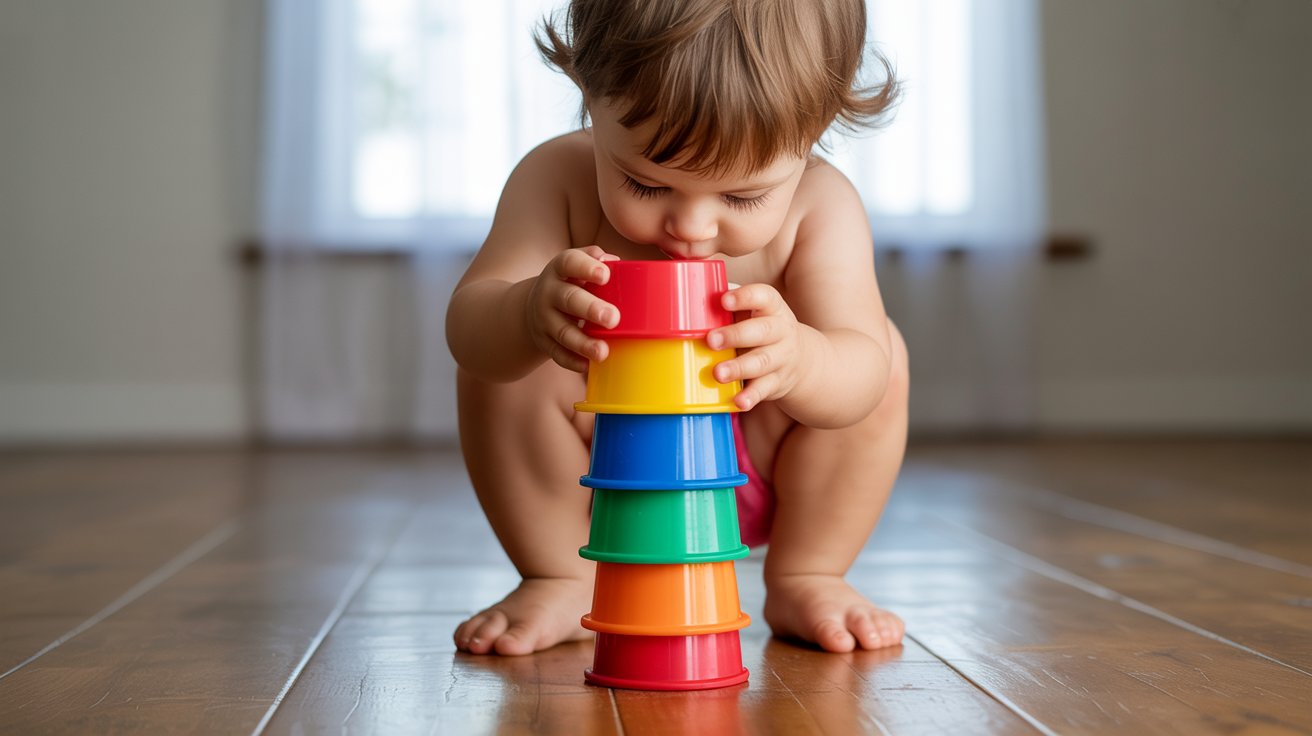
Skill developed:Fine motor, problem solving
Time required: 10 to 15 minutes
Mess level:Low
Stack a tall tower yourself and let them knock it over. They will ask for this again and again.
15. Picture Book Naming Game

Skill developed:Language, vocabulary
Time required: 5 to 10 minutes
Mess level:Low
Point to objects in a simple picture book and ask "What's this?" Repeat the same books often. Repetition is what actually builds vocabulary at this age.
16. Animal Sound Imitation

Skill developed: Language, listening
Time required:5 to 10 minutes
Mess level:Low
Make animal sounds and ask your toddler to copy. Use a picture book alongside. This is one of the easiest learning activities for a 16 month old that you can do anywhere.
17. Object Sorting by Color
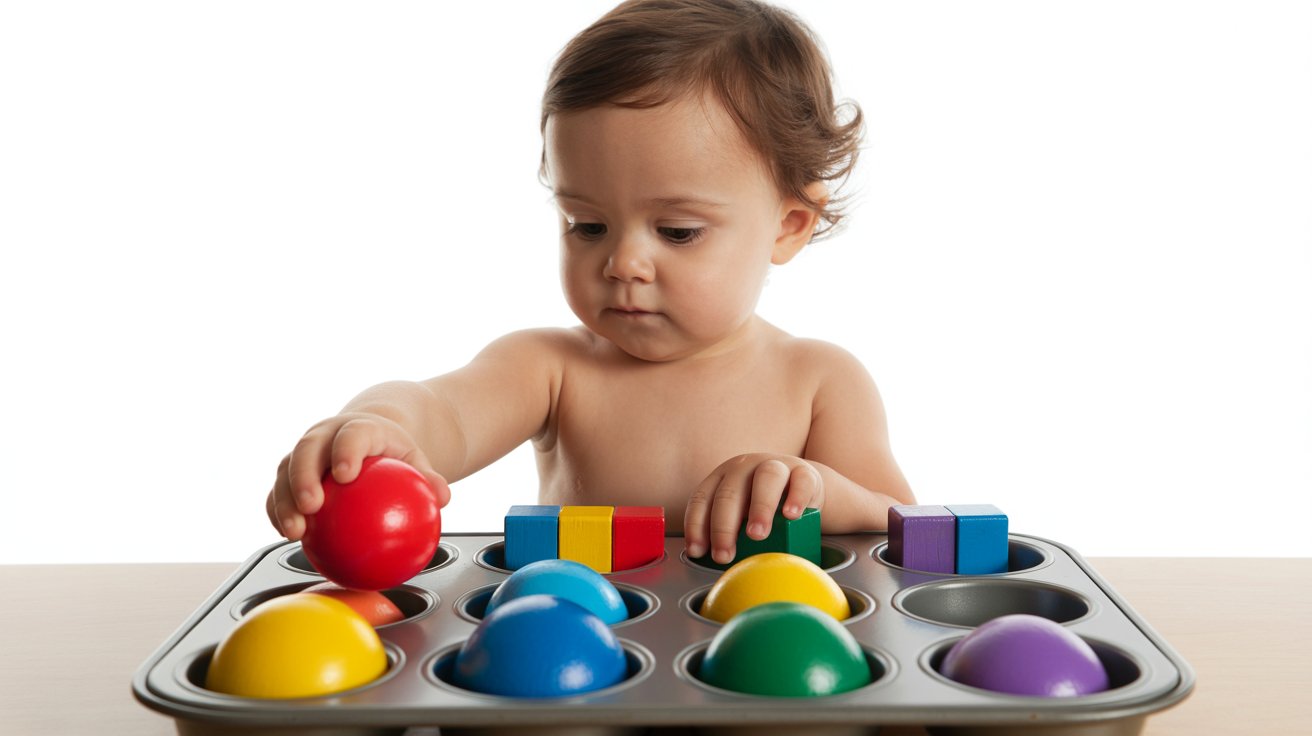
Skill developed:Cognitive, early math concepts
Time required: 10 minutes
Mess level:Low
Use a muffin tin and colored blocks or balls. Start with just two colors. Guide them through it, then let them try on their own.
18. Simple Puzzle Play

Skill developed:Fine motor, problem solving
Time required:10 to 15 minutes
Mess level:Low
Use wooden peg puzzles with large pieces. Knob puzzles are much easier to grip at this age. One of the most classic Montessori activities for 16 months.
19. Flashcard Talk Time

Skill developed:Language, focus
Time required: 5 minutes
Mess level:Low
Show one flashcard at a time and name the image clearly. Keep sessions short. Five focused minutes works better than twenty scattered ones.
20. "Where Is It?" Hide and Find

Skill developed:Object permanence, cognitive
Time required:5 to 10 minutes
Mess level:Low
Hide a toy under a blanket and ask "Where is it?" Make a big deal when they find it. That excitement is what makes them want to play again.
21. Pretend Cooking

Skill developed:Imaginative play, language
Time required:15 minutes
Mess level: Low
Give your toddler a small pot, a spoon, and safe items to stir. Narrate as they play. "You're making soup!" This kind of commentary builds vocabulary without any flashcards.
22. Doll or Teddy Care

Skill developed:Empathy, imaginative play
Time required:10 to 15 minutes
Mess level:Low
Show them how to hug a doll, feed it, and put it to sleep. Copy their actions and turn it into a back-and-forth game.
23. Music and Instruments Play

Skill developed:Rhythm, sensory, social bonding
Time required:10 to 15 minutes
Mess level: Low
A pot and wooden spoon works just as well as a toy drum. Take turns to keep it interactive and not just loud.
24. Scribble Drawing Time

Skill developed:Fine motor, self-expression
Time required:10 to 15 minutes
Mess level: Low
Give your toddler chunky crayons and plain paper. Tape the paper down so it doesn't slide. Let them scribble freely with no direction from you.
25. Laundry Basket Helper

Skill developed:Gross motor, sense of contribution
Time required:10 minutes
Mess level: Low
Let your toddler move small laundry items from one basket to another. Lots of praise makes this feel like a real job to them.
26. Snack Sorting

Skill developed: Cognitive, fine motor
Time required: 5 to 10 minutes
Mess level:Low
Put two or three types of safe snacks on a tray. Let your toddler sort and eat. Name each snack as they pick it up.
27. Watering Plants Together

Skill developed:Sensory, focus, routine
Time required:5 to 10 minutes
Mess level:Low
Give your toddler a small watering can and let them water a plant. It's calm, sensory, and holds attention surprisingly well.
Quick Comparison Table: All 27 Activities at a Glance
Not sure where to start?
This table breaks down every activity by skill focus, mess level, and time needed so you can pick the right one for your toddler's mood and your energy level right now.
| Activity | Skill Focus | Mess Level | Time Needed |
| Dry Rice Scooping | Fine motor | Low | 15–20 min |
| Water Pouring | Coordination | Medium | 10–15 min |
| Edible Finger Painting | Sensory | High | 10 min |
| Texture Basket | Language | Low | 10–15 min |
| Ice Cube Play | Sensory | Low | 10 min |
| Bubble Wrap Stomp | Gross motor | Low | 5–10 min |
| Sand/Flour Tray | Sensory | Medium | 15 min |
| Pillow Obstacle | Balance | Low | 10–15 min |
| Push/Pull Toy | Walking | Low | 10–20 min |
| Ball Rolling | Social | Low | 10 min |
| Climbing Cushions | Gross motor | Low | 10–15 min |
| Dance and Freeze | Listening | Low | 10 min |
| Tunnel Crawling | Spatial | Low | 10–15 min |
| Stacking Cups | Problem solving | Low | 10–15 min |
| Picture Book Game | Vocabulary | Low | 5–10 min |
| Animal Sounds | Language | Low | 5–10 min |
| Color Sorting | Cognitive | Low | 10 min |
| Simple Puzzle | Fine motor | Low | 10–15 min |
| Flashcard Time | Language | Low | 5 min |
| Hide and Find | Object permanence | Low | 5–10 min |
| Pretend Cooking | Imaginative play | Low | 15 min |
| Doll/Teddy Care | Empathy | Low | 10–15 min |
| Music Play | Rhythm | Low | 10–15 min |
| Scribble Drawing | Fine motor | Low | 10–15 min |
| Laundry Helper | Contribution | Low | 10 min |
| Snack Sorting | Cognitive | Low | 5–10 min |
| Watering Plants | Focus | Low | 5–10 min |
Bookmark this table for the days you're running low on ideas and need something fast, low-mess, and actually worth your toddler's attention span.
Indoor vs Outdoor Activities (Quick Guide for Parents)
Most activities above work indoors. Getting outside helps too, especially for gross motor development.
Good indoor picks:sensory bins, stacking cups, puzzles, pretend play, and books.
Good outdoor picks:watering plants, bubble wrap stomping, push toys, sand trays, and ball rolling.
A mix of both works best through the week.
How to Keep a 16 Month Old Engaged Longer
Toddlers disengage when they feel stuck. They re-engage when they feel in control.
Give them two options and let them pick. Follow their lead. If they stay in the rice bin for 20 minutes, let it run. Don't interrupt flow when it's happening naturally.
What worked consistently for me:getting on the floor and playing alongside them.
Your presence changes everything. Five focused minutes from you is worth more than 30 minutes of solo play.
What most parents get wrong is setting up an activity and then stepping back too quickly. At 16 months, they still need you right there.
Short, focused play that matches your toddler's current attention span does more for their language development and brain development than any long, structured session ever will.
Simple Daily Activity Routine for a 16 Month Old
A loose, flexible rhythm works better than a packed schedule at this age.
Morning:one sensory activity like water play or a texture basket.
Mid-morning:outdoor time or a movement activity.
After lunch:quiet play like books, puzzles, or stacking.
Late afternoon:music, dancing, or pretend play.
Evening:something calm before bed, like reading the same book again.
You don't need to fill every minute. Short bursts with rest in between keep toddlers at their best.
Activities to Avoid at 16 Months
Not everything is age-appropriate, and some activities do more harm than good.
- Skip anything with pieces small enough to be a choking risk.
- Avoid crafts that need scissors, glue, or adult supervision you can't fully give.
- Don't push puzzles with more than six to eight pieces.
- Avoid activities that require sitting still for more than 10 minutes. And skip anything with a screen.
I tried a shape sorter once that was clearly meant for a two-year-old. My toddler got frustrated within two minutes and threw it across the room. Wrong tool, wrong age.
Signs Your Toddler Is Ready for Harder Activities
Watch for these: they finish a six-piece puzzle without help, they stack more than five blocks without knocking them down on purpose, they follow two-step directions, and they start showing interest in more complex pretend play like feeding a doll a specific food.
When you see these signs consistently, it's time to move toward 18-month-level activities and start introducing more sorting, simple matching games, and basic cause-and-effect toys.
How to Rotate Activities Without Boredom
The trick is not giving access to everything at once.
Keep three or four activities out at a time. Rotate every few days.
When something comes back out after a break, it feels new again. This also applies to toys. Store half of them and swap every week or two.
I noticed my toddler was completely uninterested in the texture basket after a few days. When I put it away for a week and brought it back out, it was like she had never seen it before.
Safety Tips Parents Should Never Ignore
Keep small items out of reach. Anything that fits through a toilet paper tube is a choking risk.
Stay close during water play. Even shallow water needs direct supervision.
Check toys regularly for cracks or broken pieces. Avoid anything with sharp edges or flaking paint.
Never leave your toddler alone during sensory play. Things end up in mouths very fast at this age.
Conclusion
Activities for 16 month old toddlers work best when they're simple, short, and involve you.
None of what's in this list needs a lot of prep, money, or time. Most of it uses things you already have at home.
What matters most is showing up and being present during play. That's what actually supports fine motor development, early language, and brain development at this age.
Save this list. You'll need it on the days nothing works and you're staring at a bored toddler with zero ideas. Share it with another parent who's in the same boat.
What development activity has worked best for your toddler this month?
Frequently Asked Questions
What activities are good for a 16 month old?
Sensory bins, stacking toys, picture books, music play, and simple outdoor activities all work well. Focus on hands-on, movement-based play that involves repetition and your presence.
What are good Montessori activities for 16 months?
Dry rice scooping, object sorting, simple puzzles, and pouring activities are all strong Montessori-aligned options. They support independence and fine motor development without requiring any special equipment.
How long should a 16 month old play independently?
Most 16 month olds can manage 10 to 15 minutes of independent play at a time. Short bursts are normal and healthy at this stage.
How many activities does a 16 month old need per day?
Two to four short activity sessions per day is plenty. Quality matters more than quantity, so keep each session simple and follow your toddler's mood.
What signs show a toddler is ready for harder activities?
Watch for completing puzzles independently, stacking five or more blocks, following two-step directions, and showing more complex pretend play. These point to readiness for 18-month-level activities.