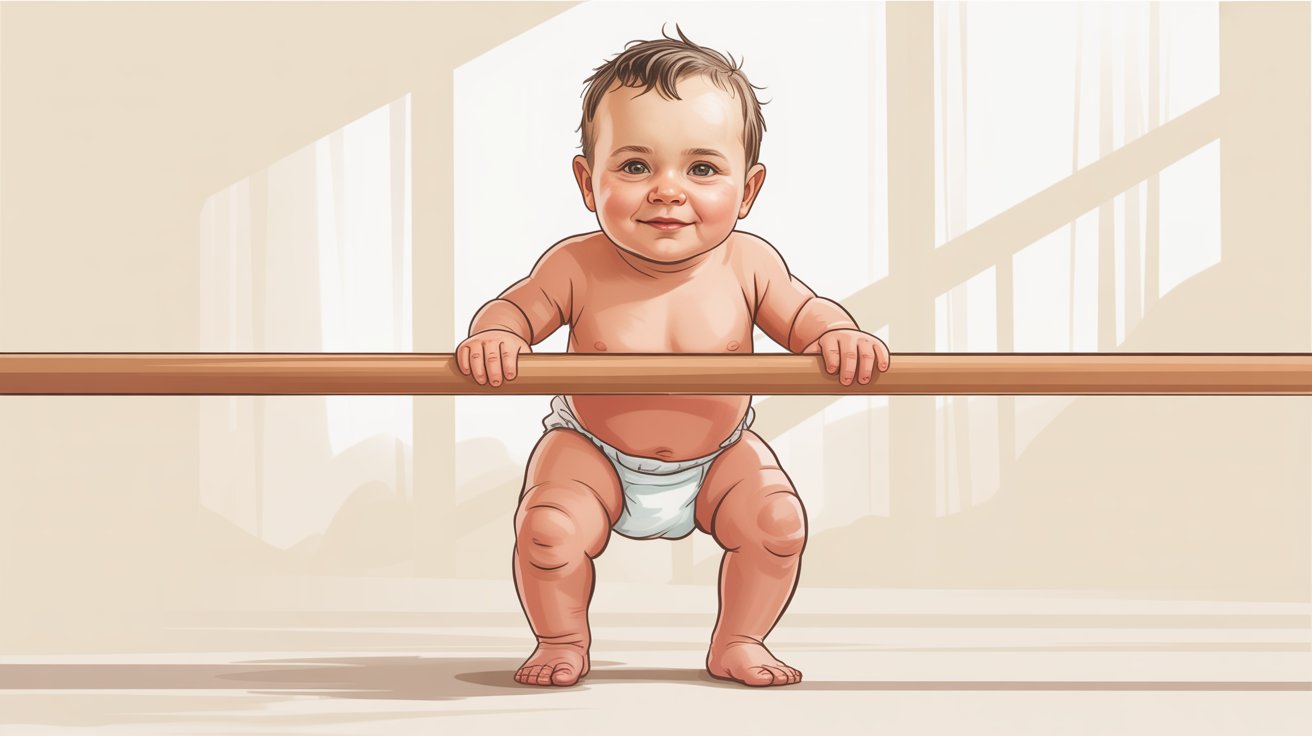

Your 10-month-old is on the move, and it’s thrilling to watch. At this age, babies are busy learning every single day. They’re crawling around the house, pulling themselves up on furniture, and getting into everything they can reach.
But here’s something you might not realize: the items sitting in your kitchen cabinets right now could be teaching your baby more than the most expensive toys. That wooden spoon? That empty container? They’re actually tools for brain development.
Most parents think they need special equipment or training to help their baby learn. Your baby is already wired to learn through everyday moments. You just need to know how to create the right opportunities.
This guide shows you how to turn ordinary household items into powerful learning experiences. These are things you probably walked past this morning without a second thought.
What 10-Month-Old Babies Are Learning?
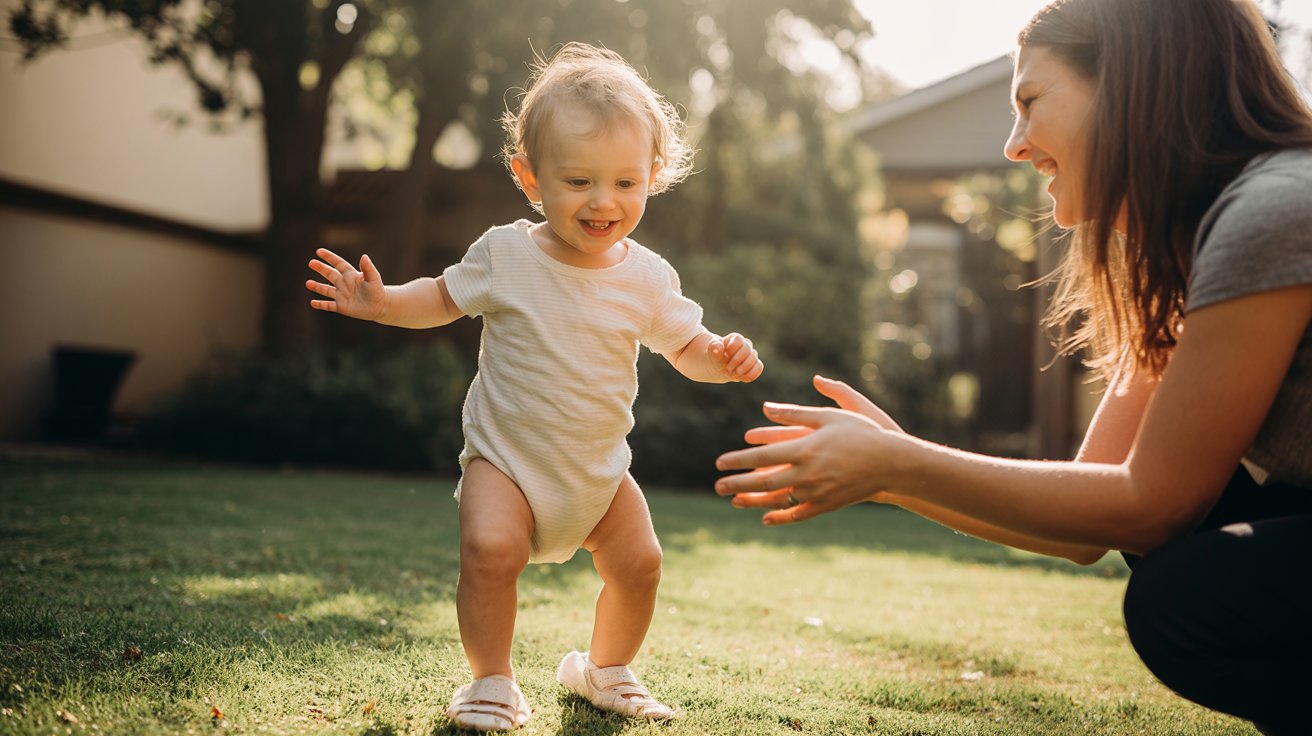
At 10 months, your baby is working hard on moving around. Most babies at this age can crawl well, and many are pulling up to stand.
Some even start “cruising” along furniture, taking steps while holding on. Their little bodies are getting stronger each day.
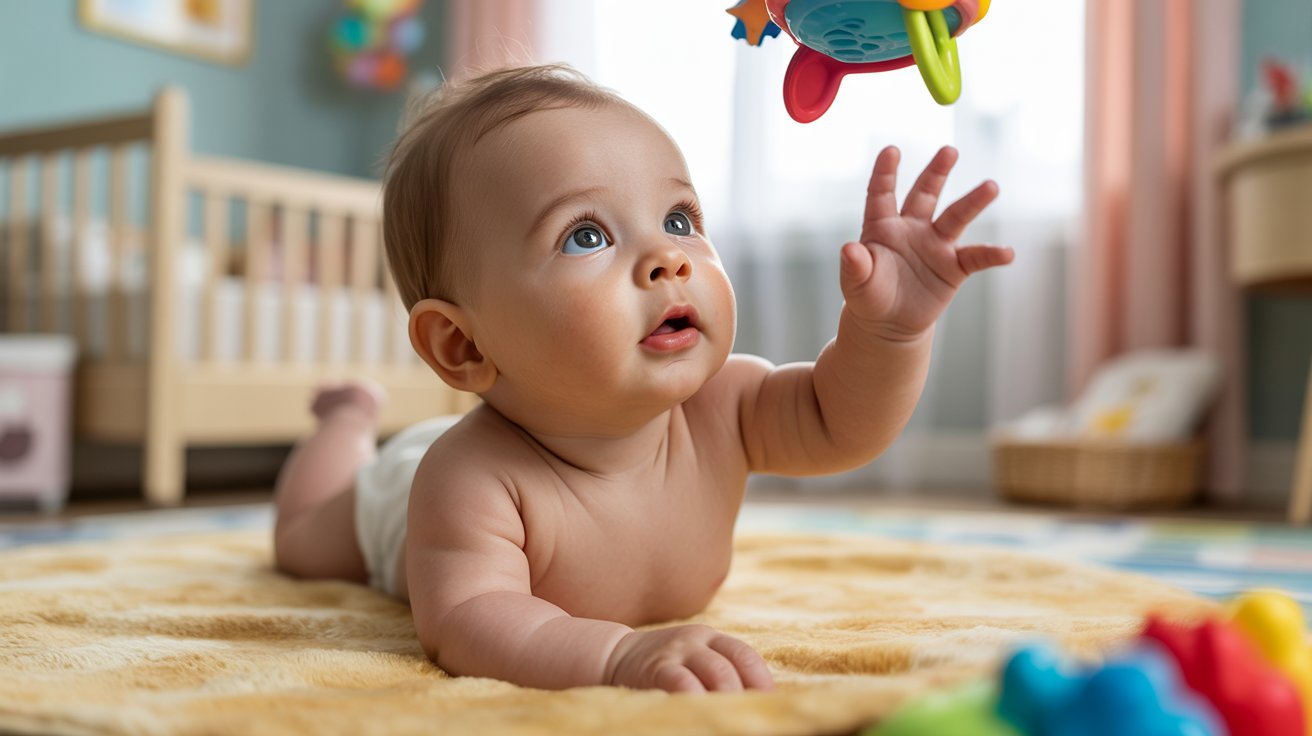
Their hands are getting smarter, too. Your baby is learning to pick up small objects using their thumb and finger. This skill, called the pincer grasp, helps them grab cereal pieces, small toys, and anything else they can reach.
They’re also starting to understand that their actions make things happen, like when they drop a toy, and it makes a sound.
Babies this age also listen more carefully. They can follow simple directions like “give me the ball” or “come here.” They want to touch everything and learn what different things feel like, sound like, and even taste like.
The right activities for 10-month-old babies help them practice all these new skills in safe, fun ways.
Simple Activities to Try Today
These activities for 10-month-old development are easy to set up and use items from around your home. Try one or two at a time and see which ones your baby loves most.
Sensory Play with Kitchen Items
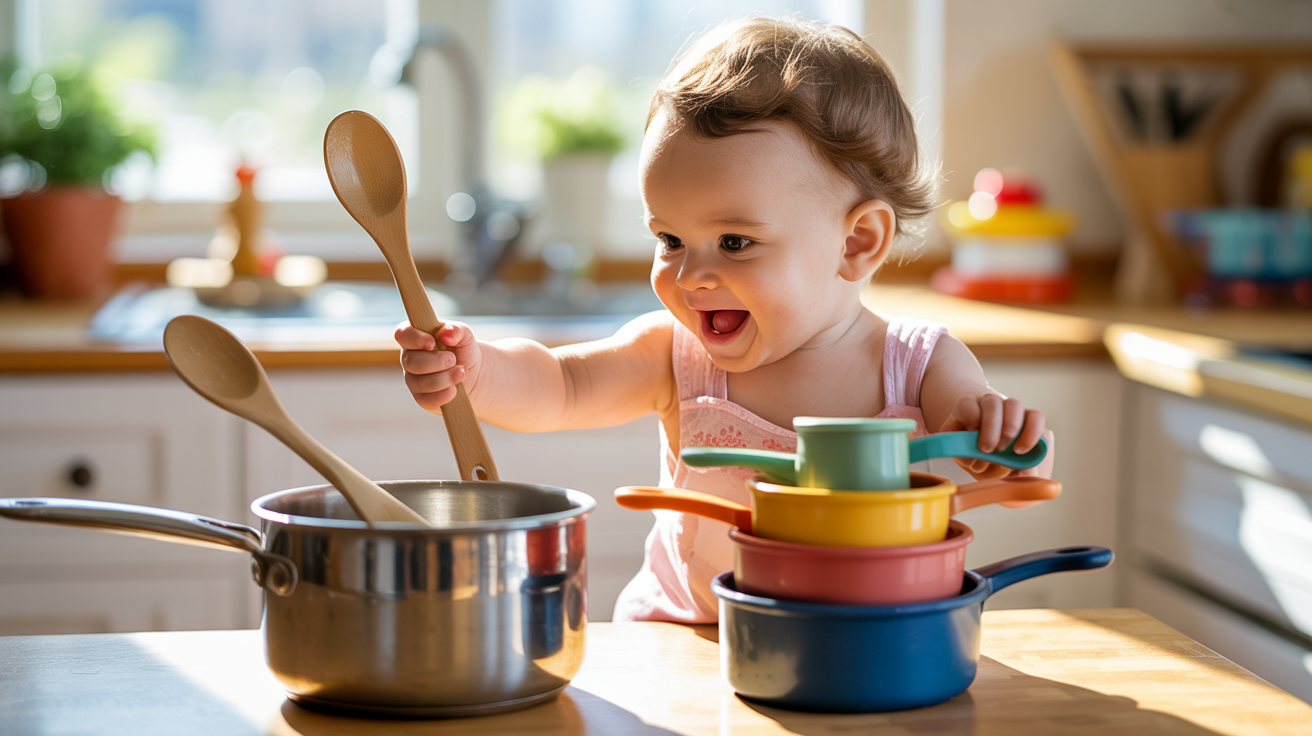
Pull out some pots, pans, wooden spoons, and measuring cups from your kitchen. Let your baby bang on the pots with the spoons, stack cups, and move items around. Babies love the sounds and the way these objects feel in their hands.
This type of play helps build hand-eye coordination. When your baby tries to hit the pot with the spoon, they’re learning to aim and control their movements.
Plus, kitchen items are safe, washable, and always available when you need a quick activity.
Water Play with Sponges
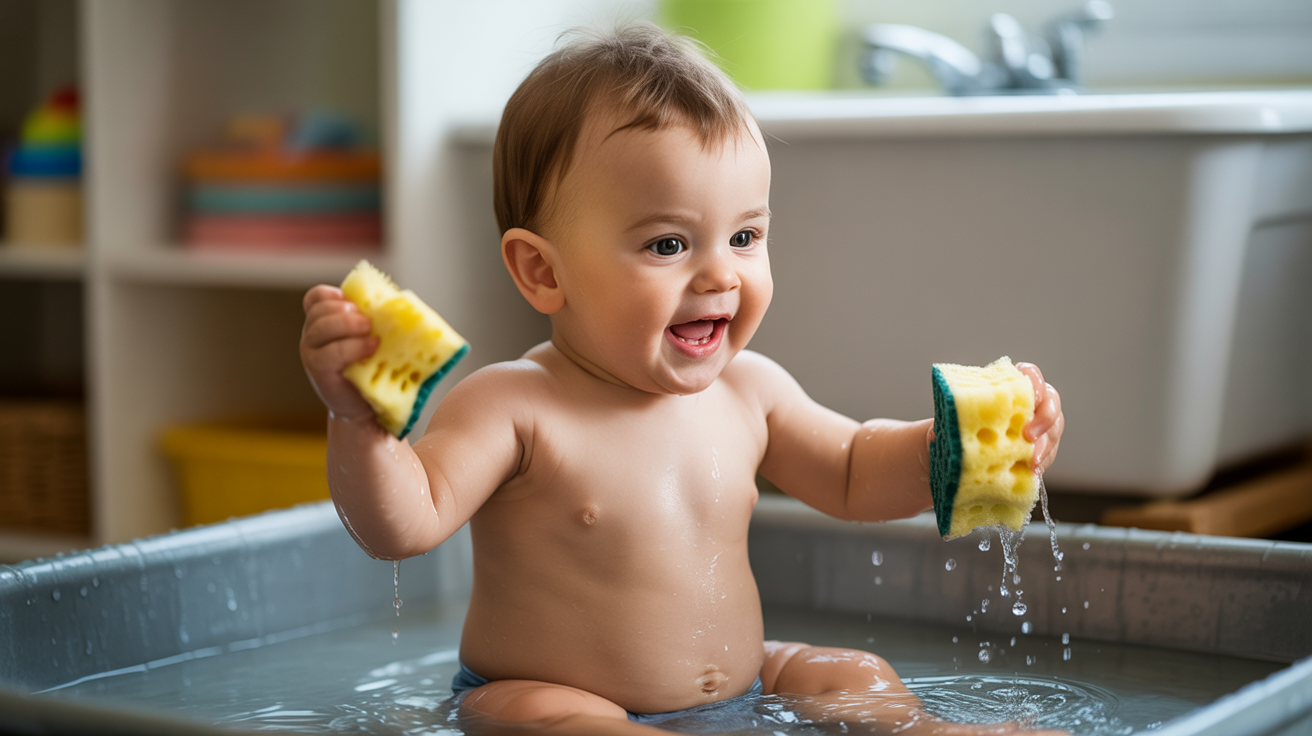
Fill a shallow bin or your bathtub with a few inches of water. Give your baby some sponges to squeeze and splash with.
Natural sponges work great, but regular kitchen sponges are fine too. Babies love feeling the water drip through their fingers.
Squeezing sponges helps strengthen little hand muscles. Your baby will also learn about wet and dry, heavy and light. Keep a towel nearby for easy cleanup, and always stay right next to your baby during water play.
Building Small Towers
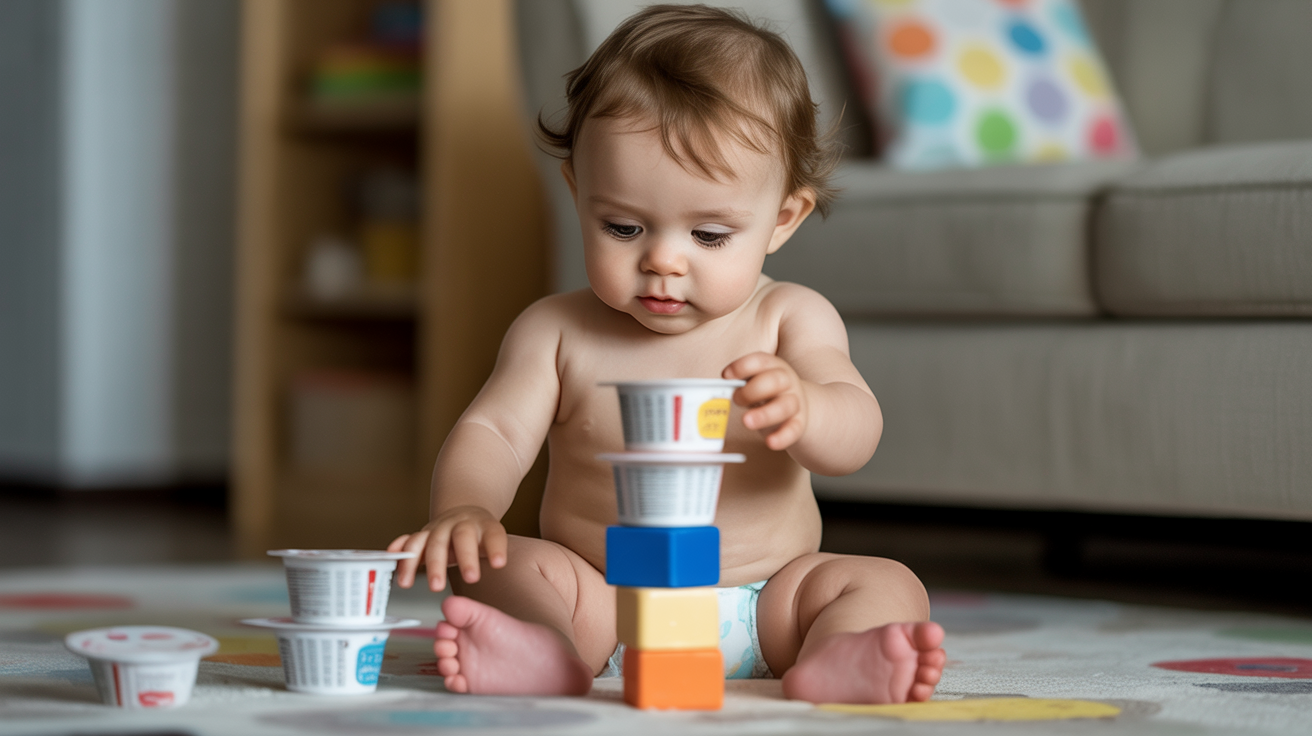
Gather some empty yogurt cups, small boxes, or plastic containers. Show your baby how to stack them up.
You can also place balls or blocks on top of flat containers. Babies love knocking towers down just as much as building them up.
This activity teaches balance and coordination. Your baby learns how to place one object on another carefully. They also start to understand how things fall and what happens when a tower gets too tall.
Ball Games
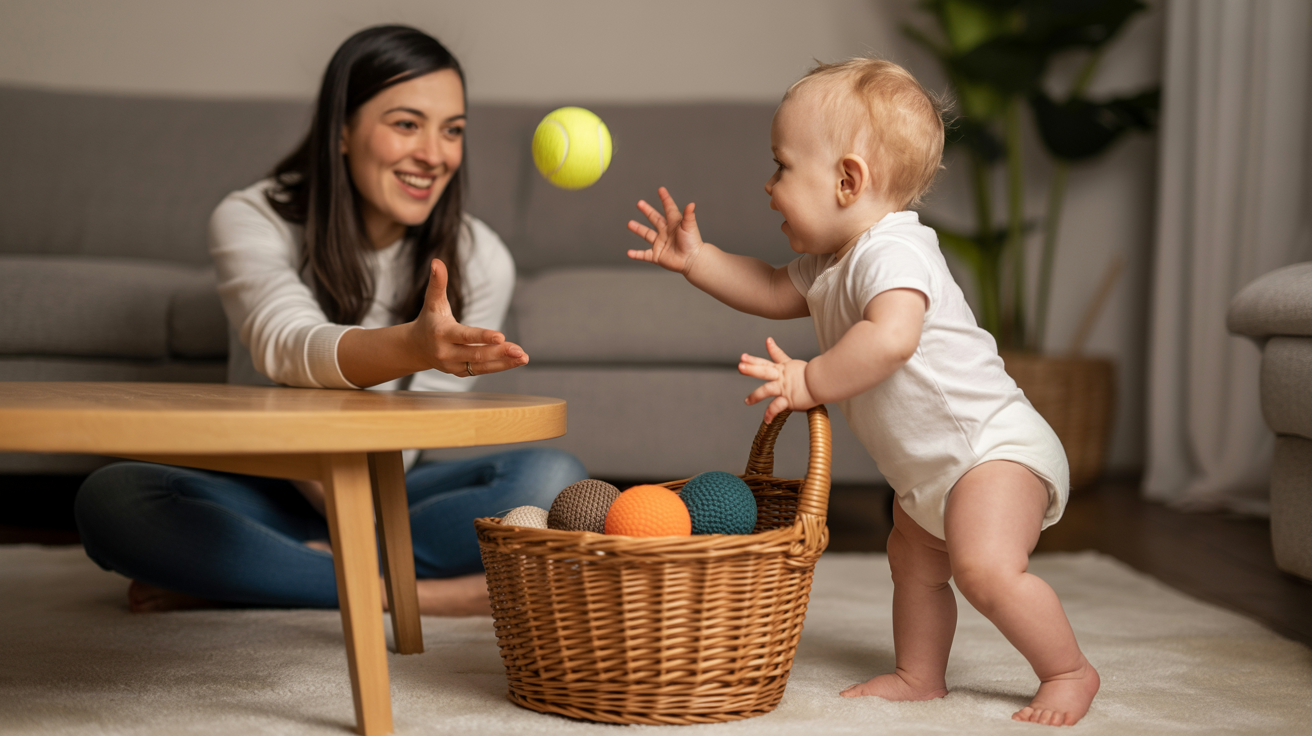
Sit on the floor across from your baby while they stand holding furniture. Roll a ball back and forth between you.
You can also set out a container and show them how to drop balls inside. Tennis balls work well because they bounce in fun ways.
Rolling and throwing balls help babies learn about distance and movement. When they try to catch or stop a rolling ball, they’re building quick reflexes. Dropping balls into containers teaches them about aim and where things go.
Real-World Nesting Objects
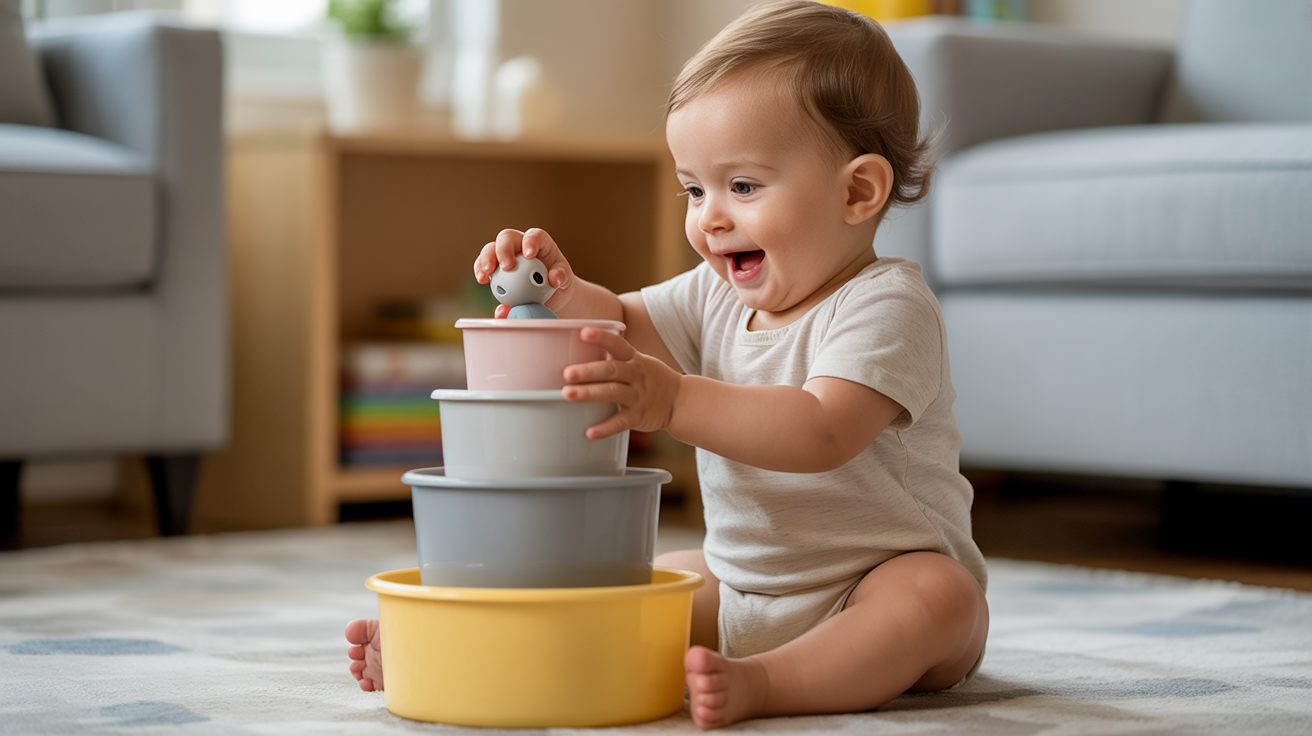
Find containers of different sizes that fit inside each other. Plastic food containers work great for this.
Show your baby how to put the small one inside the bigger one. You can also hide a small toy in a container and let them open it to find the surprise.
Nesting activities teach size relationships. Your baby figures out which container is bigger and which is smaller. This type of play also helps with problem-solving as they work to fit pieces together.
Playing with Tape
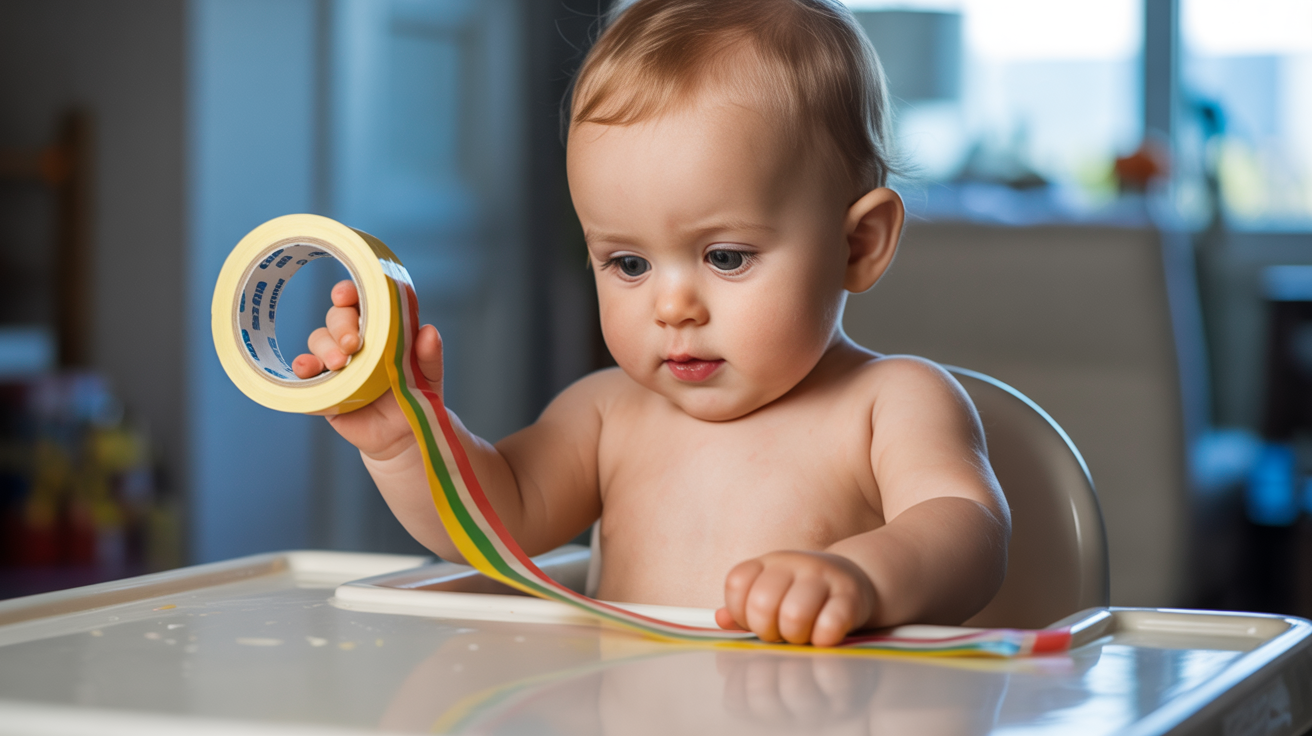
Use painter’s tape, which is safe and easy to remove. Stick pieces of tape on a table or highchair tray. Let your baby peel them off. You can also tape down a toy or ball and let them pull it free.
Peeling tape builds finger strength and coordination. It’s oddly satisfying for babies to pull tape off surfaces. This simple activity can keep a 10-month-old busy for a surprisingly long time.
Mirror Play While Standing
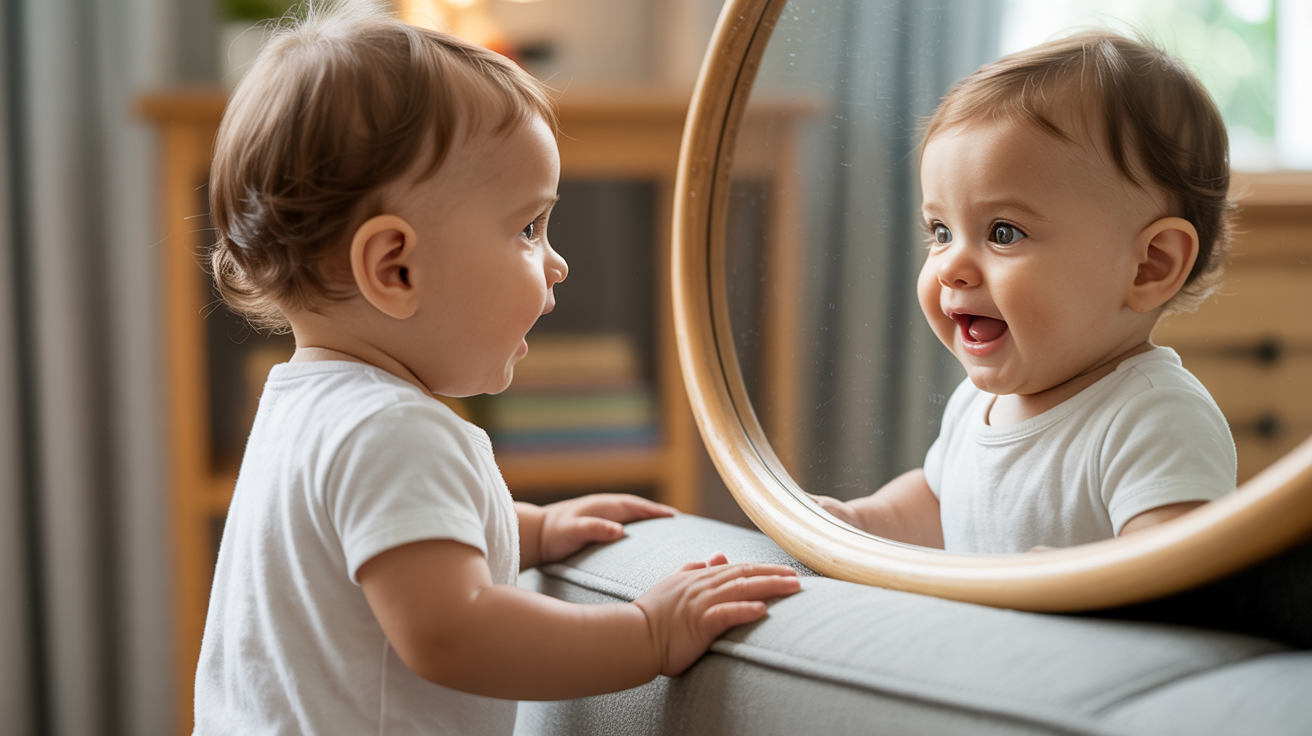
Set up a safe mirror near a piece of furniture your baby uses to pull up. As they practice standing, they can watch themselves in the mirror. Most babies find their own reflection fascinating.
Watching themselves makes standing practice more fun. Your baby gets to see their own movements and facial expressions. This helps them learn about their body and how it moves.
Check Out Nature Items Indoors
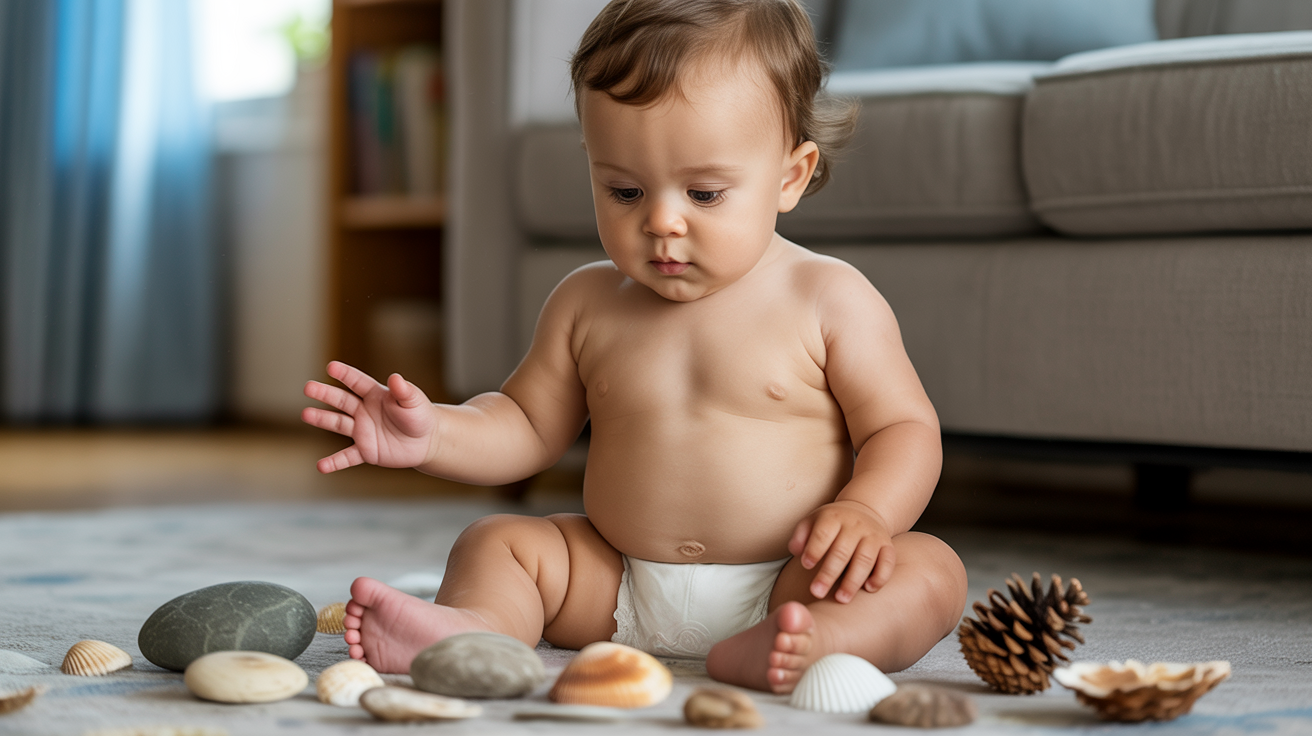
Collect some safe nature items like smooth rocks, seashells, or pinecones. Make sure they’re big enough that they can’t be swallowed. Let your baby touch them, compare them, and move them around. You can even add some to a bin of water for extra sensory fun.
These natural objects have different textures, weights, and shapes. Your baby learns by feeling the rough surface of a pinecone versus the smooth coolness of a rock. This is one of those activities for 10-month-old babies that brings the outside world safely indoors.
Coloring Together
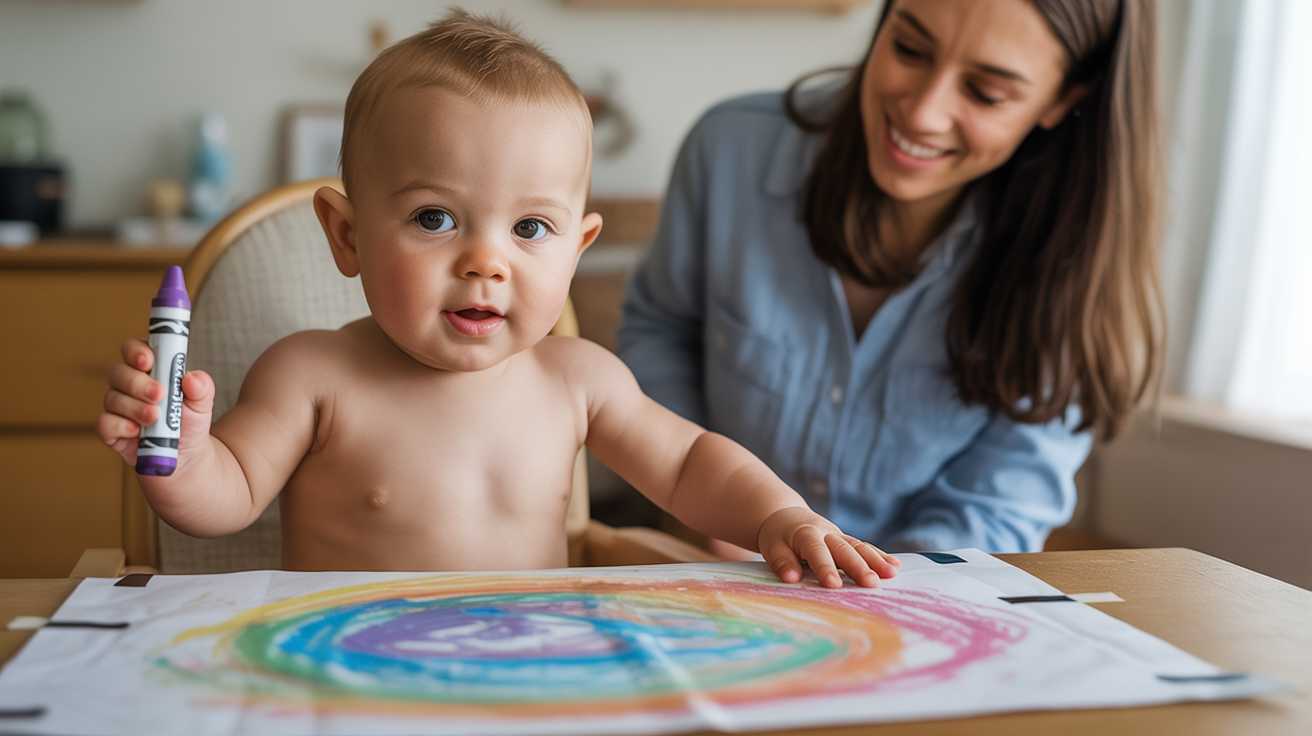
Get some large crayons or chunky markers made for babies. Tape a big piece of paper to the floor or highchair tray so it doesn’t slide around. Sit with your baby and color together. Don’t worry about what the drawing looks like.
This activity is about the experience, not making art. Your baby learns to hold a crayon and make marks appear. They see that their movements create something visible. Keep the session short and fun.
Quick Tips for Activity Time
When you’re planning activities for 10-month-old babies, remember that simple is better. Your baby doesn’t need hour-long sessions or complicated setups. Short bursts of focused play work best at this age.
Here are some helpful tips to make activity time work well:
- Keep each activity to 10 or 15 minutes. That’s plenty of time before your baby wants to move on.
- Watch what interests your baby and follow their lead. If they love one activity, do it more often.
- Always supervise closely, especially with small items or water. Stay within arm’s reach.
- Switch activities regularly to keep things interesting. What’s fun today might be boring tomorrow.
- Use items you already own. You don’t need to buy special toys.
- Let your baby help with cleanup when possible. Even putting one item in a basket helps.
- Get down on the floor at your baby’s level. You’ll see the world from their view.
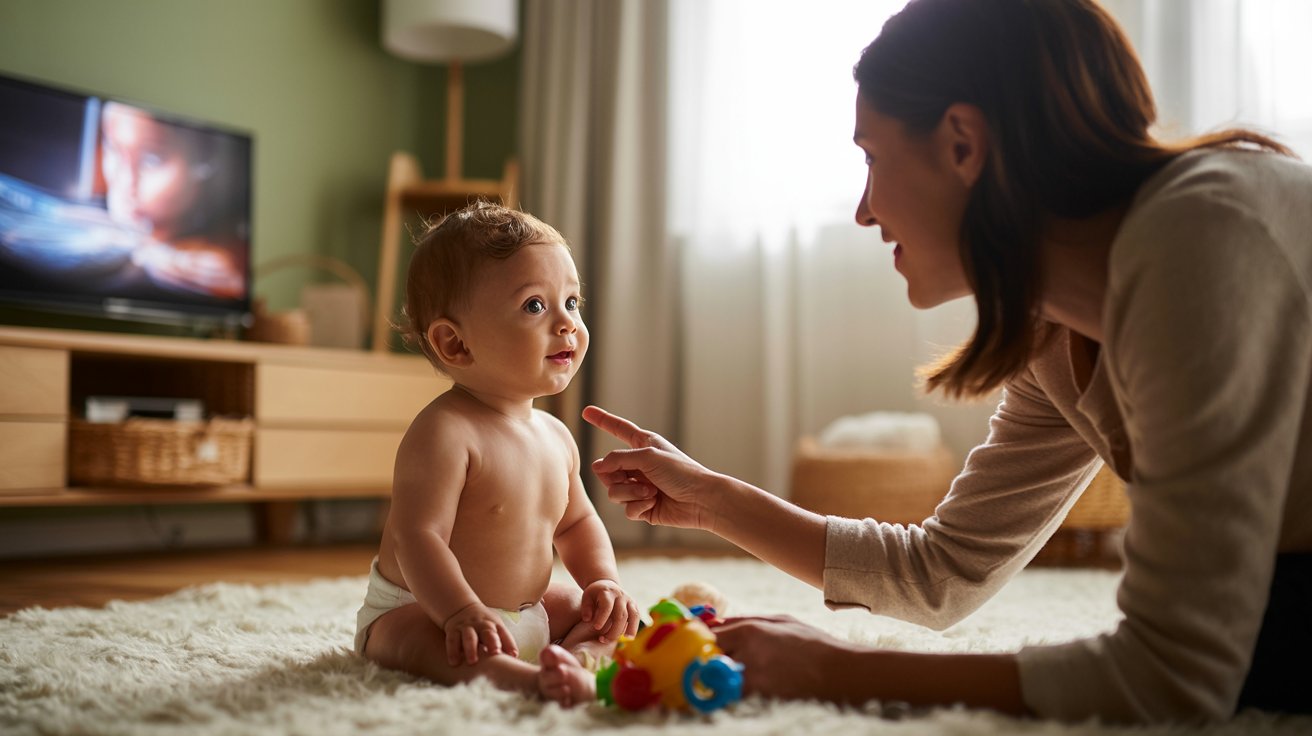
- Talk about what your baby is doing. This builds their vocabulary even before they can talk.
- Don’t stress about doing things the “right” way. There’s no perfect way to play.
The goal is quality time together, not checking boxes. If an activity isn’t working, that’s okay. Try something else or just let your baby play freely for a while.
Conclusion
The best activities for 10-month-old babies are the simple ones. You don’t need expensive toys or complicated plans. A wooden spoon and a pot, some tape to peel, or a ball to roll can provide all the learning and fun your baby needs.
Remember that you’re doing a great job. Every baby grows and learns at their own speed. Some babies love active play, while others prefer quiet activities. Both are normal and healthy.
What matters most isn’t which activity you choose. It’s the time you spend together. When you sit on the floor, make eye contact, and play with your baby, you’re giving them exactly what they need.
Pick one activity from this list to try this week. See what makes your baby smile. That’s how you’ll know you’ve found a winner.
Frequently Asked Questions
How Long Should Activity Time Last for a 10-Month-Old?
Keep activities short, around 10 to 15 minutes each. Babies this age have short attention spans. Multiple brief play sessions throughout the day work better than one long session. Watch for signs your baby is ready to move on.
Is It Normal if My Baby Only Wants to Do the Same Activity Repeatedly?
Yes, this is completely normal and healthy. Babies learn through repetition. Doing the same thing over and over helps them master new skills. Let your baby repeat activities as much as they want. They’ll move on when they’re ready.
What Should I Do if My Baby Puts Everything in Their Mouth?
This is normal at 10 months. Choose activities with items too large to swallow. Wash items before and after play. Water play, ball rolling, and stacking containers are good options since they’re safe for mouthing babies.
How Many Activities Should I Offer Each Day?
Two to three structured activities per day are plenty. Balance these with lots of free playtime. Your baby also learns during daily routines like eating, diaper changes, and bath time. Don’t overschedule. Babies need downtime too.
Do I Need to Buy Special Toys for These Activities?
No, household items work great for most activities for 10-month-old babies. Kitchen items, containers, tape, and balls provide hours of learning. Store-bought toys can be helpful if they fit your baby’s interests, but they’re not necessary.