
Living with your baby in one small room can feel overwhelming. I've been there, and I know the challenge of making it work.
This guide covers parents sharing small rooms with baby solutions that actually help. You'll learn safe sleep setups, smart furniture choices, and storage hacks that create space.
I'll walk you through room layouts, lighting tips, and common mistakes to avoid. As a parent who's lived this reality, I understand what works and what doesn't.
Let me show you how to make your shared bedroom comfortable, safe, and functional for your whole family.
Is It Safe for Parents Sharing a Small Room With a Baby?

Room sharing with your baby is safe when you follow the right guidelines. Setting up your space correctly protects your little one while keeping everyone close.
Your baby needs their own sleep surface. A crib or bassinet works best. Never place your baby on an adult bed to sleep. Keep pillows, blankets, and stuffed toys out of their sleep area.
The American Academy of Pediatrics recommends room sharing for at least six months. Place your baby on their back for every sleep. Keep the room temperature around 68 to 72 degrees.
Position the crib away from windows and heaters. Place it where you can reach it easily from your bed. Skip the crib bumpers and keep cords away from the crib area. These simple steps keep your baby safe while you share space.
How to Set Up a Small Room When Parents Share Space With a Baby

Smart room planning helps everyone sleep better and keeps your space from feeling cramped. Measure your room before buying anything.
Place your bed against one wall and the crib on the opposite or adjacent wall. Leave at least two feet between furniture for walking paths.
Position the crib within arm's reach of your bed for easier nighttime care. Keep nighttime supplies right next to the crib.
Use a small area rug under the crib or a folding screen to separate sleeping areas without crowding your room.
Space-Saving Furniture Ideas for Parents Sharing a Small Room With Baby
Choosing the right furniture makes all the difference in a tight space. Smart pieces do double duty and save precious square footage.
Multi-Purpose Furniture That Saves Space

A storage ottoman works as seating and holds baby items. Place one near the crib for nighttime feeding. Wall-mounted shelves keep things off the floor.
Install them above the crib or changing area. A fold-down changing table mounts to the wall. Flip it up when not in use. Nesting tables stack together when you don't need them.
Pull them out for extra surface space. Under-crib storage drawers slide out easily. They hold clothes, diapers, or toys.
Using a Dresser as a Changing Station
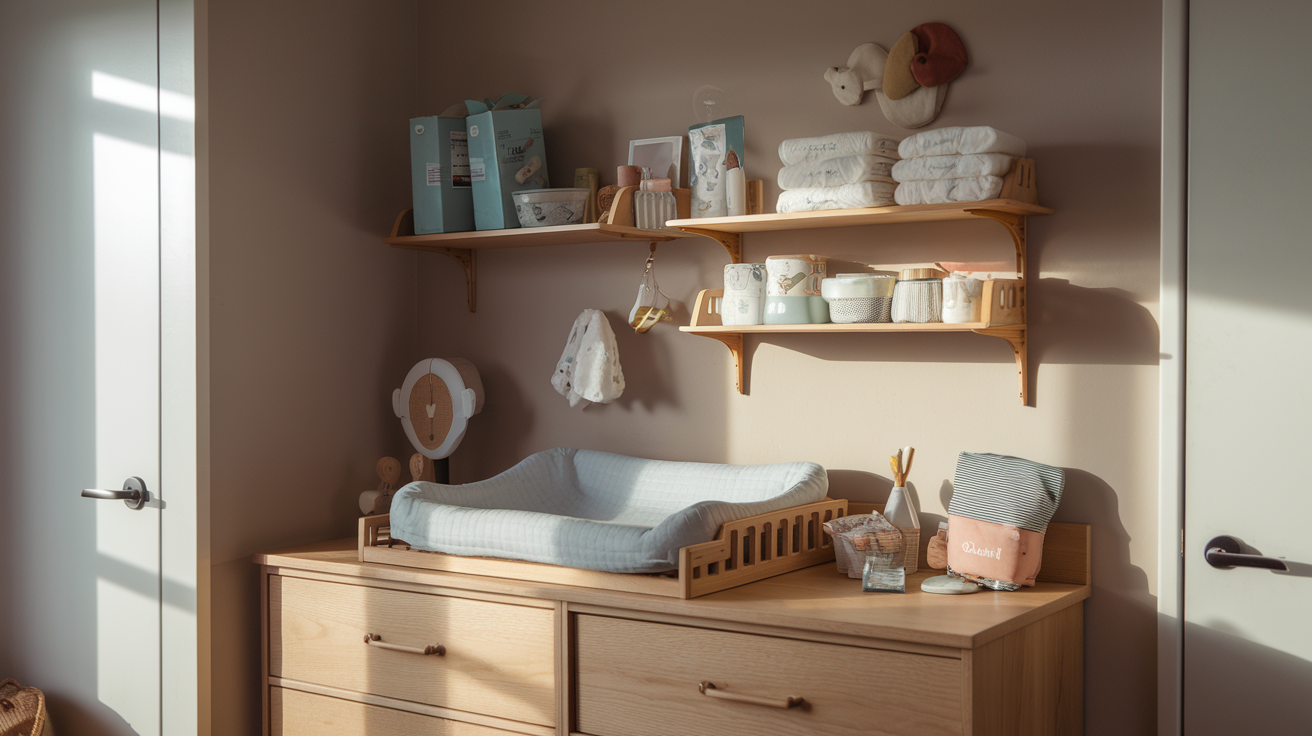
Pick a sturdy dresser with a flat top. Make sure it's at a comfortable height for you. Add a changing pad with safety straps on top.
Secure it so it won't slide. Store diapers in the top drawer. Keep wipes, creams, and extra clothes there too. Use the other drawers for baby's clothing.
Organize by type or size. This setup eliminates the need for a separate changing table. You save floor space and money.
Choosing Compact Baby Furniture for Small Bedrooms
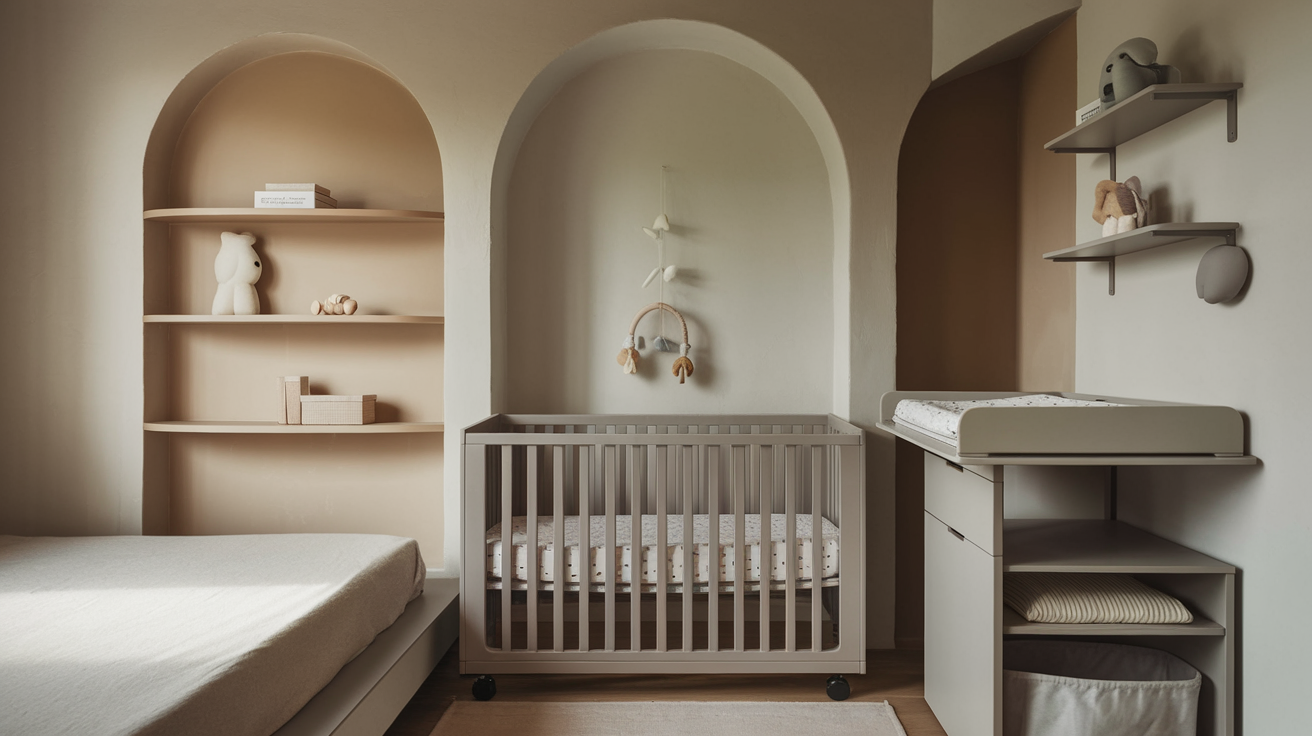
Mini cribs fit tight spaces better than standard ones. They're safe and meet all safety standards. Look for cribs with built-in drawers underneath.
Extra storage never hurts. Choose a narrow rocking chair or glider. You still get comfort without bulk. Skip large baby swings or bouncers.
Use compact versions or floor seats instead. A portable bassinet moves easily from room to room. This flexibility helps during the day.
Storage Ideas That Make Parents Sharing Small Room With Baby Easier
Good organization prevents clutter and stress in a shared bedroom. These storage solutions keep everything accessible but out of sight.
Organizing Baby Clothes in Limited Space
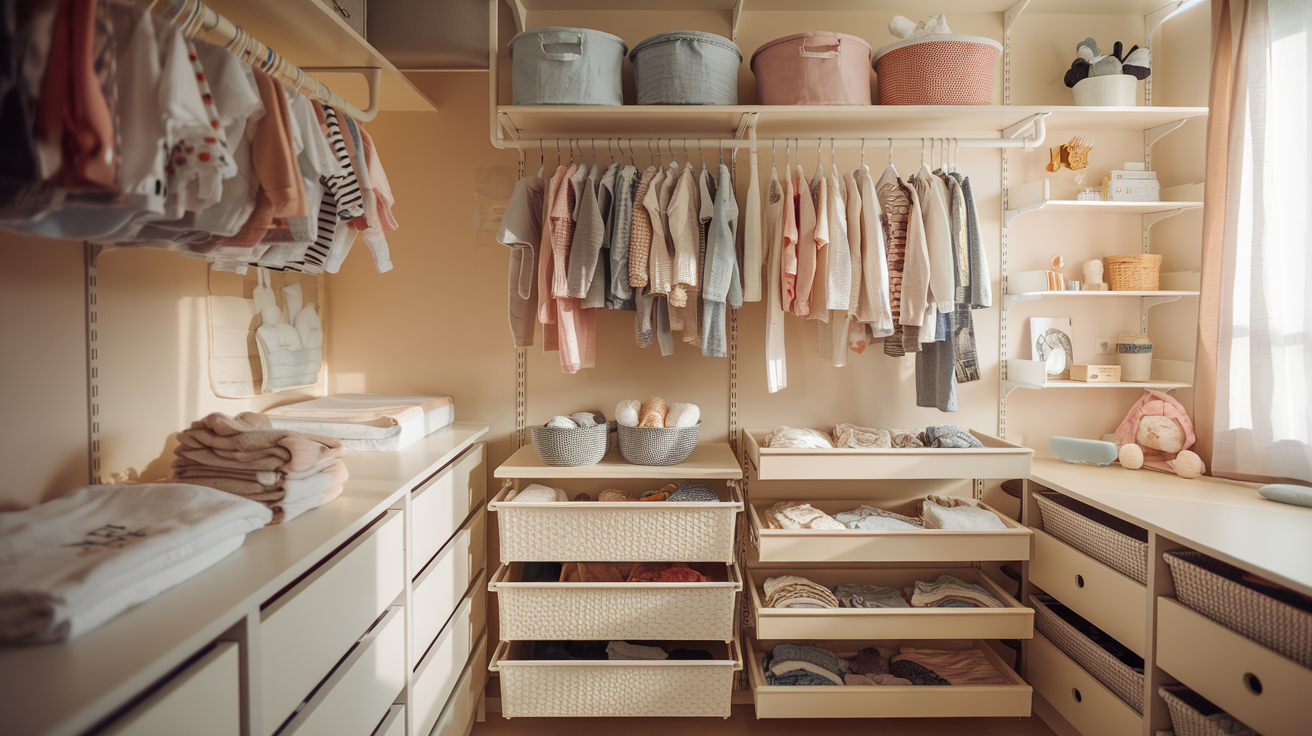
Roll baby clothes instead of folding them. Rolled items fit better in drawers and you can see everything. Use drawer dividers to separate sizes.
This prevents digging through piles. Keep only current-size clothes in the room. Store outgrown and future sizes elsewhere.
Hang tiny items on baby hangers. A small closet rod holds more than you think. Rotate seasonal clothes. Put away what your baby won't wear for months.
Using Drawer Dividers and Storage Bins
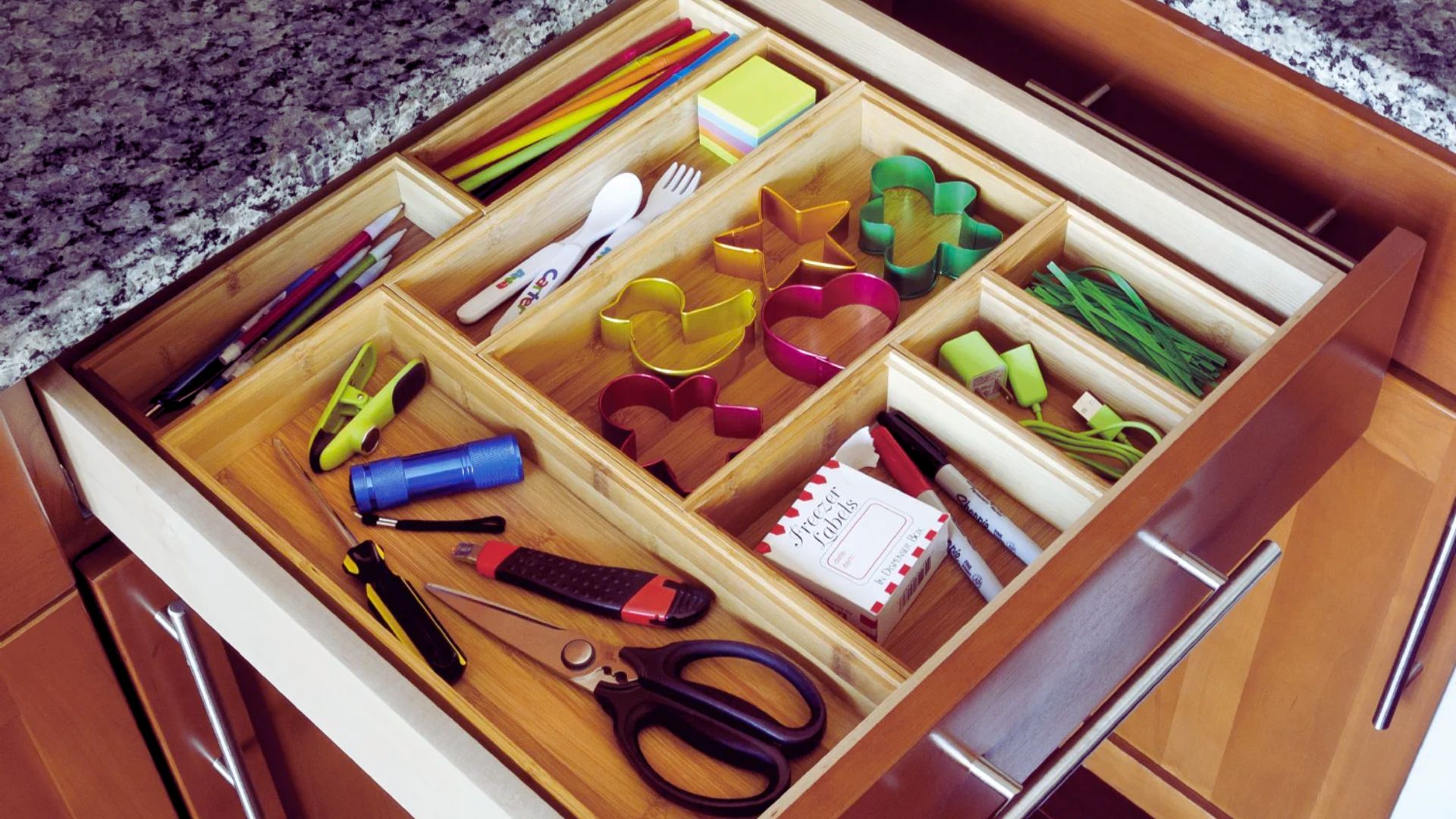
Small bins keep similar items together. Label each one for quick finding. Drawer dividers create sections for socks, bibs, and accessories.
No more messy drawers. Stackable bins fit on shelves or in closets. Clear ones let you see what's inside. Use fabric bins that slide under furniture.
They're soft and won't scratch floors. A caddy holds diapers, wipes, and creams. Move it wherever you need it.
Under-Bed Storage for Baby Essentials
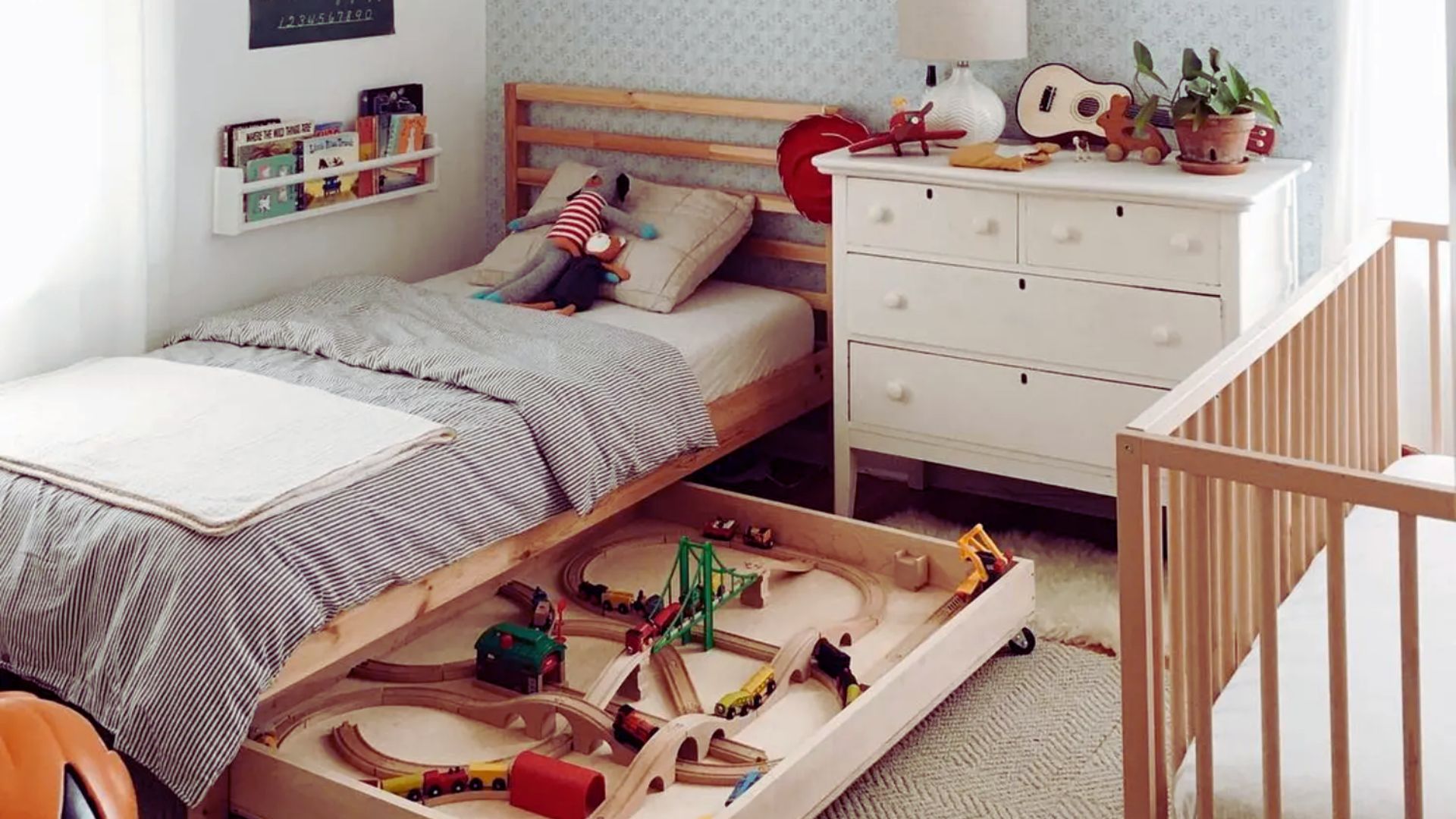
Flat storage containers slide under beds easily. They hold blankets, extra sheets, or toys. Use rolling bins for frequent access items. Pull them out when needed.
Vacuum bags compress bulky items like winter clothes. These save tons of space. Keep backup supplies under the bed.
Extra diapers, formula, or wipes stay hidden but close. Measure your under-bed clearance first. Not all beds have the same height.
Nursery Decor Ideas That Work in a Shared Small Room
This captures the basics well – light colors, visual continuity, and minimal clutter. The advice about keeping baby items neutral is practical since cartoon themes can make small spaces feel chaotic.
A few additions: vertical storage becomes essential in shared rooms. Wall-mounted shelves or over-the-door organizers keep supplies accessible without eating floor space. Blackout curtains serve double duty – helping baby nap while giving parents privacy and light control.
One gap: sound management. A white noise machine creates an acoustic buffer between adult activity and baby sleep. Place the crib as far from the adult bed as possible, ideally in a corner, to create separate zones even in one room.
And focus on function over aesthetics when you're sleep-deprived and grabbing diapers at 3 a.m. Pick a baseline setup that works, then add minimal touches if you want.
Common Mistakes Parents Make When Sharing a Small Room With a Baby
Avoiding these errors saves you time, money, and frustration. New parents often buy everything they see.
Stick to basics: a crib, one dresser, and seating.
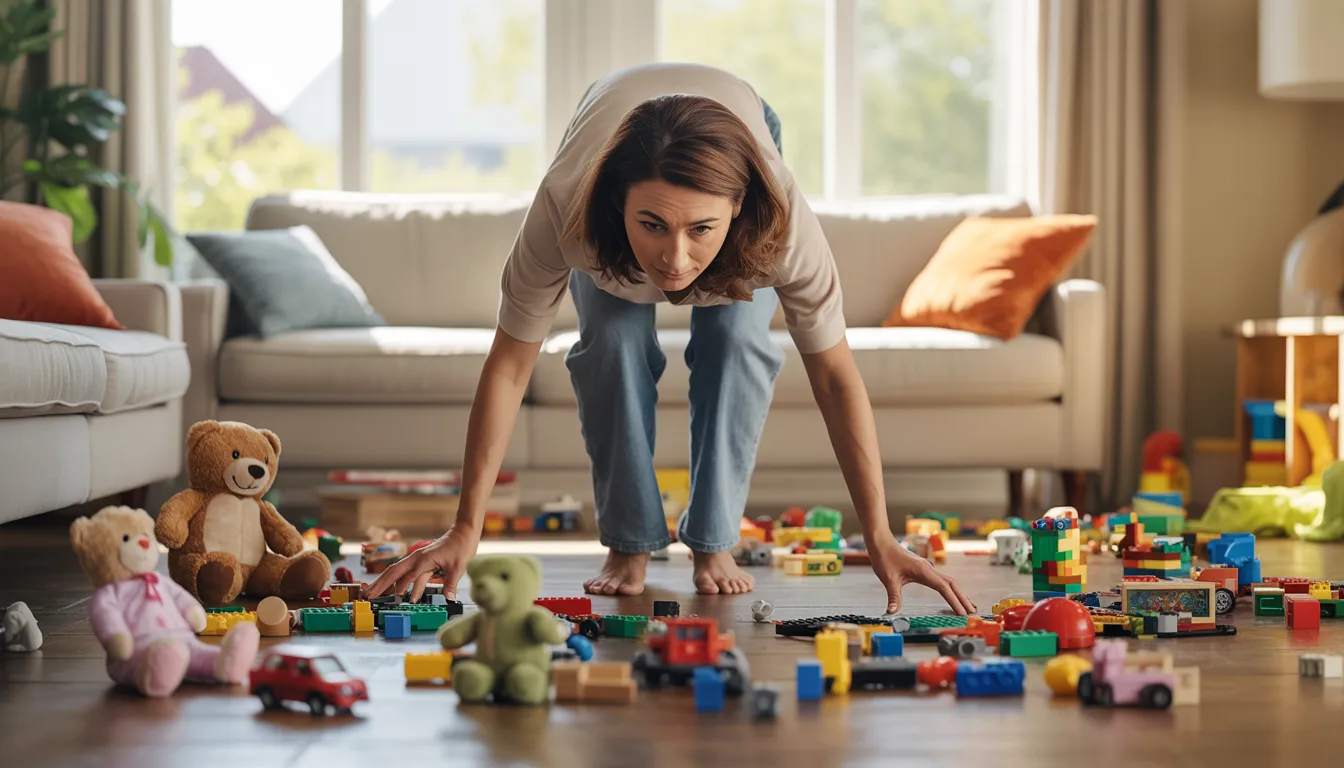
Too much furniture creates obstacles. Leave empty floor space for when your baby starts to play. Without a storage plan, clutter takes over fast.
Use vertical space with shelves and hooks. Review your storage setup every few months as needs change. Babies grow faster than you expect.
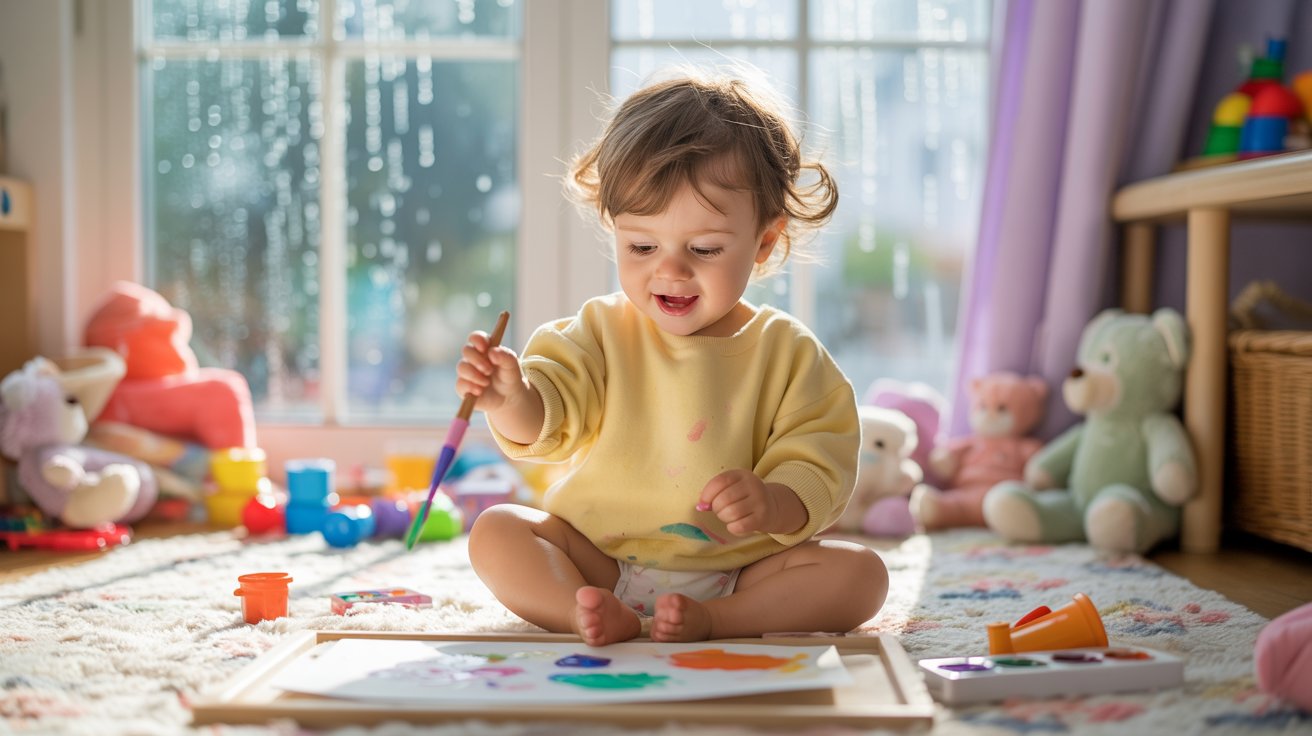
Plan ahead for changing needs. Storage needs increase as the baby gets older. Keep safe floor space available for a mobile baby.
Practical Tips to Make Parents Sharing Small Room With Baby Easier
These daily strategies help your shared room function smoothly. Small habits make a big difference over time.
- Set up changing supplies next to the crib and keep nighttime essentials like water bottles and burp cloths within easy reach so you won't fumble in the dark.
- Put things back immediately after use and do a quick tidy-up each morning to prevent clutter from taking over your small space.
- Have a designated spot for everything and use labels on bins and drawers so anyone can find what they need quickly.
- Move breakable items higher as the baby becomes mobile and add childproof locks to drawers and doors when your little one starts crawling.
- Create a small play area when the baby sits up and be ready to transition to a toddler bed when the time comes, which might mean rearranging the whole room again.
Conclusion
Making parents share a small room with baby work takes planning, but it's completely doable. I've watched my own cramped bedroom become a cozy space for all of us.
Start with safety, choose smart furniture, and stay organized. Your room will feel comfortable instead of chaotic. Remember that this phase is temporary.
Soon your baby will have their own room, and you might even miss having them so close. What setup has worked best in your small space? Share your tips in the comments below.
Frequently Asked Questions
How long can parents share a small room with a baby safely?
Room sharing works well for at least six months to a year. Many families continue until age two or three without issues. The key is following safe sleep guidelines and maintaining proper organization throughout.
What size crib fits best in a small bedroom?
Mini cribs measure about 38 by 24 inches and work great in tight spaces. They're smaller than standard cribs but still safe and comfortable. Many convert to toddler beds, extending their usefulness.
How do I keep a baby from waking parents at night?
White noise machines help everyone sleep through minor sounds. Position the crib away from your bed if possible. Respond quickly to needs so crying doesn't escalate and wake everyone fully.
Can I safely co-sleep in a small room?
Co-sleeping on an adult bed isn't recommended due to suffocation risks. Room sharing with a baby in their own crib or bassinet is the safest option. This keeps babies close while protecting them during sleep.
What baby furniture do I actually need in a small room?
You only need a safe sleep space, storage for clothes, and a changing surface. A crib or bassinet, one dresser, and a changing pad cover the basics. Everything else is optional based on your space.