
I know how scary it can be when you notice something off about your toddler’s teeth. Cavities are one of the most common dental problems in young children, and catching them early makes all the difference.
In this guide, I’m sharing 7 early signs of cavities in toddlers that every parent should know. These warning signs can help you spot decay before it becomes painful or requires serious dental work.
I’ve researched each symptom carefully so you can feel confident protecting your child’s smile. We’ll cover everything from tooth discoloration to changes in eating habits, plus practical tips to prevent cavities from forming in the first place.
Why Early Detection Matters?
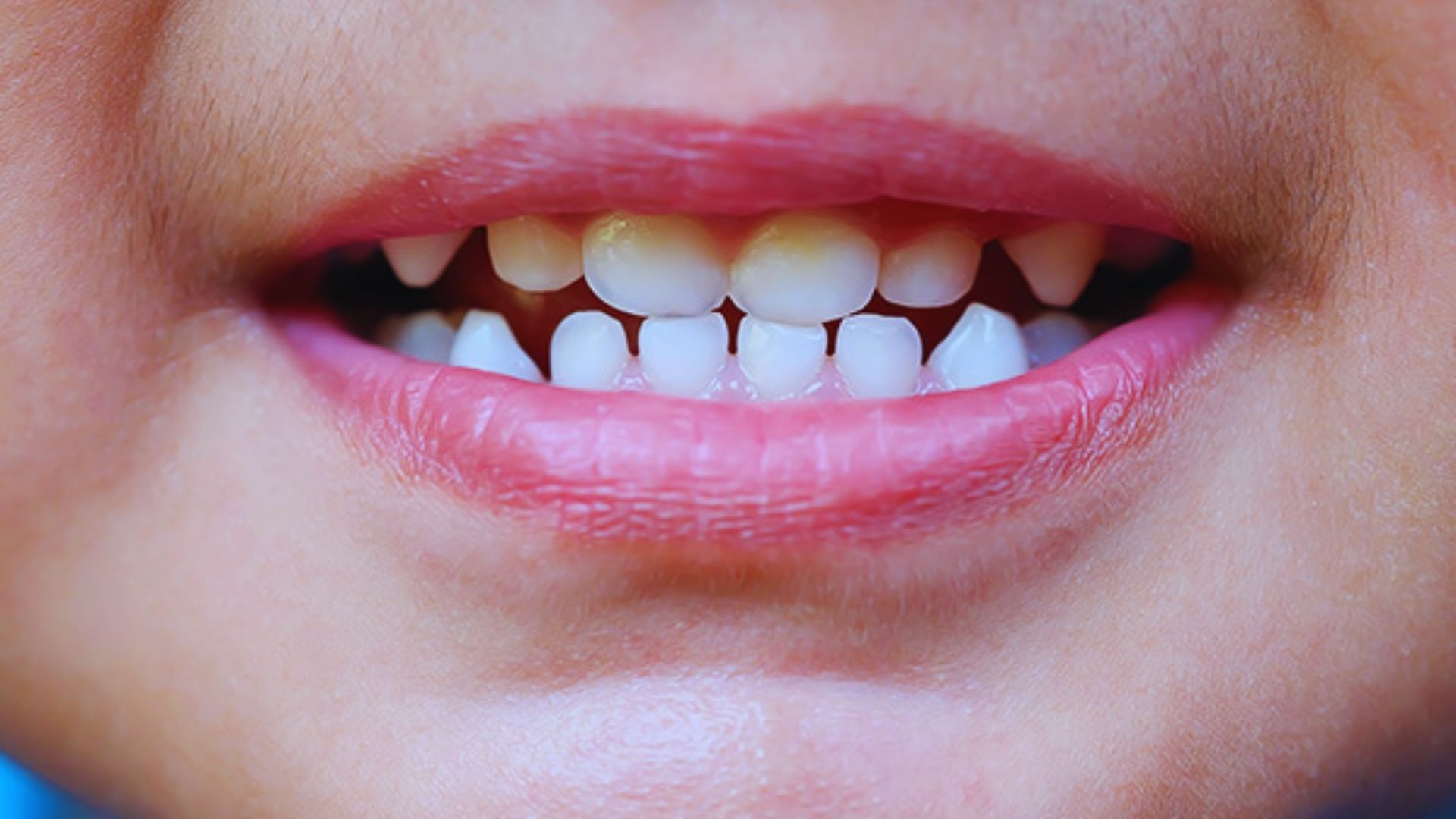
Cavities don’t heal on their own. In toddlers, decay can spread fast because their tooth enamel is still developing and is more vulnerable to bacteria.
When you catch a cavity early, treatment is simpler. Your child experiences less pain, and the dentist can often fix the problem with minimal work. Early treatment also protects permanent teeth that are forming beneath baby teeth.
Ignoring early signs can lead to infections, severe pain, and more complex procedures. It can even affect how your toddler eats and speaks. Regular monitoring helps you stay ahead of problems before they grow serious.
7 Early Signs of Cavity in Toddlers
Watch for these warning symptoms to catch tooth decay before it causes serious problems for your child.
1. Tooth Discoloration
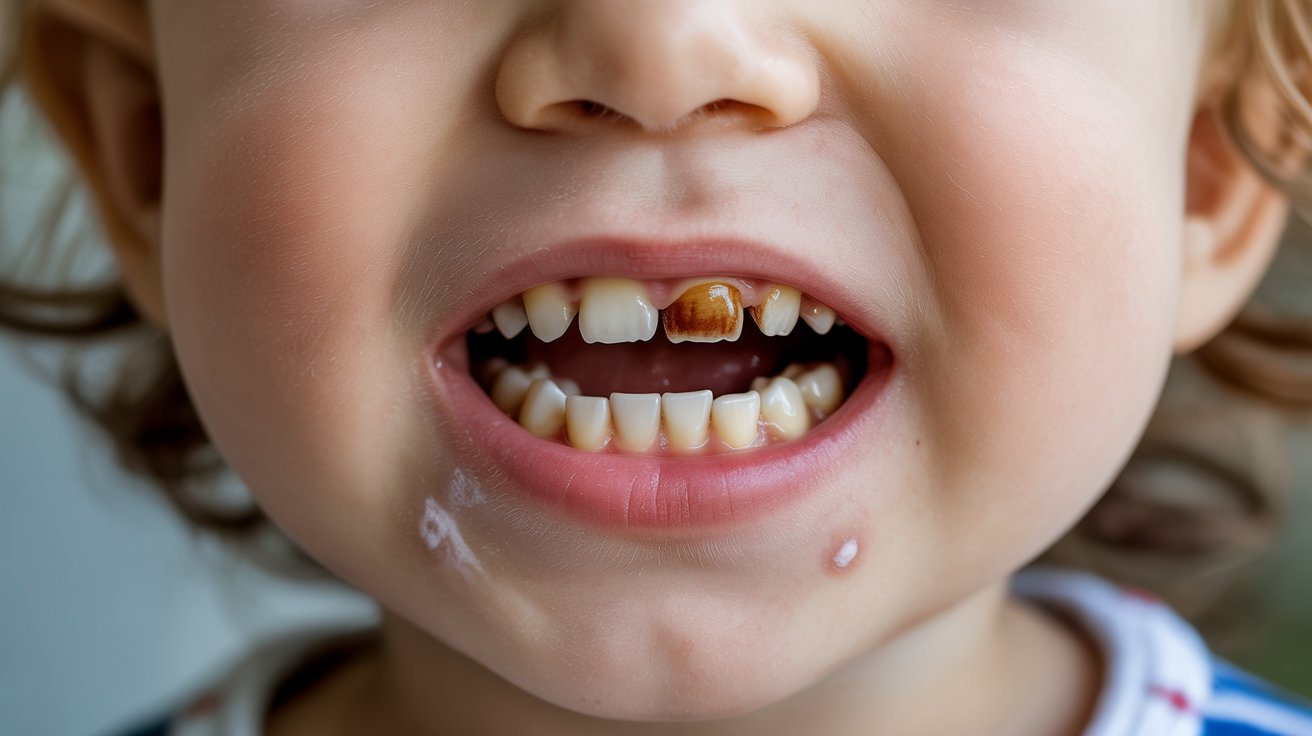
Keep an eye out for spots on your toddler’s teeth. White, brown, or even black marks often mean decay is starting.
These spots show that enamel is breaking down. White spots usually appear first when minerals leave the tooth surface. As decay progresses, you might notice brown or black areas forming.
Check your child’s teeth regularly in good light. Pay special attention to the areas near the gum line and between teeth where bacteria tend to gather.
2. Tooth Sensitivity

Does your toddler pull away from cold drinks or sweet snacks? Sensitivity is a clear warning sign.
When enamel wears down, it exposes the softer layer underneath called dentin. This makes teeth react to temperature changes and sugar. Your child might wince, cry, or refuse certain foods.
Watch how they respond during meals. If they consistently avoid cold or sweet items, schedule a dental visit.
3. Persistent Toothache or Pain

Toddlers can’t always tell you when something hurts. Look for behavioral changes instead.
Your child might become fussy, avoid chewing on one side of their mouth, or wake up crying at night. They may touch their face or jaw repeatedly. Some toddlers refuse to eat their favorite foods because of discomfort.
Any ongoing signs of pain need attention. Don’t wait to see if it goes away on its own.
4. Holes, Pits, or Craters in Teeth
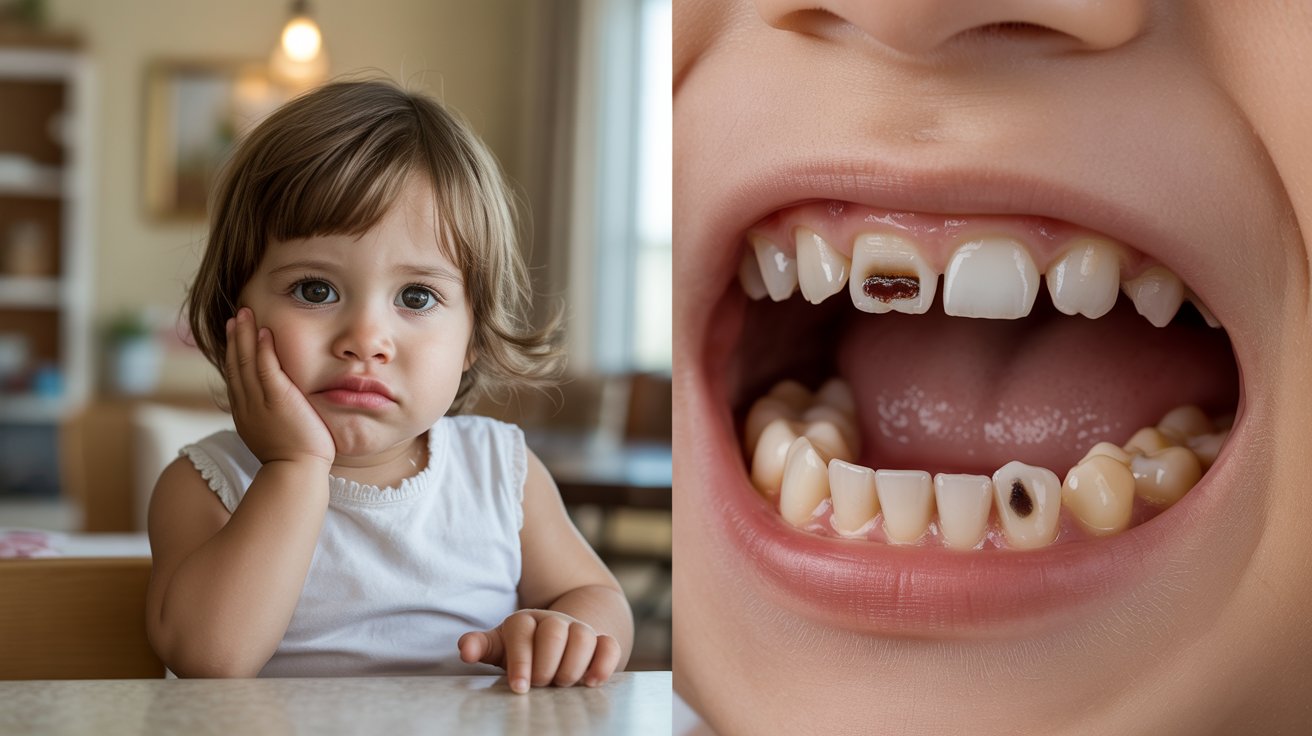
Small holes or rough spots on tooth surfaces mean cavities are forming. These can be hard to see at first.
Run your finger gently over your toddler’s teeth. You might feel tiny pits or rough patches. Sometimes you can spot them visually as small dark spots or indentations.
Regular dental checkups help catch these early. Your dentist uses special tools and lighting to find cavities you might miss at home.
5. Food Trapped in Teeth
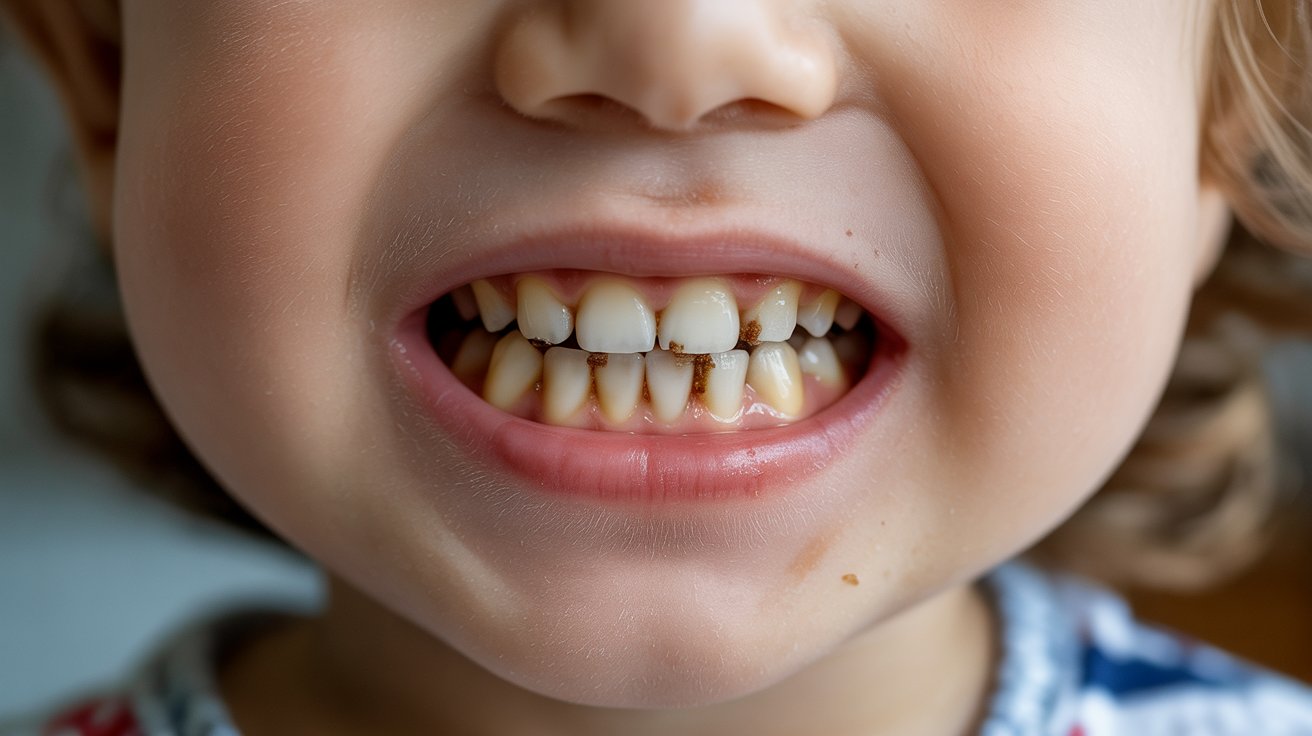
When food keeps getting stuck in the same spot, it’s worth investigating. This happens when teeth develop tiny gaps or rough surfaces from early decay.
Trapped food feeds bacteria, which creates more acid and accelerates cavity formation. You might notice food particles wedged between teeth or stuck in grooves after every meal.
Help your toddler rinse after eating. Increased food trapping means it’s time for a dental exam.
6. Bad Breath or Unpleasant Taste

Persistent bad breath in toddlers isn’t normal. It often signals bacterial buildup from developing cavities.
Bacteria feeding on sugars and trapped food produce acids that smell unpleasant. Your child might have a sour or metallic taste in their mouth, though they probably can’t describe it.
If breath stays bad even after brushing, decay could be the cause. This symptom appears before visible cavities form in many cases.
7. Changes in Eating or Chewing Habits

Watch how your toddler chews their food. Favoring one side of the mouth or avoiding certain textures suggests discomfort.
Kids with developing cavities may refuse crunchy foods like apples or resist cold items like yogurt. They might chew slowly or spit out food that touches a sensitive area.
Sudden pickiness about foods they normally enjoy is a red flag. It often means something is bothering them, and dental pain is a common culprit.
When to See a Pediatric Dentist?
Don’t wait if you spot warning signs. Schedule a dental appointment right away when you notice any of the seven symptoms we covered. Early treatment makes a huge difference.
Your dentist can stop decay before it spreads deeper into the tooth. This means less pain for your toddler and simpler fixes that take less time. Waiting can turn a small problem into a big one. What starts as a tiny spot can become a painful infection that requires more work to fix.
Call your pediatric dentist if you see discoloration or spots on teeth, sensitivity to hot or cold foods, signs of tooth pain or discomfort, visible holes or pits, frequent food trapping, bad breath that won’t go away, or changes in how your child chews.
Most dental offices can fit in urgent appointments for young children. They understand that catching cavities early protects your toddler’s health and saves you stress down the road.
Tips to Prevent Cavities in Toddlers
Prevention protects your child from pain and expensive treatments, and it starts with simple daily habits at home.
- Brush your toddler’s teeth twice daily with fluoride toothpaste using a small, soft-bristled brush designed for young children.
- Apply only a rice-grain-sized amount of toothpaste for kids under three and a pea-sized amount for older toddlers, making sure to brush all surfaces, including back molars.
- Floss once your toddler has teeth that touch and supervise brushing closely until around age six, making it fun with songs or colorful toothbrushes.
- Cut back on candy, juice, and sweet snacks since sugar feeds the bacteria that cause cavities.
- Offer water instead of sugary drinks throughout the day and save treats for mealtimes rather than constant snacking.
- Focus on healthy options like cheese, vegetables, and whole grains that support strong teeth and don’t feed harmful bacteria.
- Schedule dental visits by your child’s first birthday, then every six months for professional monitoring, X-rays, and preventive treatments like fluoride varnish or sealants.
Conclusion
Spotting early signs of a cavity in a toddler makes such a difference in protecting your child’s health. I’ve seen how much easier treatment is when parents catch problems early. Check your toddler’s teeth regularly, maintain good brushing habits, and don’t skip dental appointments.
If you notice any of these seven warning signs, call your dentist right away. Trust your instincts: you know your child best. As a parent, I know how overwhelming dental care can feel, but small daily efforts really add up.
Your attention now sets the foundation for a lifetime of healthy smiles. What dental tips have worked for your family? Drop a comment below and share your experience with other parents.
Frequently Asked Questions
Can babies get cavities before they turn one?
Yes, cavities can form as soon as teeth appear. Babies who drink bottles at bedtime or nurse frequently at night face a higher risk. Start cleaning teeth as soon as they come in.
How often should I brush my toddler’s teeth?
Brush twice daily: once in the morning and once before bed. Each session should last about two minutes. Supervise brushing until your child is at least six years old.
Are baby teeth cavities serious if they’ll fall out anyway?
Baby teeth hold space for permanent teeth and help with eating and speaking. Cavities in baby teeth can infect permanent teeth forming underneath and cause long-term problems.
What causes cavities in toddlers?
Bacteria in the mouth feed on sugars and produce acid that damages enamel. Poor brushing, frequent snacking, sugary drinks, and genetics all contribute to cavity formation.
When should my toddler first see a dentist?
Schedule the first dental visit by your child’s first birthday or within six months of their first tooth appearing. Early visits help prevent problems and build comfort with dental care.