

Your baby is drooling more than usual. They’re fussy, chewing on everything, and you’re wondering, “Is this teething?”
You’re not alone. Most parents feel unsure about what to expect with their baby’s first tooth.
In this article, I’ll walk you through when babies typically get their first tooth, a month-by-month teething timeline, signs to watch for, and safe ways to ease the pain.
As a parent who has been through sleepless teething nights, I want to make this simple and clear for you.
When Do Babies Usually Get Their First Tooth?

Most babies get their first tooth between 4 and 7 months of age. The lower front teeth (central incisors) usually appear first. Some babies teeth as early as 3 months, others as late as 12 months. Both are normal.
By age 3, most children have all 20 baby teeth.
Early teething means a tooth appears before 3 months. Rare, but not harmful. Some babies are even born with a tooth, called a natal tooth.
Late teething means no tooth by 12 to 15 months. If nothing shows by 18 months, check with your pediatrician.
Every baby’s timeline is different. Genetics, birth weight, nutrition, and growth rate all play a role. There is no perfect schedule. Steady progress is what matters.
Baby Teething Timeline Month by Month

A month-by-month look at when and how baby teeth develop from birth through the toddler years.
0–3 Months: Teeth Developing Under the Gums
Your baby has no visible teeth yet. But teeth are already forming beneath the gum line. This process started before birth, around the 6th week of pregnancy.
During these early months, your baby may drool more than expected. This is normal and does not always mean teething has started.
4–6 Months: Early Signs of Teething Begin
This is when many parents first notice signs of teething.
Your baby may:
- Drool more than usual
- Chew on fingers or toys
- Show mild fussiness
- Have slightly swollen gums
A tooth may not appear yet, but the teeth are moving upward under the gum. This pressure causes discomfort.
6–8 Months: First Bottom Front Teeth Appear
The lower central incisors are usually the first teeth to break through. This happens around 6 to 8 months for most babies.
You may notice a small white bump on the lower gum. Your baby may be extra fussy a few days before and after the tooth comes in.
8–12 Months: Upper Front Teeth Come In
Next come the upper central incisors. These usually appear between 8 and 12 months.
By the time your baby celebrates their first birthday, they may have up to 4 or 6 teeth. Some babies have fewer, and that is still okay.
9–16 Months: Lateral Incisors Erupt
The teeth on either side of the front teeth are called lateral incisors. The upper ones usually come in between 9 and 13 months. The lower ones follow around 10 to 16 months.
Your baby’s smile starts to look fuller during this stage.
12–18 Months: First Molars Begin Erupting
First molars are the flat teeth at the back of the mouth. They help with chewing. These are larger than incisors, and their eruption can cause more discomfort.
Your baby may be fussier during this phase. Offer chilled teething rings or a gentle gum massage to help.
16–22 Months: Canine Teeth Appear
Canine teeth (also called cuspids) fill in the gap between the lateral incisors and first molars. The upper canines usually appear before the lower ones.
These pointed teeth can sometimes cause more soreness because of their shape.
22–33 Months: Second Molars Complete the Baby Teeth Set
The last baby teeth to come in are the second molars. These appear at the very back of the mouth and complete your child’s set of 20 baby teeth.
By age 3, most children have all their baby teeth. Some children finish teething a bit earlier or later.
What Order Do Baby Teeth Come In?
Baby teeth don’t appear randomly. They follow a fairly predictable order. Here’s the sequence most babies follow.
Lower Central Incisors
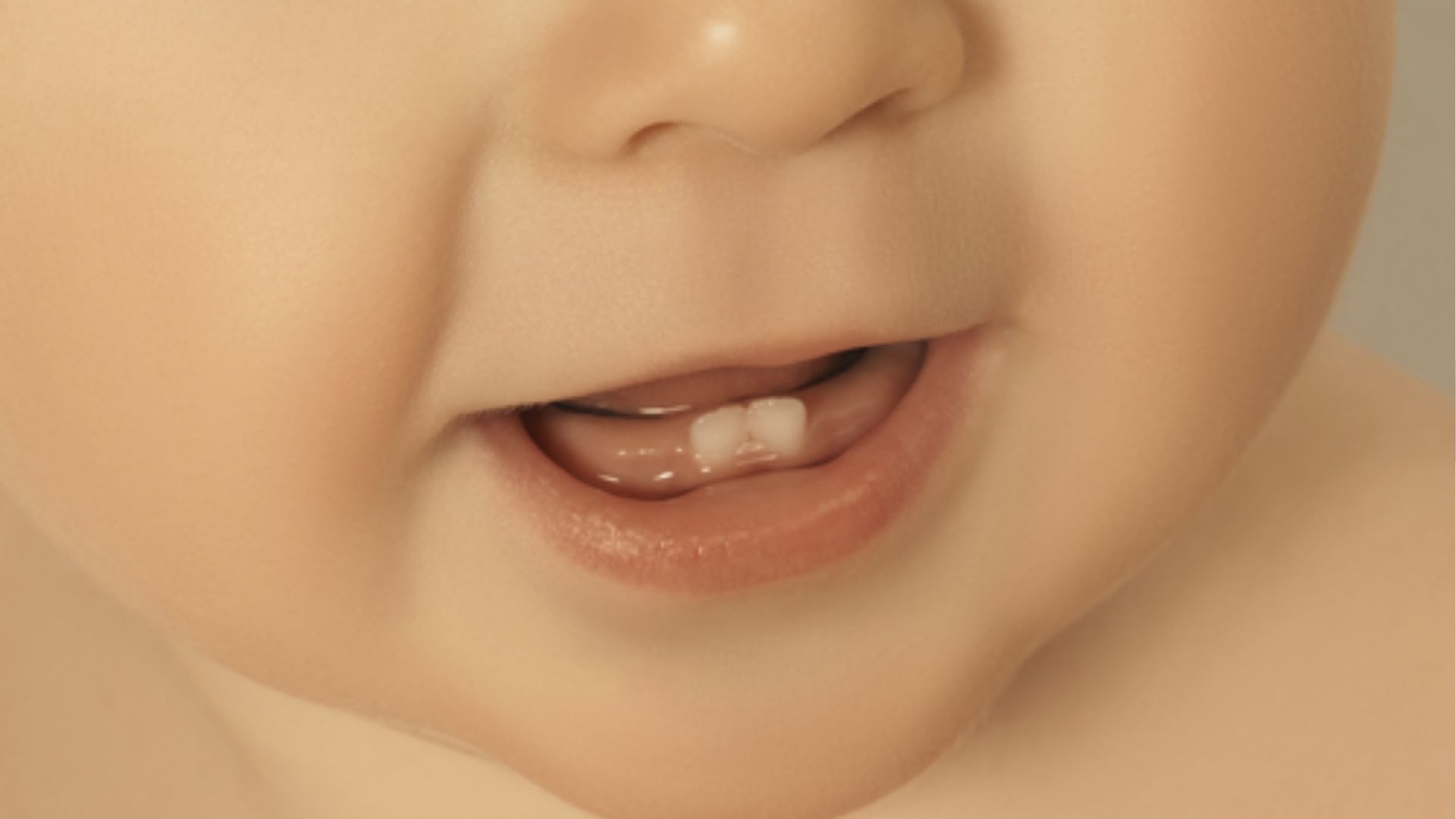
These are the first two teeth to appear, located at the bottom center of the mouth. They usually come in between 6 and 10 months.
Upper Central Incisors
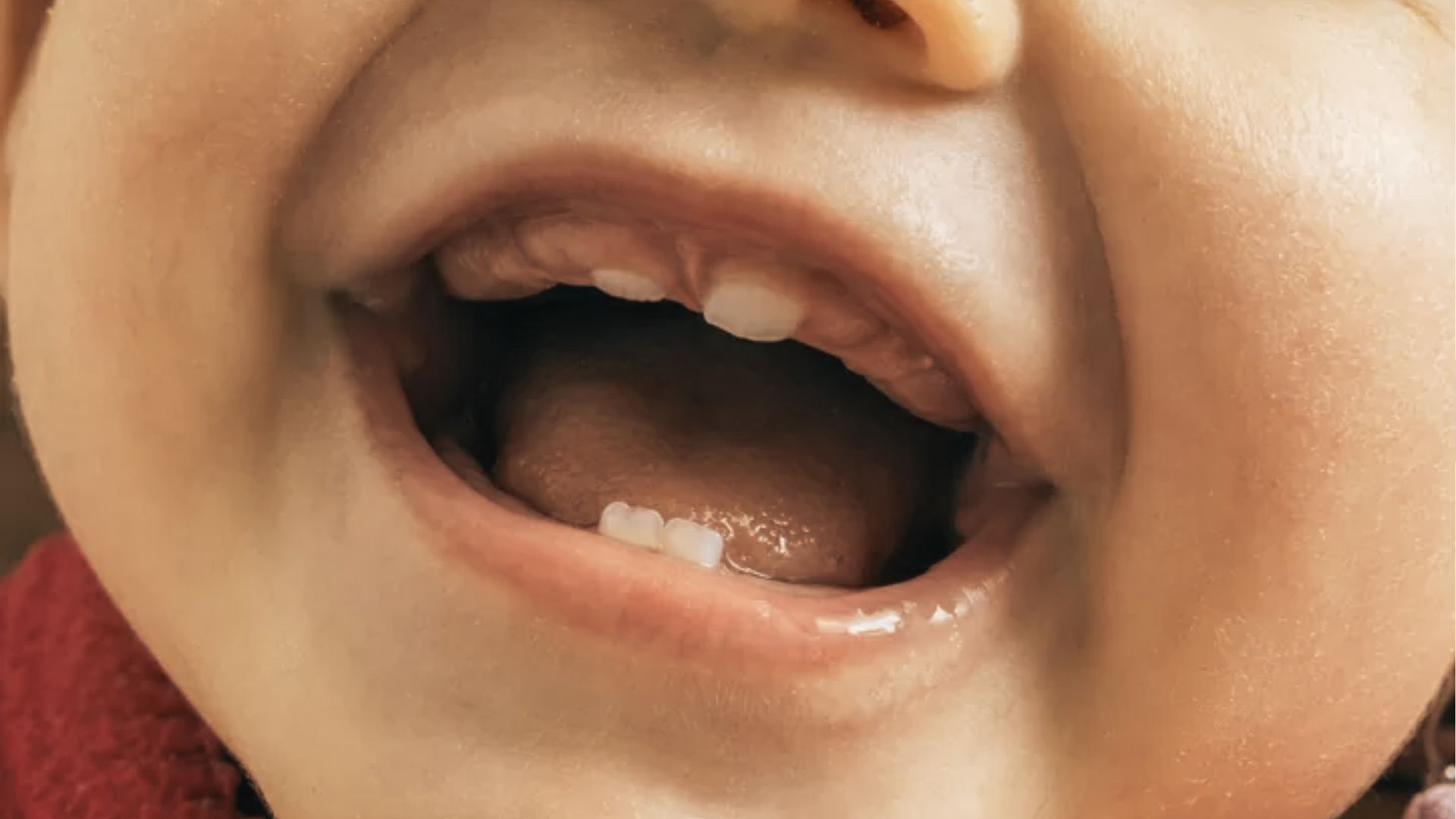
The top two front teeth follow next, usually between 8 and 12 months. These are the teeth most visible in a baby’s early smile.
Upper and Lower Lateral Incisors
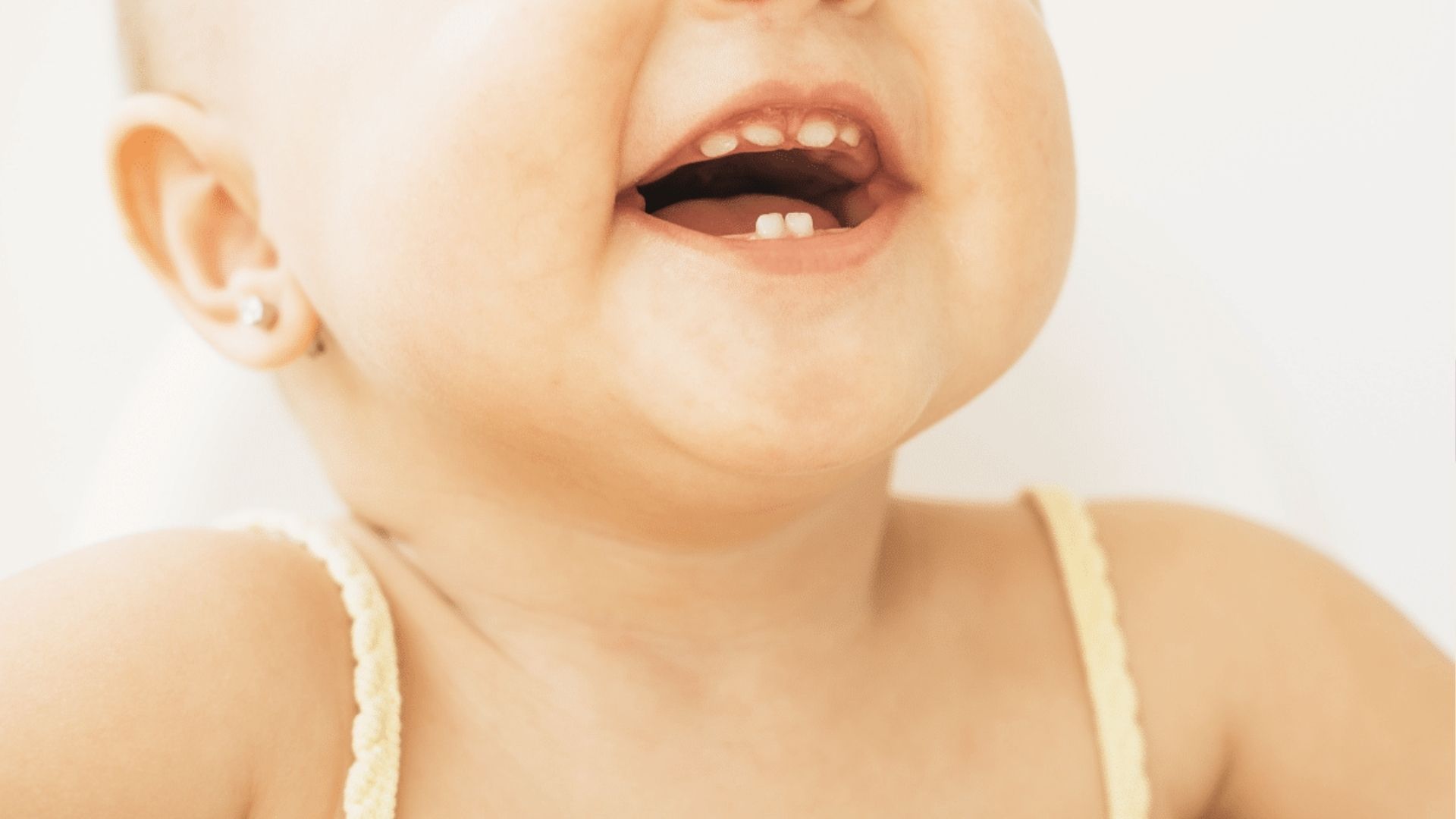
These sit next to the central incisors. The upper ones come in around 9 to 13 months. The lower ones follow at 10 to 16 months.
First Molars
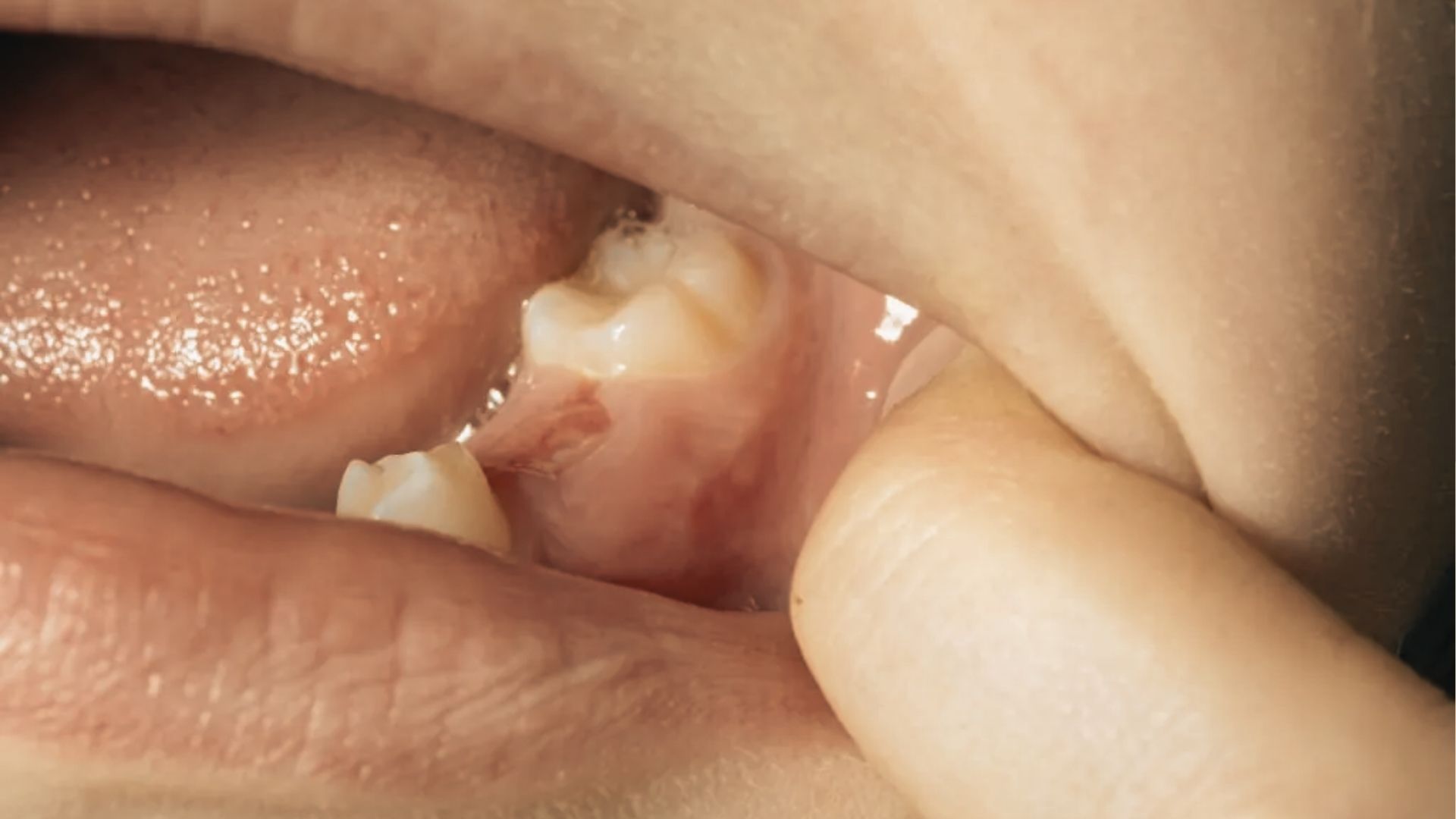
The first set of back teeth comes in between 13 and 19 months. These are used for grinding soft foods and are wider than the front teeth.
Canines
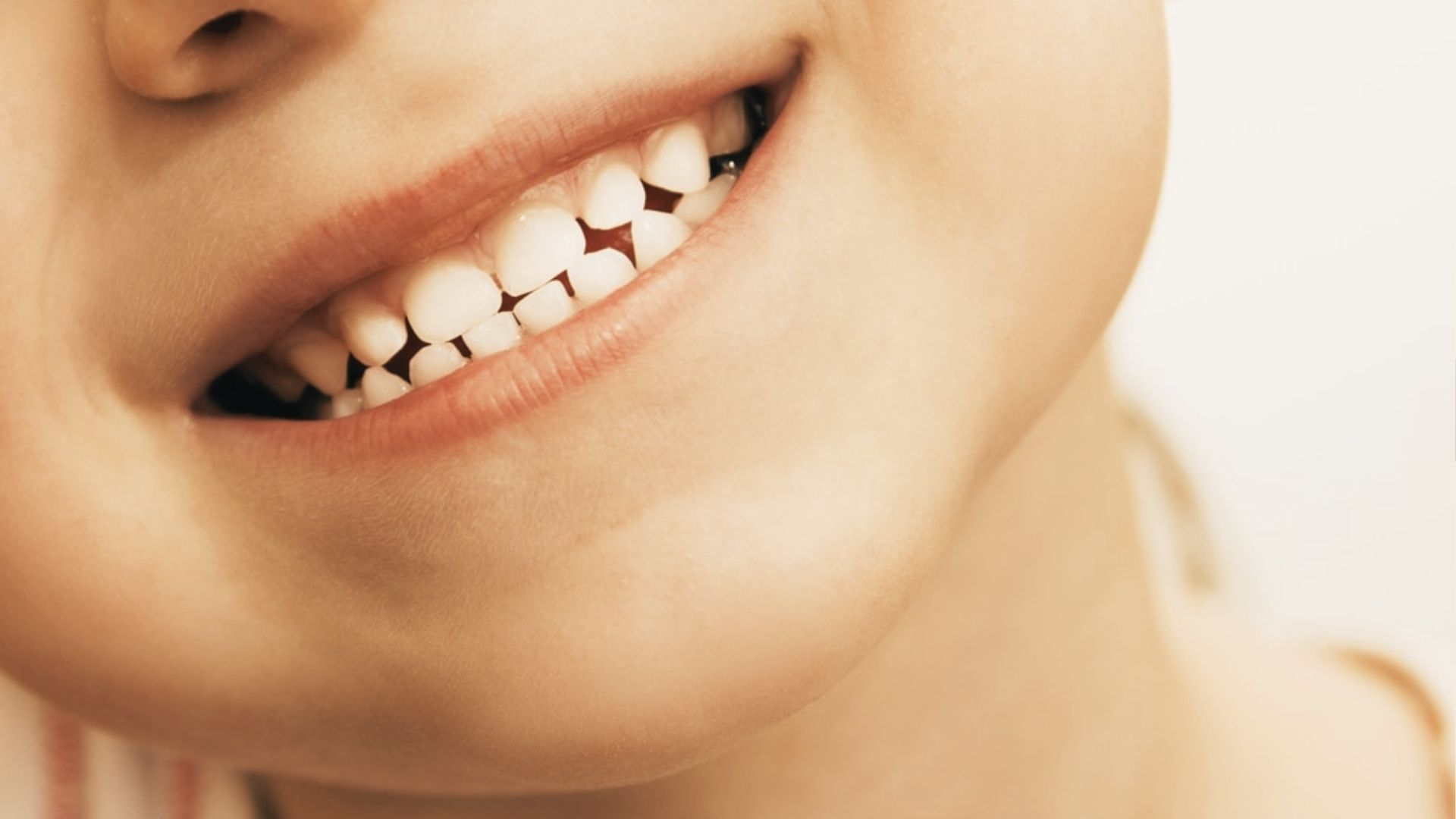
The pointed teeth between the front teeth and molars arrive between 16 and 22 months. Upper canines often appear before lower ones.
Second Molars
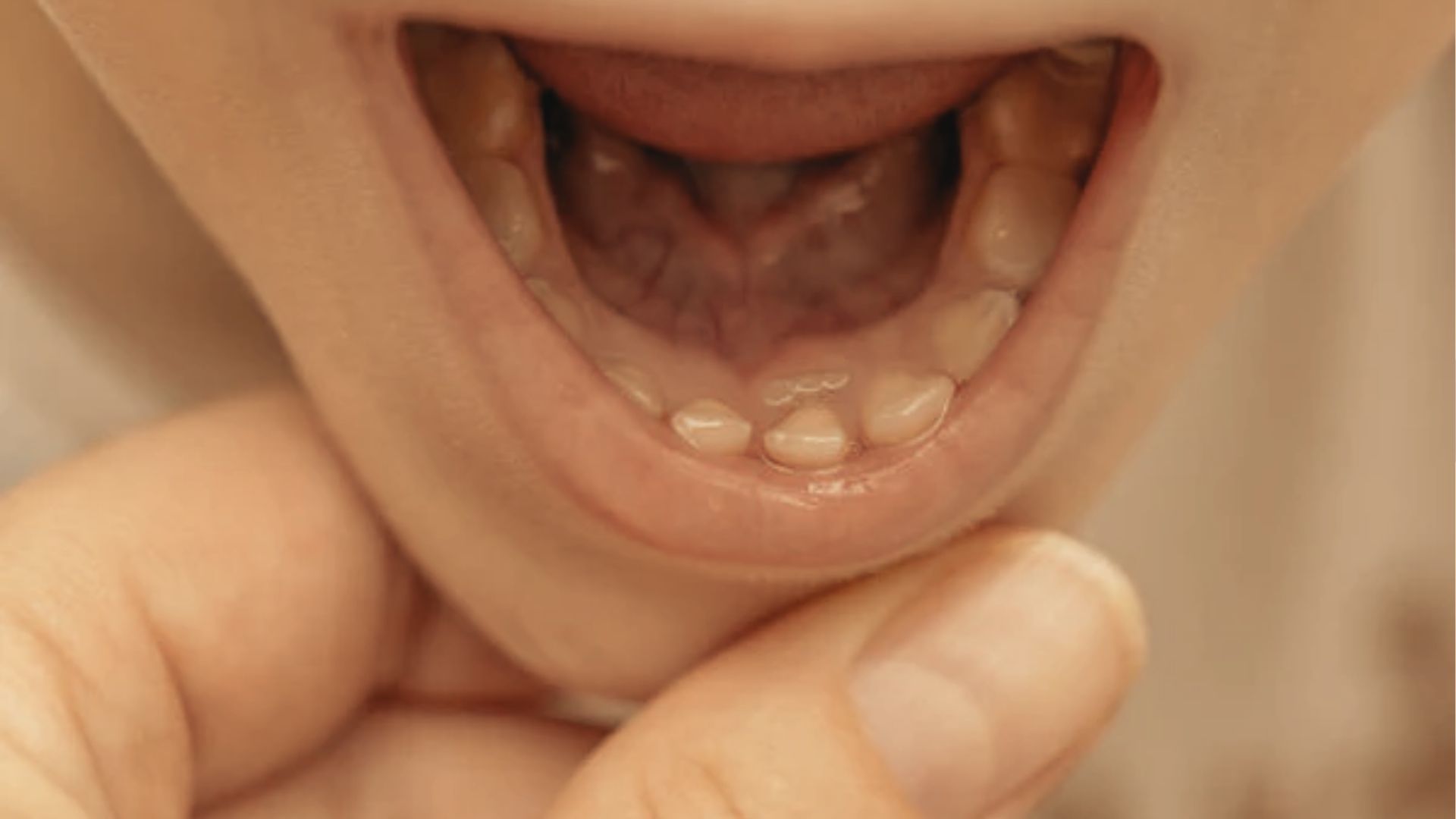
The final set of baby teeth comes in between 25 and 33 months. Once these are in, your child has a full set of 20 primary teeth.
Common Signs Your Baby Is Getting Their First Tooth
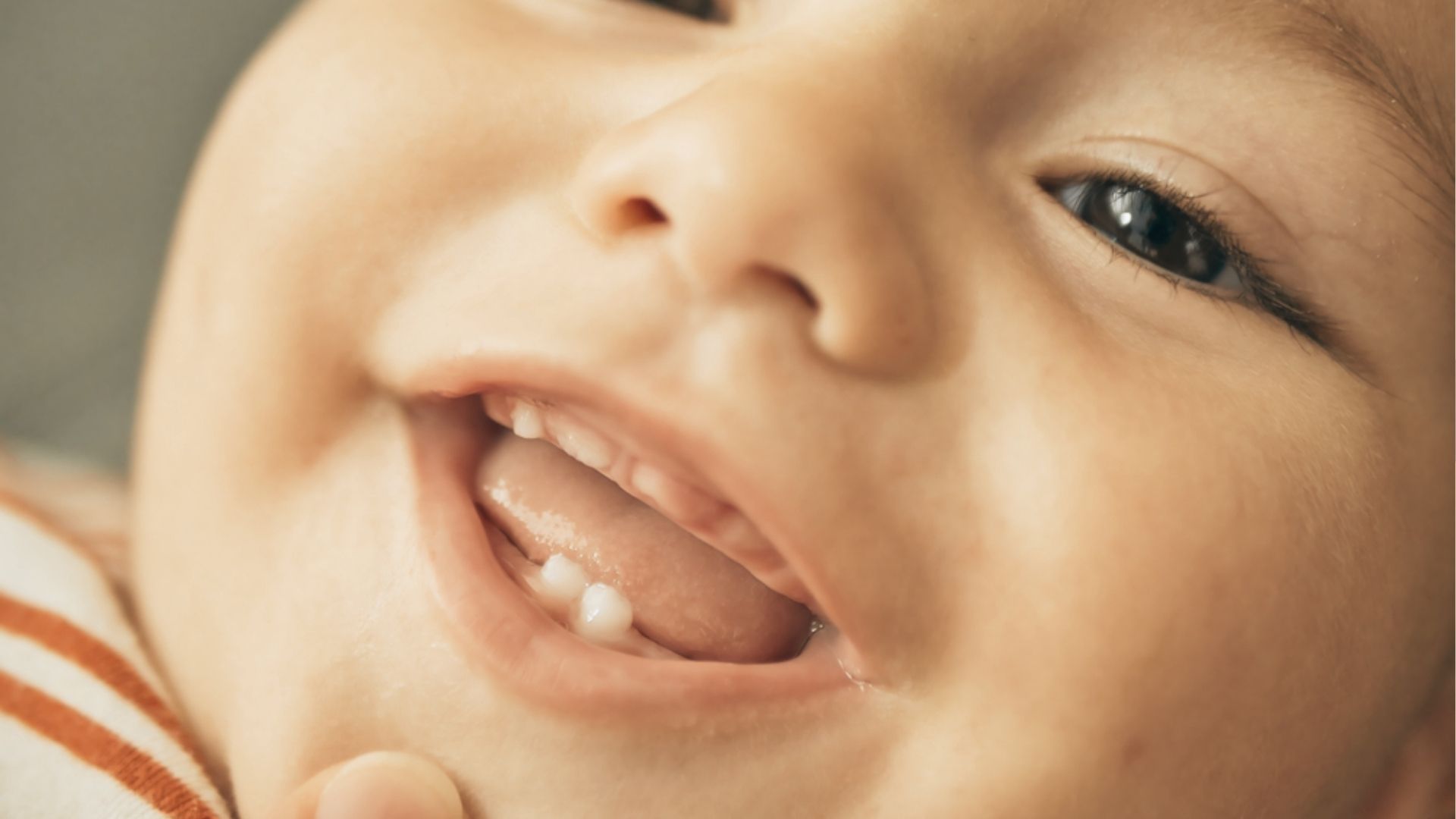
Teething looks different in every baby. But most parents notice some common signs. Here’s what to watch for.
Increased Drooling
Extra drool is one of the earliest and most common signs of teething. The gums produce more saliva as the tooth pushes up.
Keep a soft bib on your baby to prevent skin irritation around the mouth and chin.
Swollen or Sensitive Gums
The gum area above an incoming tooth may look red, raised, or slightly swollen. Your baby may flinch or pull away if you gently touch the area.
This is normal. The swelling goes down once the tooth breaks through.
Chewing on Fingers or Toys
Babies chew on things to apply pressure to sore gums. This counter-pressure brings them relief.
If your baby suddenly starts putting everything in their mouth, teething may be the reason. Make sure they only chew on safe, clean items.
Fussiness and Irritability
Teething is uncomfortable. Some babies handle it well. Others become clingy, cranky, or hard to settle.
This is not bad behavior. Your baby is in pain and needs comfort. Extra holding and gentle distractions can help.
Sleep Disruptions During Teething
Many parents find their baby wakes more at night during teething. The discomfort feels more noticeable when there are no distractions.
Try to keep your usual bedtime routine. Consistency helps your baby feel safe even when they are uncomfortable.
Mild Rise in Temperature
Some babies have a slightly uplifted body temperature during teething. This is usually below 38°C (100.4°F).
True fever above this level is not caused by teething and may point to an illness. Always check with your doctor if the fever seems high.
How Long Does Teething Last?
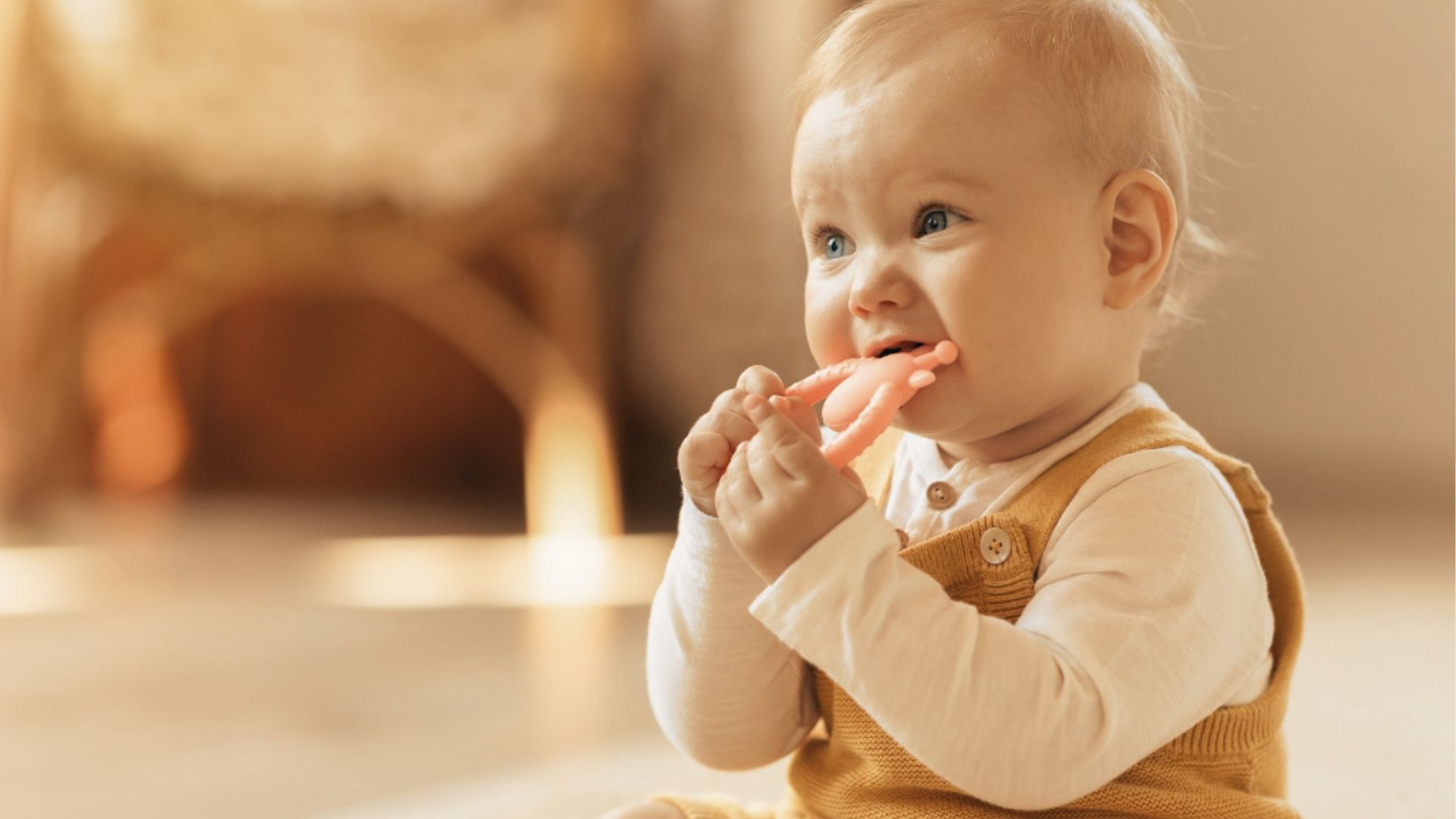
Teething is not a one-time event. It happens in phases over several years.
Symptoms often start 3 to 5 days before a tooth appears. You may notice drooling, fussiness, and swollen gums in the days leading up to it.
The worst pain usually lasts only a few days around the time the tooth breaks through. Once it is visible, the discomfort fades quickly.
Some teeth hurt more than others. Molars tend to cause more soreness than front teeth because they are larger.
Most babies have all 20 baby teeth by age 2 to 3. After that, teeth stay stable until around age 6, when permanent teeth start coming in.
Safe Remedies to Soothe Teething Pain
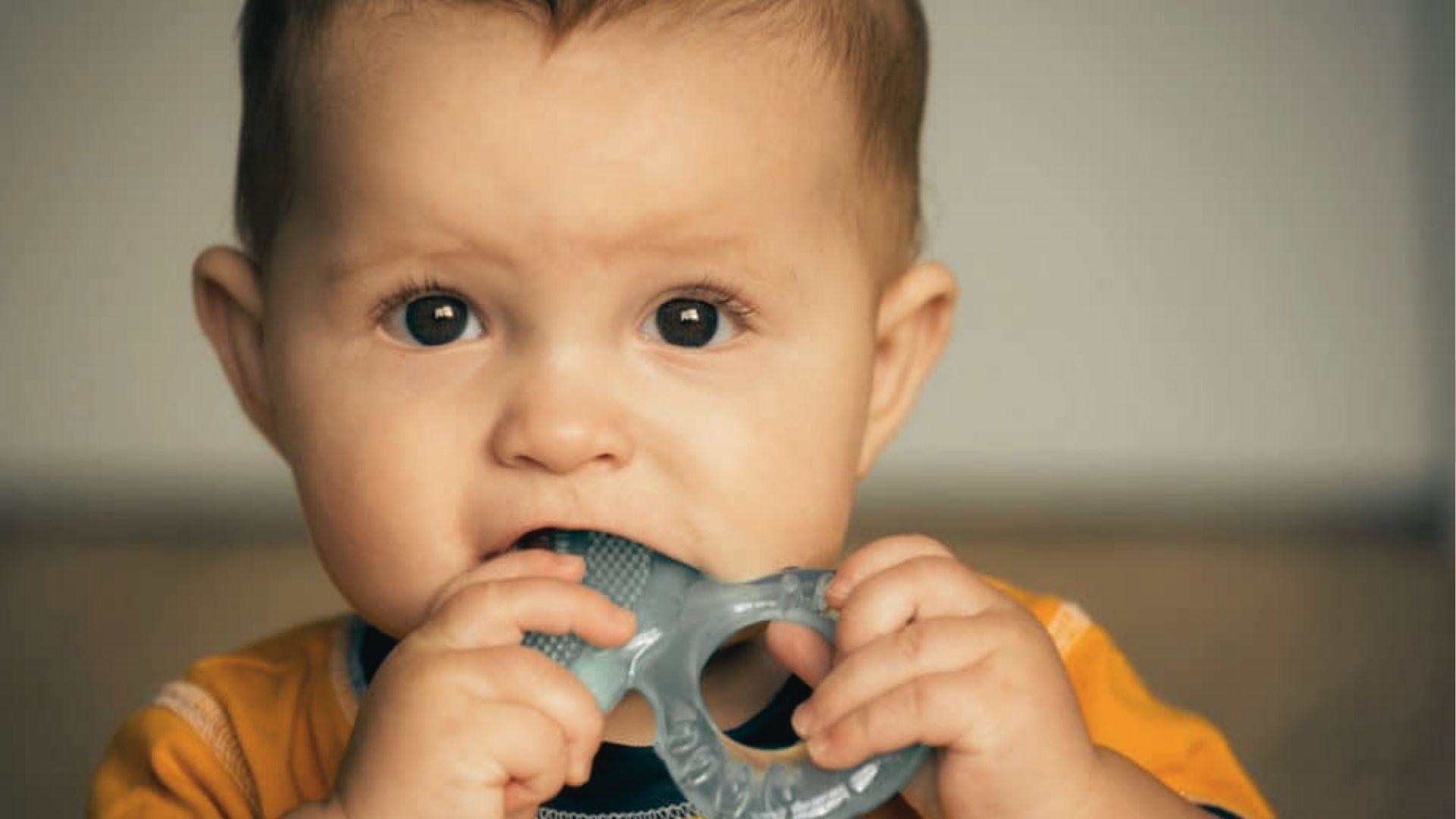
You want to help your baby feel better. Here are safe and effective options to ease teething discomfort.
Chilled Teething Rings and Washcloths
A chilled (not frozen) teething ring can help numb sore gums. The cool temperature reduces inflammation and brings relief.
You can also wet a clean washcloth and place it in the fridge for a few minutes, then let your baby chew on it.
Never freeze teething rings. Frozen items are too hard and can hurt your baby’s gums.
Gentle Gum Massage
Use a clean finger to gently rub your baby’s gums in a circular motion. The pressure can ease the discomfort caused by a tooth pushing through.
Do this for 1 to 2 minutes. Many babies calm down quickly with this method.
Cold Foods for Babies Eating Solids
If your baby has started solid foods, chilled pureed fruits or yogurt can help soothe their gums. The cool temperature provides the same numbing effect as a teething ring.
Avoid giving large pieces of cold food that could be a choking risk.
Infant Pain Relief Options
If your baby seems to be in real pain, infant acetaminophen (paracetamol) or ibuprofen (for babies over 6 months) can be used.
Always follow the dosage on the packaging based on your baby’s weight and age. Ask your doctor if you are unsure.
Teething Remedies to Avoid
Some products marketed for teething are not safe.
Avoid these:
- Teething gels with benzocaine (can be harmful for infants)
- Amber teething necklaces (choking and strangulation risk)
- Homeopathic teething tablets (not proven safe or effective)
- Frozen solid food pieces (choking risk)
Stick to simple, proven methods and always check with your pediatrician before trying something new.
Tips to Care for Your Baby’s First Tooth
Once that first tooth appears, dental care begins right away. Starting early makes a big difference for your baby’s long-term health.
- Start brushing as soon as the first tooth appears. Use a soft-bristled infant toothbrush twice a day, morning and night.
- Use a rice-grain-sized smear of fluoride toothpaste for babies under 3. For ages 3 to 6, a pea-sized amount is enough.
- Never put your baby to sleep with a bottle of milk or juice. Sugar from drinks sits on teeth overnight and causes decay fast.
- Avoid sharing spoons or cups with your baby. Cavity-causing bacteria can easily transfer from your mouth to theirs.
- Build a simple two-minute brushing routine and make it fun. A habit started now will carry your child well into their school years.
Nutrition Tips for Healthy Baby Teeth
What your baby eats from day one shapes how strong and healthy their teeth grow.
- Feed your baby calcium-rich foods like yogurt, soft cheese, cooked spinach, eggs, and salmon. These build strong teeth and support healthy development in the early months.
- Water is the best drink for babies over 6 months, especially fluoridated tap water. It keeps teeth clean and gives natural protection against cavities every day.
- Limit fruit juice, sweetened snacks, honey, dried fruit, and sweet cereals as much as possible. These break down into sugar and stick to teeth, causing decay faster than you think.
- Always wipe or brush your baby’s teeth after every meal or snack. Food left sitting on teeth turns into acid that slowly weakens enamel over time.
- Fluoride strengthens tooth enamel and fights the bacteria that cause cavities. If your tap water is not fluoridated, ask your dentist about drops or supplements for your baby.
When to Call a Pediatrician About Teething
Most teething is normal and manageable at home. But sometimes symptoms point to something else.
Teething causes mild discomfort. It does not cause high fever over 38°C (100.4°F), diarrhea, vomiting, rash on the body, or ear pulling with fever. If your baby shows any of these signs, call your doctor. These are often signs of infection or illness, not teething.
Call your pediatrician if your baby cries constantly and cannot be soothed, refuses to eat or drink for more than a day, shows extreme gum swelling, or has no teeth by 18 months. These signs need a closer look.
Conclusion
Watching your baby get their first tooth is one of those small moments you will always remember. It is a little milestone that tells you they are growing up right before your eyes.
I hope this guide made teething feel less confusing and more manageable. You have everything you need to handle it with confidence.
If this helped you, share it with another parent who needs it. And if you have questions or want to share your own teething story, leave a comment below. I would love to hear from you.
Frequently Asked Questions
When Do Babies Get Their First Tooth on Average?
Most babies get their first tooth between 4 and 7 months of age. The lower front teeth are usually the first to appear, but every baby’s timeline is slightly different.
Is It Normal for a Baby to Start Teething at 3 Months?
Yes, some babies begin teething as early as 3 months. This is considered early but is not harmful. You may notice more drooling and chewing, though a visible tooth may not appear for a few more months.
How Can I Tell If My Baby Is Teething or Just Sick?
Teething usually causes drooling, gum swelling, and mild fussiness. A fever above 38°C, vomiting, or diarrhea is not caused by teething and may signal an illness that needs a doctor’s attention.
What Should I Do If My Baby Has No Teeth by 12 Months?
Some babies simply teethe later than others, especially if it runs in the family. If there are still no teeth by 18 months, speak with your pediatrician or pediatric dentist to check for any underlying concerns.
When Should I Start Brushing My Baby’s Teeth?
Start brushing as soon as the first tooth appears. Use a soft baby toothbrush and a tiny rice-grain-sized amount of fluoride toothpaste. Brush twice daily to protect against early tooth decay.