
I know how confusing it can be to figure out what your baby should wear. The weather changes, and you wonder if they’re too hot or too cold.
That’s why I created this baby temperature chart clothing guide to help you dress your little one with confidence.
By the end, you’ll feel sure about keeping your baby comfortable and safe, no matter the temperature.
Let’s make this simple together.
Why Babies Need Temperature-Based Clothing
Babies can’t control their body heat like adults. Their system is still developing, making them sensitive to temperature shifts.
Wrong clothing causes problems. Too much leads to overheating, heat rash, or dehydration. Too little causes cold and poor sleep.
Newborns can’t shiver or sweat well, depending entirely on what you dress them in.
Too many layers increase SIDS risk. Too few layers cause cold stress. The key is finding the middle ground.
How to Use a Baby Temperature Chart Clothing Guide
A temperature chart takes the guesswork out of dressing your baby. It matches room temperature with the right clothing layers.
A baby temperature chart lists temperature ranges and tells you what clothing works for each one. Some include TOG ratings for sleep clothing.
Check temperature by feeling the back of your baby’s neck or chest. It should feel warm but not sweaty.
Don’t rely on hands and feet, these are often cool even when comfortable. If their neck feels sweaty, remove a layer. If cool, add one.
Baby Temperature Chart Clothing by Temperature Range
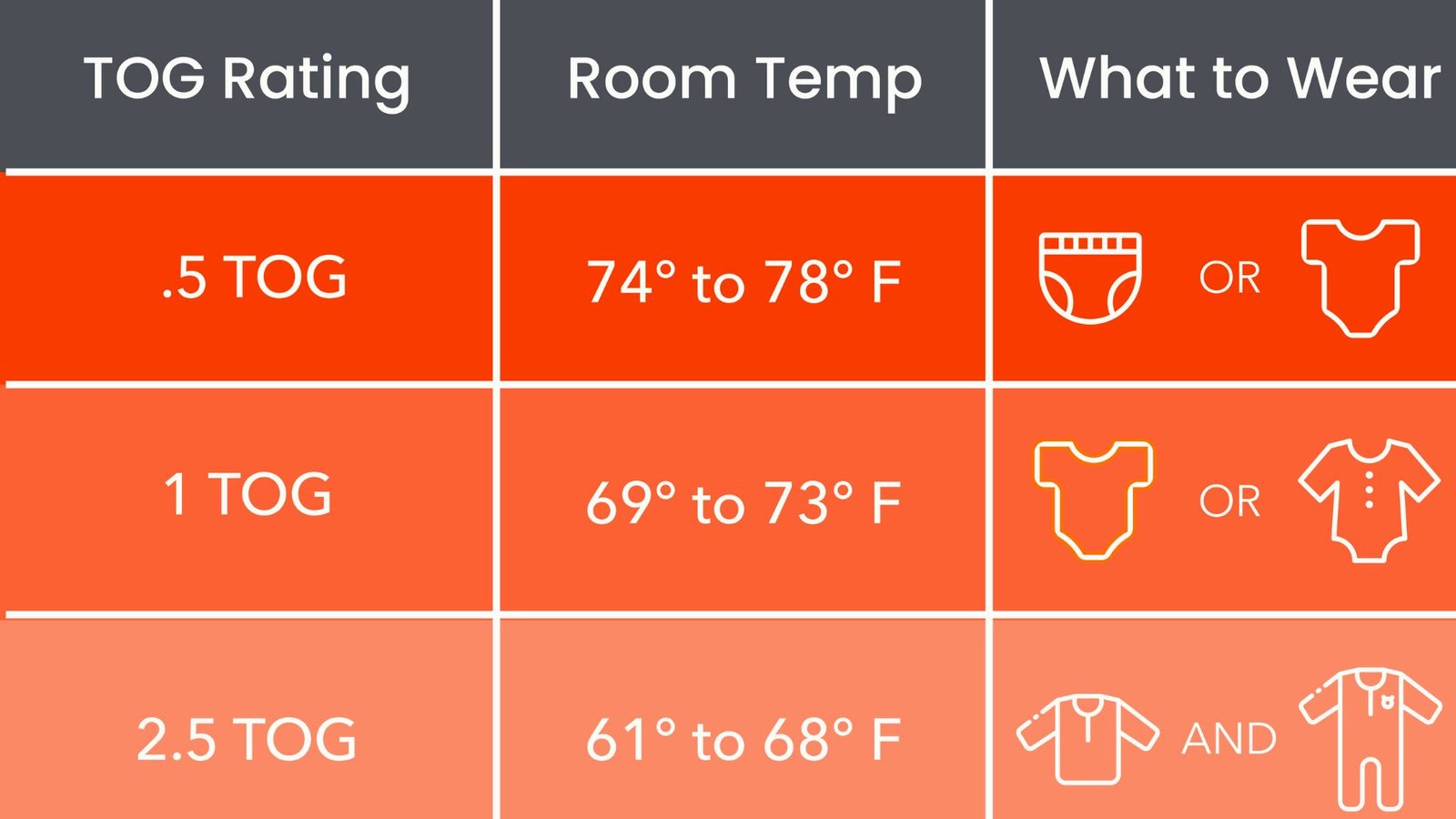
This chart provides specific clothing recommendations for babies based on room temperature ranges to maintain comfort and safety.
Cold Temperatures (Below 16°C / 60°F)
In cold rooms, your baby needs multiple layers. Start with a cotton bodysuit, add a long-sleeved shirt or sleeper, then top with a warm outer layer like a fleece suit or sleep sack.
For outdoor trips, use a jacket or bunting. Add a hat since babies lose heat quickly from their scalp. Mittens keep hands warm.
Avoid snowsuits inside car seats as the bulk makes straps unsafe. Dress them in layers, then cover with a blanket after buckling.
Cool Temperatures (16°C–19°C / 60°F–66°F)
This range needs moderate layering. Use a bodysuit plus a sleeper or outfit with long sleeves and pants. For outdoor time, add a light jacket.
Socks help keep feet warm indoors. A thin hat works well outside but isn’t needed indoors unless your home is quite cool.
Watch your baby for signs they’re comfortable. Adjust as needed when moving between rooms or going outside.
Moderate Temperatures (20°C–23°C / 68°F–73°F)
Most babies are comfortable in this range with minimal layers. A bodysuit with pants and a long sleeved shirt works well during the day.
For sleep, a bodysuit under a sleep sack is enough. You can skip socks if the room stays consistently warm.
Make sure air circulates well in the room. Open a window slightly or use a fan on low if the room feels stuffy. This temperature range gives you the most flexibility.
Warm Temperatures (24°C–27°C / 75°F–81°F)
When it’s warm, less is more. Dress your baby in light cotton clothing like a short-sleeved bodysuit. Add lightweight pants or shorts if you prefer.
For outdoor time, protect their skin from the sun. Use a hat with a brim and keep them in shade when possible. A light muslin blanket can cover their legs in the stroller.
Keep checking that they’re not getting too warm. Feel their neck regularly.
Hot Temperatures (Above 27°C / 81°F)
In hot weather, your baby needs very little clothing. A single layer like a cotton bodysuit or romper is enough. Some babies are fine in just a diaper indoors.
Make sure they stay hydrated. If you’re breastfeeding, offer the breast more often. If bottle-feeding, offer extra water between feeds for babies over six months.
Watch for signs of overheating like flushed cheeks, rapid breathing, or fussiness. Move them to a cooler spot and remove a layer if needed.
Baby Temperature Chart Clothing for Daytime
Daytime dressing needs flexibility as temperatures shift and your baby’s activity level changes. Dress your baby in layers with a bodysuit as base.
When you go outside, add one layer. If you’re wearing a jacket, your baby needs one too, plus a hat.
Remove the extra layer when you come back inside. Active babies need less clothing since movement generates heat.
Newborns need the one more layer rule if you’re comfortable in a shirt, your newborn needs a shirt plus a light layer. Check their neck every hour and keep them in shade when outside.
Baby Temperature Chart Clothing for Sleep
Sleep clothing follows different rules than daytime outfits. Safety comes first. The safest sleep setup has no loose blankets.
Use a sleep sack or wearable blanket instead. For cool rooms, choose long sleeves. For warm rooms, use sleeveless. For very warm rooms, a bodysuit alone is fine.
TOG ratings measure warmth. 0.5 TOG is for rooms above 24°C. 1.0 TOG works for 20°C to 24°C. 2.5 TOG is for 16°C to 20°C. Pair with a bodysuit underneath.
Best Fabrics for Baby Temperature Control
Fabric choice matters as much as the number of layers. Cotton is your best choice. It breathes well, absorbs moisture, and works in all seasons.
Bamboo is soft, breathable, and feels cool against skin for sleep clothing. Merino wool keeps babies warm when cold and wicks moisture when warm without irritating skin.
Avoid synthetic fabrics like polyester, they trap heat. Use fleece only for outer layers. Avoid waterproof materials unless outside in rain.
Signs Your Baby Is Too Hot or Too Cold
- A cold baby has cool skin on their chest or neck, arms pulled in close, pale or blue lips, and may cry or become unusually quiet and sleepy add a layer and warm them gradually
- An overheated baby shows a hot or sweaty neck and chest, red flushed cheeks, and damp hair from sweating
- Temperature discomfort causes fussiness, irritability, and crying in babies whether they’re too hot or too cold
- Overheated babies may refuse to eat, breathe faster, and develop heat rash on their skin
- Remove a layer and move to a cooler room when baby is too hot, or add clothing and warm gradually when baby is too cold
Seasonal Baby Clothing Things
Having the right items on hand for each season makes dressing easier. You don’t need a huge wardrobe, just smart basics.
For summer, stock up on lightweight cotton bodysuits, rompers, sun hats with brims, muslin blankets, and lightweight sleep sacks. Save socks for air-conditioned spaces.
For winter, you need long-sleeved bodysuits, warm sleepers, fleece suits, hats, mittens, and warm socks. Get sleep sacks in 2.5 TOG for nighttime.
Avoid bulk that would be unsafe in car seats.
Practical Tips for Dressing Babies Safely
A few simple practices make temperature management easier every day.
- Use three layers like building blocks: a base layer touching skin, a middle layer for warmth, and an outer layer for protection with easy to remove snaps or zippers
- Keep extra layers in your diaper bag since weather can change while you’re out, and bring a blanket you can add or remove easily
- Dress your baby for indoors first, then add layers for going out, and remove outer layers within a few minutes when coming back inside
- Keep your baby’s neck accessible so you can check their temperature throughout the day in different environments
- Don’t overdress your baby before buckling them in the car since temperature rises quickly cover them with a blanket after they’re secured if needed
Conclusion
I still remember the first time I realized my baby was uncomfortable because I’d dressed her wrong. It taught me to trust both the temperature chart and her signals.
You’ve learned exactly what your baby needs for every temperature, season, and time of day. Check their neck, choose breathable fabrics, and layer thoughtfully.
Your confidence will grow with each day. Start using the baby temperature chart clothing guide today and watch how much easier it becomes.
Share this with other parents who might be struggling too. Your baby is lucky to have you.
Frequently Asked Questions
What temperature should I keep in my baby’s room at night?
The ideal room temperature for babies is between 16°C and 20°C (60°F to 68°F). This range promotes safe sleep and reduces overheating risk. Use a room thermometer to monitor it.
How do I know if my baby is dressed appropriately for the weather?
Check the back of your baby’s neck or chest with your hand. The skin should feel warm but not sweaty or hot. If it’s cool, add a layer. If it’s damp, remove one.
Can I use blankets for my baby at night?
Loose blankets are not safe for babies under 12 months due to suffocation risk. Use a wearable blanket or sleep sack instead. These keep babies warm without covering their face.
What should my baby wear under a sleep sack?
It depends on the TOG rating and room temperature. For warm rooms, just a bodysuit works. For cooler rooms with a 2.5 TOG sack, use a bodysuit and possibly a sleeper underneath.
Why are my baby’s hands and feet always cold?
Babies have poor circulation to their extremities, so cold hands and feet are normal. Check their neck or chest instead. As long as their core is warm, they’re comfortable.