Seeing your 3 month old baby eye watering can feel scary. I get it.
I was there too, constantly wiping my daughter’s tears and wondering if I should call the doctor. Most cases are completely harmless and fix themselves with time.
My goal is to give you clear, honest answers so you can care for your little one with confidence.
Let’s figure this out together.
Understanding Baby Eye Watering at Three Months
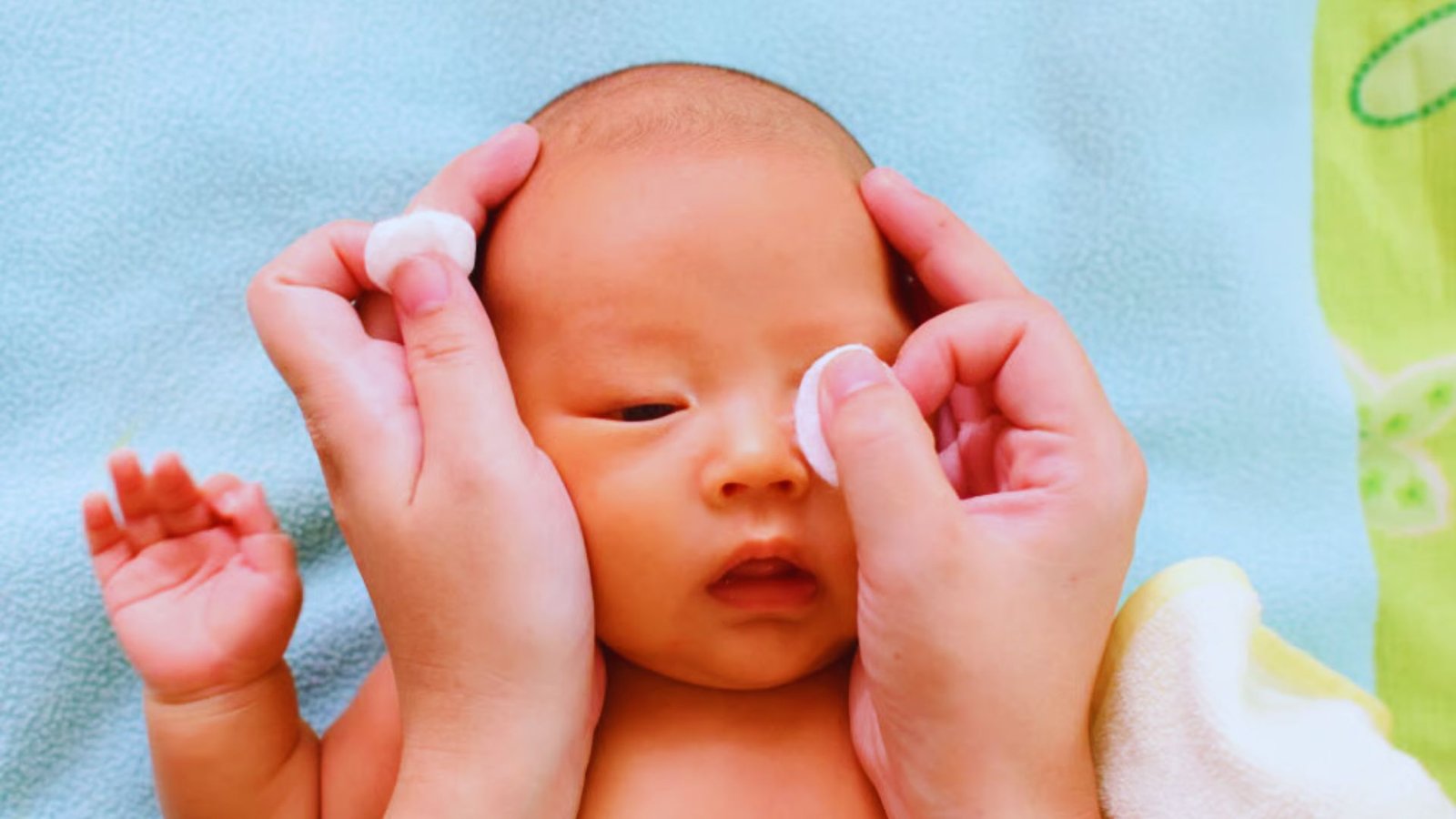
At three months old, your baby’s tear ducts and eye systems are still developing. This means some watering is completely normal and expected.
The tear drainage system might not work perfectly yet, causing tears to overflow instead of draining properly. Most babies outgrow this by their first birthday.
About 20% of babies experience some eye watering in their first year. It usually affects one eye more than the other. The condition often comes and goes throughout the day.
Cold weather or wind can make it worse. Your baby isn’t in pain from normal tear duct issues. They’ll act happy, eat well, and sleep normally.
Common Causes of Eye Watering

From blocked ducts to irritants and infections, several factors can make your baby’s eyes water.
Blocked tear ducts
account for most eye watering in babies under six months. The blockage happens when the drainage pathway hasn’t opened completely.
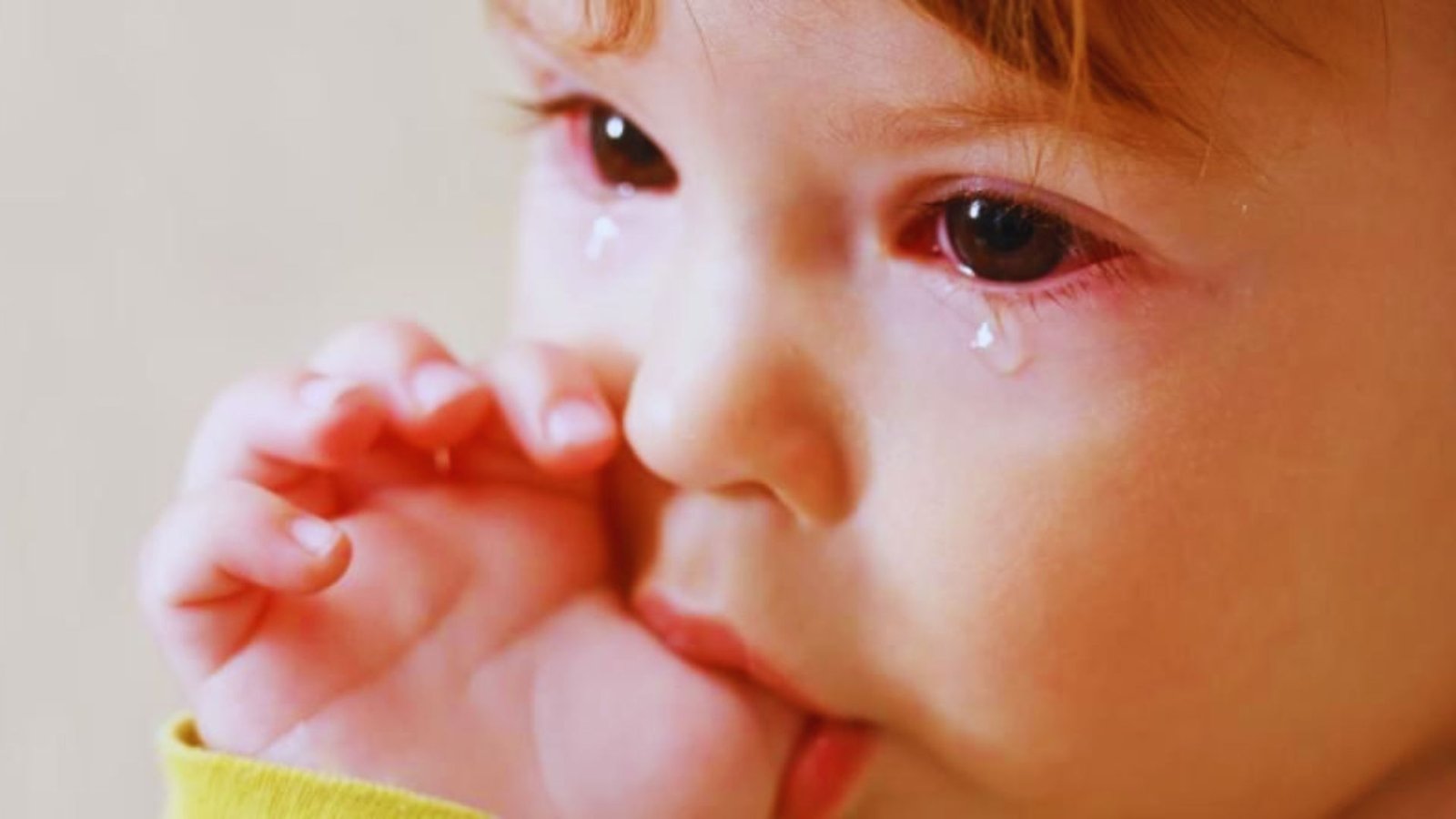
Tears have nowhere to go except down the face. You’ll notice tears collecting in the inner corner of the eye. The tears are clear and don’t have an odor.
Environmental irritants
like dust, pet dander, and household cleaners can trigger watering. Bath time can also cause watering if soap gets near the eyes.
Room temperature and humidity levels affect eye comfort too. Very dry air from heating systems can make eyes water more.
Mild infections
like conjunctivitis can occur in young babies. You’ll see redness in the white part of the eye along with watering.
Discharge might start clear but can turn yellow or green. Baby acne or skin irritation near the eyes sometimes spreads bacteria.
Allergies
are less common in three-month-olds but can happen. Food allergies in breastfed babies occur when mom eats certain foods.
Allergic reactions typically cause watering in both eyes, not just one. Other allergy symptoms include sneezing, rash, or fussiness after feeding.
Signs Eye Watering Is Usually Harmless
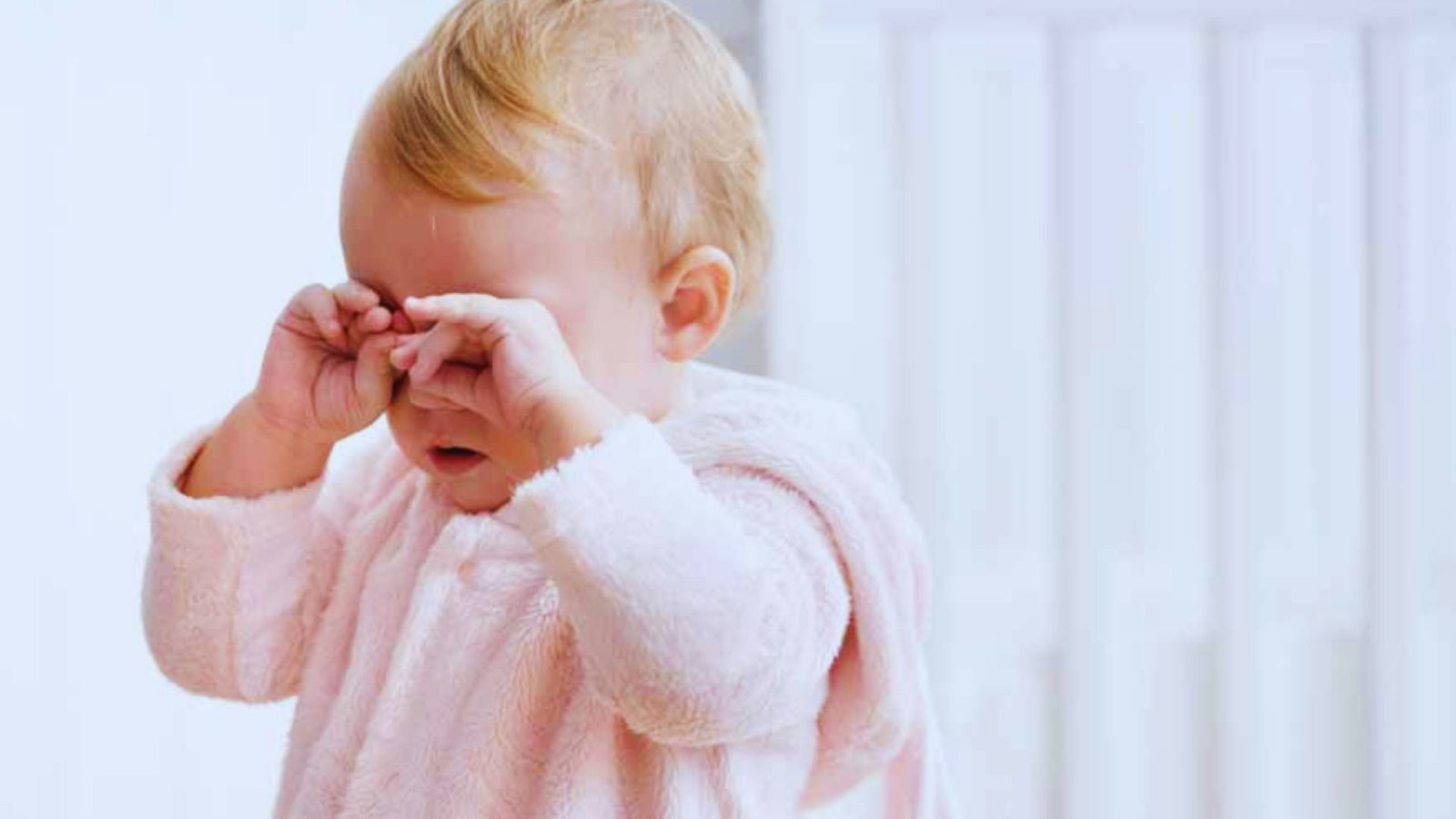
Clear tears, happy baby behavior, and easy cleanup usually mean everything is fine.
- Clear, thin tears with no odor or unusual color
- Eye appears healthy and white with no redness or swelling
- Baby acts normal, smiles, feeds well, and sleeps consistently
- No constant rubbing or scratching at eyes
- Tears and slight crustiness wipe away easily with warm water
- Use soft, damp cloth from inner corner outward with fresh section for each eye
When to Worry About Eye Watering
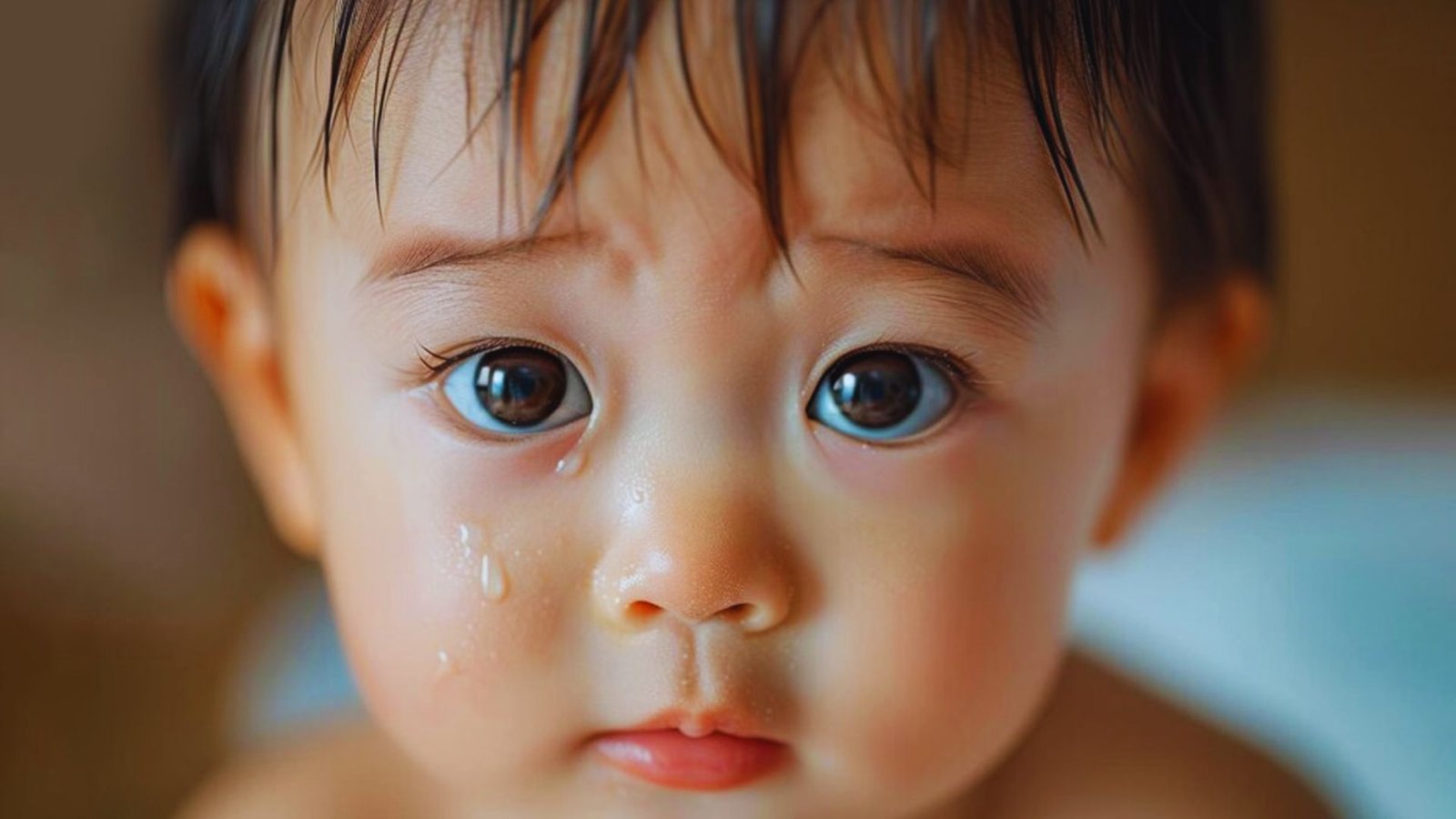
Red eyes, colored discharge, stuck eyelids, or light sensitivity need immediate medical attention.
Redness or swelling: signals inflammation or infection. The eye might look pink or have visible blood vessels. Contact your pediatrician the same day you notice these changes.
Yellow or green discharge: is a clear sign of bacterial infection. The goop can be thick and sticky, making the eyelashes clump together. Bacterial conjunctivitis requires antibiotic treatment.
Eyelids sticking together: after sleep means bacteria are actively multiplying. You might need to use a warm, wet cloth to gently remove the crust. Call your pediatrician right away.
Constant eye rubbing: indicates irritation or pain. Your baby might be fussier than normal and turn their head away from light.
Light sensitivity: combined with eye watering can signal increased pressure in the eye. This is rare but requires immediate medical evaluation.
What Parents Can Do at Home

Always wash your hands before touching your baby’s eyes. Use warm water and a clean, soft cloth. Gently wipe from the inner corner outward. Use a fresh section for each eye.
Tear duct massage can help open blocked ducts. Place your clean index finger below the inner corner of the eye.
Apply gentle pressure downward along the nose toward the nostril. Repeat 5 to 10 times per session, 3 to 4 times daily.
Keep your baby’s fingernails trimmed to prevent scratching. Wash anything that touches their face. Avoid exposing them to people with eye infections.
When to See a Doctor
Know the warning signs that require same-day medical attention to protect your baby’s vision.
Call your pediatrician the same day if you notice:
- Red eyes, colored discharge, or stuck eyelids
- Fever combined with eye symptoms
- Swelling around the eye or excessive pain
What to expect at the appointment:
- The doctor will examine both eyes and check the drainage system
- If infection is suspected, they might take a culture sample
- Early treatment prevents complications and protects developing vision
Treatment Options
- Doctors often recommend waiting as most open naturally by 12 months
- Continue massage and cleaning at home during this period
- Antibiotic eye drops prescribed for about a week if bacterial infection diagnosed
- Apply medicine several times daily with symptoms improving within 48 hours
- Tear duct probing may be recommended after 12 to 15 months for persistent blockages
- Quick procedure with very high success rates
Conclusion
I spent so many nights worrying about my daughter’s watery eyes, wondering if I was missing something serious.
Looking back, I wish I’d known that 3 month old baby eye watering is usually just a blocked tear duct that clears up on its own.
Trust your instincts, watch for those warning signs, and don’t hesitate to call your pediatrician when something feels off.
Have you dealt with this? I’d love to hear your experience in the comments below.
Frequently Asked Questions
Will my baby’s blocked tear duct get worse before it gets better?
Sometimes watering increases temporarily during cold weather or when your baby has a cold. As long as no infection signs appear, this is still normal.
Can I use breast milk to treat my baby’s watery eyes?
Breast milk has antibacterial properties, but it’s not a substitute for medical treatment when infection is present. Always check with your pediatrician first.
How long should I try tear duct massage before seeing results?
Most doctors recommend massaging for at least 4 to 6 weeks. If you see no improvement or symptoms worsen, contact your pediatrician.
Is it normal for only one eye to water my baby?
Yes, blocked tear ducts often affect just one eye because each duct develops independently. Single-eye watering without other symptoms usually indicates a simple blockage.
What if my baby’s eye watering comes and goes throughout the day?
This is completely normal with blocked tear ducts. The watering often appears worse after naps, during feedings, or in cold weather, then seems to clear up at other times.